
Multimodal Post-Digital Ethnography: Researcher Qualities, Ethical Concepts, and Legal Challenges in Research Praxis (Part I)

How to Analyze Poetry Performance on Social Media Platforms: Introducing Researcher Qualities, Methodological Parameters, and Positionality

by MAGDALENA ELISABETH KORECKA, University of Vienna/University of Hamburg

This blog series offers practical guidance for poetry performance researchers navigating the ethical and legal dimensions of social media research. While not exhaustive, it is an invitation to consider the conceptual parameters that shape researcher-to-participant dynamics and the quality of findings. This series is addressed to literary and cultural researchers who are unfamiliar with social science methodology but wish to apply multimodal post-digital ethnography[1] to poetry performance research. It presents a way ‘in’ for academics in the humanities[2] desiring to broaden their scope of study objects as well as the set of methodologies they can draw on. Part One gives a brief overview of the skills and qualities that poetry performance researchers ideally possess, along with a short introduction to post-digital ethnography. Part Two discusses the legal and ethical dimensions of this approach.

This introduction is especially fitting for poetry performance scholars who are considering methodological triangulation, i.e., a mixed-methods approach or a combination of various methods, in their interdisciplinary projects. Within such projects, collaborations with, for instance, speech scientists or IT specialists are possible, or in particular with the discipline of Digital Humanities, which offers scholars quantitative research approaches (big data amassments of poetry collected online and in digitized archives) besides the qualitative and therefore smaller individual case study research in poetry performance archives that this blog series covers. In any configuration – be it in interdisciplinary research teams in a project or in a collective co-edited publication, or a position of consultancy – poetry performance projects greatly benefit from diversifying approaches across disciplinary boundaries.

However, it is also crucial for poetry performance scholars to be aware of certain prerequisites for ethical engagement across disciplines. While there are many points that could be discussed, a short list of qualities that researchers should have or are willing to acquire for these purposes suffices to explicate what to consider as part of the specific research process of multimodal post-digital ethnography.

Three Necessary Skills and Qualities for Poetry Performance Scholars

I now want to emphasize three qualities and associated skills which may prove useful for poetry performance scholars. These are necessary to have and/or to learn before, during, and after the research process. I list three important skills along with some examples.

1. Flexibility

Flexibility as a demand means, for instance, to be willing to acquire or already possess a willingness to stay up to date with media law – which Part Two discusses in detail –, an area of law that is still in its infancy and constantly develops with respect to regulations of the social media space.

A recently introduced and important regulation in the UK is, for example, the Digital Markets, Competition and Consumers Act 2024 that clearly states how the protection of consumers needs to be guaranteed on social media platforms, including the avoidance of misleading advertising practices.[3] As a part of flexibility, poetry performance scholars analyzing activity on social media ought to get acquainted with such changes, e.g. with newly introduced legal rules. With poets increasingly occupying the space of content creators on socials, some turn to advertising practices to monetize their otherwise free work. This is why researchers ought to be familiar with the fact that ads on Instagram need to be marked accordingly, to name an important case in point. Demarcating advertisements is a legal prerequisite, but the level of immediate visibility differs from post to post; sometimes, only an extensive search into hashtags reveals a post’s nature as an advertisement. Collaborative content posted on two or more profiles usually makes this process easier. Knowledge of such ad logics can thus explain associated hashtags and caption descriptors in addition to explicating how far platform contributions overlap with or are intertwined with poets’ own aesthetic choices – this also changes readings/interpretations. This means that instead of viewing clearly positioned location tags such as tagged cafés in cities, as showcasing a seemingly spontaneous poetic writing process in a specifc place or as additional poetic information, scholars can discern these or other elements as corporate.

Hence, poetry performance researchers of social media ecologies need to work with fast-paced changes specific to the attention economy, through sustained engagement or collaboration (see point 3 below). For instance, researchers may listen to tech-specific podcasts, actively immerse themselves in discussions about digital culture on social media such as on BlueSky, or consume tech-focused media like WIRED or Hyperrhiz: New Media Cultures Journal. They may also be involved in either practical usage of social media themselves or closely work together with a team member who is taking on such a role. Poetry scholars can also consult professionals in the field of media law or other academics who are invested in digital culture scholarship and possess specialized knowledgeable about platformized cultural online spheres. Consequentially, improving one’s social media literacy skills on-the-go proves helpful in distinguishing platform features from poets’ creative abilities.

Another instance where it is important to adapt to changes is the introduction – and the potentially rather quick discarding – of platform features that may affect, for instance, reel length or platform policies on political content and visibility. For instance, captions may have a limited word count, so it is important to distinguish between platform constraints and poets’ individual aesthetic choice. Importantly, it matters how a poetry post is in accordance with afforded platforms features, how innovatively it circumvents them, if it includes a platform interventionist groundwork or if it rather adheres to policies in a proprietary way for purposes of visibility. For a holistic understanding of poetry performance on social media, the skill of flexibility is highly relevant when branching out from classical poetry analysis to a more interdisciplinary, social science-inflected approach of study. The effects of media law in this particular context will be discussed in detail in the second part of this blog series.

2. Core Values

When staying true to core principles of the humanities, research of platforms should perform a critical intervention. Otherwise, this research is no more than a lip service to platform capitalism. Critical reflection on platform politics and one’s own positionality are important to consider for an ethical research praxis – one that aims to disclose how specific results have been achieved. These are contingent on asked research questions, and their reflection is a testament to how poetry is studied, i.e. through which lens platform material is examined. It is therefore crucial to contemplate how scientific core values of transparency and self-reflection are present and implemented in research design, as non-negotiable instruments for academically sound research. In practice, this means that scholars should describe the application of their core values in detail. Additionally, poetry performance researchers need to disclose involvement with people/actors and how participants are reimbursed either financially, ideally, or by alternatives if financial compensation is impossible. At the very least, attention can easily be directed to poets’ work. While maintaining critical distance and by inviting nuanced ambiguity, also in academic publication, communication with involved poetry organizers or poets across the board is necessary.

With poetry performance especially, transparency about methodology and its thorough documentation becomes even more important, for instance, when platforms deactivate certain features. Such a turn of events, in fact, influences poetic aesthetics, whether in perception or interpretation. If, for instance, a vertical format is changed to a horizontal one, or if colors look different, aesthetic parameters might shift. When researchers are taking notes of comment sections or of an interview, or when they are talking to poets and are including transcripts as sources, they open possibilities of discussion for readers as well as the wider academic community. In addition, transparency in self-reflective methodological publications yields confirmability for future research, which is a practice that has been long established as a norm of social sciences. Transparency can be a way for archiving a research process in interdisciplinary project publications, too. With such archives, the issue of preserving one’s research process but also, even more significantly, of primary materials, materializes as well.[4]

Researchers should consistently remind themselves of their core values to remain flexible in the face of change. Aside from a set of shared values like transparency and self-reflexiveness, community is paramount to the entire multimodal post-digital ethnography process per se. Thus, the next section explains what collectivity in a research process means and how to achieve it as a poetry performance researcher.

3. Collectivity

This third category refers to a commitment to collectivity by academics. Such a commitment can look like respecting boundaries of how much involved participants like poets or audience members have time for interviews. A collective research approach also involves consistently reflecting on one’s own scientific procedures, which includes being aware of and admitting to mistakes as they are an unavoidable step of learning. In addition, I encourage scholars to consistently remember one’s own and collective ‘why,’ i.e., the purpose of a specific research endeavor.

Also, approaching interdisciplinarity in teams also means recognizing contributions of the many actors involved in research. Knowledge from the fields of communication studies, political sciences, various philologies, digital anthropology, IT and platform studies, art history, media-specific questions as well as poetry discussions can be merged with poetry performance studies. If one wants to pin it down to a sub-field, literary sociology best describes the application of multimodal post-digital ethnography– with its particular interdisciplinary focus. In the spirit of open academic discussion which aims to decenter capitalist scarcity models, working collaboratively in research networks manifests in concrete tangible action such as openly shared resources, for example. In publishing reading lists publicly, through open access or via an open editing system, academics showcase a profound commitment to their academic community. A case in point is the Poetry Off the Page bibliography: It is consistently open to submissions to entries on poetry performance scholarship with a focus on the national context of the UK and Ireland.[5] In general, multimodal post-digital ethnography as a method offers poetry scholars a way to lean into collaboration across disciplines, which is contingent upon a willingness to keep an open mind.

I consider these three abilities prerequisites to carry out multimodal post-digital ethnographic research as a poetry performance scholar. I want to reiterate that these qualities are technical-ethical demands that arise when applying this specific method in practice. Researchers are responsible for a type of poetry performance scholarship that takes media specificity seriously, leading to earnest considerations of spoken word poetry online. Poetry performance on social media, a highly multimodal art form, cannot be understood in its entirety if one does not consider social media ecology’s situatedness. Furthermore, such skills/qualities help researchers to consider ethical and legal parameters of their projects. This is why readers will find examples of such parameters for social media-based poetry performance analyses at the center of the second blog post in this series. For now, however, I will explain which methodological parameters need to be considered.

Methodological Parameters

The basis for practicing multimodal post-digital ethnography in poetry performance analysis and interpretation is an acknowledgment of the fundamental parameters of ethics, legality, the researcher qualities and skills listed above, positionality stances in relation to audiences, institutional anchoring, and media environments. Annette Markham and Elizabeth Buchanan advise the following practices for methodological choices, which are also applicable to multimodal post-digital ethnography:

Ethical decision-making is a deliberative process, and researchers should consult as many people and resources as possible in this process, including fellow researchers, people participating in or familiar with contexts / sites being studied, research review boards, ethics guidelines, published scholarship (within one’s discipline but also in other disciplines), and, where applicable, legal precedent. (208)

Therefore, I aim to anchor the method of multimodal post-digital ethnography as a methodological avenue that considers the proliferation of spoken word videos and poetry performance pieces in audio-visual form on social media platforms. The analysis of such poetic material poses challenges for poetry performance researchers; one of them being ethics, the other legality. This is what digital ethics researcher Annette Markhman and scholar Elizabeth Buchanan mean when they express a necessity for a community of actors in a methodological process in the passage quoted above. This also applies to the methodological practice of scholars based in the humanities, including scholars of poetry performance. The laid-out principles are inflected by my own PhD study approach to social media poetry; with and beyond it, I provide possible methodological directions to explore in poetry performance research.

So, what is multimodal post-digital ethnography? In my own research, I built on digital ethics, media law, marketing research, anthropology, cultural and visual culture studies, platform studies, and communication studies, among other fields to explore like library and information science. My goal has been to study social media poetry as a socio-aesthetically distinct phenomenon. In the course of my research, I have consulted various researchers but also engage with discussions among readers or audience members in comment sections as well as with perspectives by poets in individual interviews.[6] Such a triangulation, i.e. a mixing of methodological approaches, is typical for digital ethnography; it lends itself well to mixedmethods approaches and for collaboration across disciplines. Possible case studies for poetry performance research are analyses of user responses in the comments section of poetry performance videos on a social media platform like YouTube in connection with overall social media profile reviews as well poetry performers’ public image, including public activities such as podcast interviews. Such primary materials are well-fitted to the specific method of multimodal post-digital ethnography; it helps to assess their overall poetic-aesthetic, social, and platform-based significance.

If researchers are considering using multimodal post-digital ethnography, they should be aware of both its advantages and disadvantages. On the one hand, and with the advantage of a truly interdisciplinary basis and its open form, this method is especially apt for collective research practices. On the other hand and depending on one’s level of familiarity with social science principles, time investment is high and a lot of preparation as well as reflection throughout the research process and afterwards, in writing up findings, is required. Thus, scholars will inevitably gather a huge amount of data, even if their project is not quantitative. An example is data resulting out of social media profile observation in the form of field notes. How individual research steps look depends heavily on research project specifics.

For readers seeking more detailed introductions to digital ethnographic practice, method-focused guides by Sarah Pink and colleagues (“Digital Ethnography”) as well as discussions of methodological discomfort in digital ethnography by Crystal Abidin and Gabriele de Seta (“Private messages from the field”), for instance, offer helpful starting points.

In terms of further academic sources, guides on qualitative research explain the how to of methodologies[7] to various degrees, including interviewing (see PoP insider–Claire Palzer’s “three-partite interview series ,” which tackles e.g. ethical questioning on trauma), group settings such as opinion collection in focus groups, and social media based observation of profiles (e.g. Simone Pfeifer’s entry for the DEI, i.e. Digital Ethnography Initiative, at the University of Vienna). In an extension of digital ethnographic work focusing on a plethora of platform contents, this blog’s main focus is poetry performance on social media. In combination with classical close readings, the method of literary studies and critical theory use, an ethnographic focus on social media spaces and their poetic phenomena enhances a holistic understanding of aesthetic, social, ethical, and influential work by performance poets as participants as well as audiences of social media poetry as phenomenon.

Depending on specific research questions and materials, structural set-ups can look completely different. Multimodal post-digital ethnography is highly contextual, meaning that exact practical steps are contingent upon overall research designs and aims. In the following I propose an explanation for the main and continuously relevant parts of the methodological work. Whichever practical route is embarked upon, these are the media ethnographic, the post-digital, and the multimodal aspects of the method.

What connects various academic collectives and projects is exactly the methodological framework of multimodal post-digital ethnography. Through this method, scholars find common ground with multidisciplinary projects that also center a research focus on culturally media-specific issues; in discussing processes of technological self-reflection as well as insightful stances about experiences in terms of knowledge-making, or on the matter of relationships with study participants, bonds across study fields are possible in field-theoretical practices. To carry out such methodological projects, human relationships are important, with a method that is, in general, collective. Hence, poetry performance researchers should – if they are not already doing it – follow scientific values of transparency, which is the basis of establishing trust and serving ethical safeguarding. Funders like the European Research Councileven demand and review ethics requirements in grant applications. They are implying expectations placed on responsibility, accountability, and trust by evaluating how these requirements correspond to planned – implemented – premises in a project (Ávila 2025). Ultimately, ethical realization in scholarly work is contingent upon an honest, respectful, and a collective kind of thinking.

What all methodological approaches of ethnography have in common is the phenomenological lens. An example for phenomenological inquiry is the definition of digital ethnography by a collective of researchers from Science and Technology Studies (STS). Sarah Pink, Heather Hortst, John Postill, Larissa Hjorth, Tania Lewis, and John Tachi claim that the method’s “starting point” is “the idea that digital media and technologies are part of the everyday and more spectacular worlds that people inhabit” (7). The scholars’ ‘mission statement’ is their interest “in how the digital has become part of the material, sensory and social worlds we inhabit, and what the implications are for ethnographic research practice.” (ibid.). With such a definition of digital ethnography in mind, it becomes clear how post-digitality as a term makes sense when analyzing poetry performance practices on social media. Post-digitality accounts for the enmeshment of ‘analogue’ and ‘digital’ approaches, which are closely akin to adaptations of ‘live’ performances to Instagram- or other platform-based streams (see Martina Pfeiler’s published research adaptations of “live performances to streams” online as a direct result of the COVID-19 pandemic). Other examples of post-digitality are presented by performance bits filmed and later uploaded by poets/fans to YouTube; others, however, are examples of spoken word videos specifically created for social media platforms and/or a proliferation on them. An example is Hollie McNish’s spoken word poetry film “Embarassed” or the poet’s reading series on her Instagram page (see Julia Novak 324 and Novak “No matter how” n.p. ). Additionally, some poets include event recaps on their profiles, which shows how social action extends beyond the confines of platforms. So, a certain reciprocity of the on- and offline is prevalent throughout performance poetries, which the term of post-digitality captures aesthetically, technologically, and socially. On the one hand, the digital influence on how performances are filmed to fit the vertical story format on Instagram, for instance, affects the in-person attendance of a spoken word show – how the seating arrangements are placed in case this is important for organizers; on the other hand, the proliferation of audience participation in the form of clapping or judging in poetry slams, for example, closely correlates with platform afforded features of interaction such as likes, comments, and re-posts. So far, so good – the post-digital and ethnographic work of the method is explained. But what about multimodality?

Audio-visually formatted poetry performance artifacts are, at their core, multimodal, i.e. their form consists of a variety of modalities; these stretch from oral speech and voice modulation to color-focused or nostalgic grain filters added to poetry films. Such “multimodal ensembles” (Jewitt 72–3; see also “multimodal studies’ groundwork” by Gunther Kress and Theo van Leeuwen) are uploaded and disseminated via social media application-based feeds. Expanding to poetry post elements beyond the poem proper within such multimodally rich, audio-visually poetic posts, a captions’ purpose, for instance, is often one of an added paratext. It is comparable to and replaces the introductory passages often seen at ‘live’ poetry events preceding performances. This is why poetry performances with its manifold multimodal forms lend themselves perfectly to be studied by multimodal post-digital ethnography. In my own work, multimodal close reading is the term I use to emphasize the depth that multimodality studies bring to examining visual aesthetics. The inclusion of multimodal in the method’s name, particularly, also signifies that audio-visuality alone carries so much meaning that it would be a shame not to take it seriously, even as it is discernible in e.g. seemingly simple emojis (see also Korecka “Platformized,” “Social Media Poetry”).

Besides the ability to grasp certain visual styles and platform influences, the method of multimodal post-digital ethnography allows researchers to examine contributions made by people, hence called research participants and actors.[8] Relationships between poets, readers/audience members, literary critics, organizers as well as MCs and journalists active in tech news segments are such important instances of knowledge creation. If academics want to grasp why poets upload their performances to Instagram, why people comment on such public posts, which topics are discussed, and what role platforms play in all of this, multimodal post-digital[9] ethnography can be a useful method – by way of integrating comment section observations or qualitative interviews with users.

In addition, the already mentioned self-reflection is a core part of the discussed methodology as it helps to see through one’s own biases in terms of technological thinking, perhaps even “algorithmic imaginaries” (see Taina Bucher’s research on “Facebook’s algorithmic imaginaries,” so explanations by users): These are stories of personal experience, cognitive explanations users employ to ‘crack’ the codes of algorithmically curated content in order to remove uncertainty as well as missing knowledge (see also Glatt on “online creators”). Beyond social media use put under scrutiny, one’s own privileges in terms of gender, race, and age, or other subject-based positions, are also necessary conditions of self-reflection, which can be summarized under positionality.

Furthermore, and by going back to the fundamentals, distinctions between methods and methodologies help researchers understand how methodological choices include more than simply choosing an apt research instrument. Methods are tools of application and instruments for the study of phenomena, for which methodology is the method’s argumentative justification. As Pink (“Digital Ethnography,” “Sensory Ethnography,” “Visual Ethnography”) claims in her many publications on digital ethnography, ethnography is not only meant to provide an instrument, but it also includes a rethinking of academic positionality. This means that utilizing multimodal post-digital ethnography for poetry performance research with respect to audience interaction or performative poetry personas online, for instance, includes considerations and recontextualizations of one’s method as such. In having to argue for the use of a specific method, one becomes hyper aware of what it can and cannot do, how to alter it so it fits the remits of a project, its aims, which kind of limitations it has, and more importantly, how all of these steps involve human relationships between researchers and study participants.

Such in-depth engagement in the process of research design, its devising by scholars, contributes to methodological-philosophical debate more broadly. Such reflection should be considered with every research step and contribute to the treatment of participants as agentive subjects with their own set of opinions that influence decision-making in research studies; see, for instance, the concept of informed consent (see practical explanations by Pink “Visual Ethnography,” “Digital Ethnography.”) The American Psychological Association, for instance, defines informed consent as “a person’s voluntary agreement to participate in a procedure on the basis of their understanding of its nature, its potential benefits and possible risks, and available alternatives.” (n.p.) This is the basis for which poetry performance researchers ought to strive, including users’ opinions on their use of data or information (see Beninger 55–73), depending on their private or public status, among other factors pertaining to profiles on TikTok or Instagram (for EU-based researchers, the “Ethics and Data Protection Decision Tree” is a useful tool).[10]

Furthermore, a study’s purpose (why?) is inextricably linked to its manner of obtaining the desired outcome (how?), and it is also intertwined with its target audience/s (for whom?). This interrelated state means that choosing a specific method always carries a set of beliefs with it; for example, belief regarding agentive research participants. This position is also one inherent to data scientist Gustavo Jorge Martins de Aguiar’s statement on the difference of method to methodology: The scholar explicates that “[t]he “method” refers to the specific techniques and procedures used to collect and analyze data, whereas “methodology” encompasses the overall research design, including the theoretical framework, research questions, and the research approach.” (Aguiar 20) Thus, literary studies scholars should be aware of implications that methods and their methodologies carry, e.g. so-called netnographic research has been used in problematic ways for marketing profiling of social media accounts by companies. This is the reason why communication studies experts in as well as outside of corporations make sure to center participant consent in online studies; another case of concern are power dynamics in the research of vulnerable groups, among them minors or those that are unable to provide their own consent, for which high degrees of protection are expected in digital sociology studies (see Vosman, Baart, and Hoffman “Ethics of Care” or Robert V. Kozinets “Netnography: Doing Ethnographic Research Online;” “Netnography Redefined;” “Netnography: An Essential Guide.”)

In an ideal world, legal frameworks always build on ethics. As this is not always the case, researchers need to make informed decisions in methodological processes of studies. If unsure which connotations methods carry, one can consult digital ethnographic collectives such as the UK-based Digital Ethnography Collective founded by Zoë Glatt and Branwen Spector, or the Digital Ethnography Initiative, founded by Philipp Budka, Suzana Jovicic, and Monika Palmberger at the University of Vienna in Austria, or the Emerging Technologies Research Lab at Monash University in/around Melbourne, Australia, which brings forth methodological, ethnographic development by scholars such as Sarah Pink, Vaike Fors, Debora Lanzeni, Melisa Duque, Shanti Sumartojo, and Yolande Strengers.[11]

Readers should be also mindful of the fact that this and the following blog entry focus on qualitative research methodology as it is presently practiced in social sciences, which can be easily combined with close reading practices of traditional literary studies. Such practice entails small corpora of primary material, of poetry performances and paratextual material found in captions or obtained through situated discussions in comment sections underneath social media posts, among other studied elements.

Positionality and Audience

Now, I would like to draw your attention to my own positionality and professional experience, as they are relevant to this blog entry. As a PhD researcher in literary and cultural/media studies, I have been studying social media poetry since at least 2020, when I began work for my MA thesis on instapoetry (completed: 2021). In the following five years, I worked in the ERC project Poetry in the Digital Age at the University of Hamburg (PI: Prof. Dr. Claudia Benthien) and in the FWF/ERC project Poetry Off the Page at the University of Vienna (PI: Assoz.-Prof. Dr. Julia Novak). Throughout these years, I have expanded my interdisciplinary thinking by taking on a PhD project[12] that tackles socially formed aesthetic practices of multilingual instapoetry in Polish, English, and German, and by looking at instapoetic media-specific art through a materially informed feminist lens. This is the position from which I am writing this blog article and the experience I can share. Through co-constitute knowledge formation within the network collective that DLC + / Digital LiteraryCultures+[13] provides, I aim for collaboration across disciplines. Additionally, science communication activities in the form of social media outreach for academia have also informed my professional practice and I have co-developed multiple social media series, such as Why Poetry?[14] and The Poetic Pause.[15] With some poetic participants, I share more identity traits – like growing up bilingually or a gender identity – while there are fewer commonalties with others. In any case, treating people with empathy and respect is a prerequisite to being able to carry out this type of work at a high degree of ethical commitment, to which I continuously aspire.

Besides such provisions as well as preparations in the form of the necessary skills for multimodal post-digital ethnography presented above (flexibility, adherence to core values as well as collectivity), this blog entry’s intervention is largely methodological. With a specific focus on directives for poetry performance researchers, I have included basic sources on various types of ethnography (e.g. digitalormultimodal) and explained how framing in terms of positionality as well as audience relationality can improve research design and its application in practice.

In addition, legality matters when collecting performance poetry information for analysis, whether in the form of profile data gathering of spoken word poets’ pages on Instagram or via re-visited public statements as well as offline performances or online posted poetic materials provided by poets and audience members. This is why I will introduce core legal principles that scholars should know when deciding to use multimodal post-digital ethnography as a method in the next blog article. In it, readers will be informed about legal matters very soon, so stay up-to-date with Poetry Off the Page!

***

Magdalena Elisabeth Korecka is a PhD researcher and Poetry Off the Page’s former junior research associate. Her PhD project investigates so-called ‘instapoetry’ and originates from her work in the ERC project “Poetry in the Digital Age” at the University of Hamburg. Its core is the examination of this social media-based poetic phenomenon – in its localized, English, Polish, and German versions – through the methodological lens of multimodal post-digital ethnography. Hereby, a media-critical framework of platformization is combined with the analysis of audio-visual aesthetics in a variety of socially engaged, i.e. feminist, poetic pieces. With degrees in Anglophone Literatures and Cultures and Journalism and Communication Science (University of Vienna/ University of Applied Sciences, Utrecht), her research interests combine post-digital socio-poetics with methodological and ethical implications of researching them. Further aspects of post-digital literary culture are discussed and dissected at events that she had the pleasure to co-organize, e.g. the conference Poetry and Contemporary Visual Culture / Lyrik und zeitgenössische Visuelle Kultur (2022) and its subsequent co-edited publication (w. Dr. Wiebke Vorrath; De Gruyter, 2023). Moreover, she regards openly shared knowledge discussion as a core pillar of strong scientific practice, not only in teaching but also in collaborative endeavors, incl. in the network Digital Literary Cultures +  or in journalistic publications such as 54 books, Metropole Magazine.

***

To cite this blog post: Korecka, Magdalena Elisabeth. “Multimodal Post-Digital Ethnography: Researcher Qualities, Ethical Concepts, and Legal Challenges in Research Praxis (Part I).” Poetry Off the Page, 21 July 2026, https://poetryoffthepage.net/multimodal-post-digital-ethnography-researcher-qualities-ethical-concepts-and-legal-challenges-in-research-praxis-part-i/.

***

Works Cited

All links have been accessed last in May 2026.

Abidin, Crystal, and Gabriele Seta. “Private messages from the field: Confessions on digital ethnography and its discomforts.” Journal of Digital Social Research vol 2, no 1, 2020, pp. 1­-19, https://doi.org/10.33621/jdsr.v2i1.35.

Aguiar, Gustavo Jorge Martins de. “Distinguishing between Method and Methodology in Academic Research.” SSRN (Social Science Research Network), 2024, pp.1-4, http://dx.doi.org/10.2139/ssrn.4857923.

American Psychological Association. “Informed Consent.” 15 November 2023, https://dictionary.apa.org/informed-consent.

Ávila, Carolina C. “Ethics requirements in your ERC application.” The European Research Council, 6 March 2025, https://erc.europa.eu/sites/default/files/2025-03/Guidance_on_Research_Ethics_requirements.pdf.

Beninger, Kelsey. “Social Media Users’ Views on the Ethics of Social Media Research.” The SAGE Handbook of Social Media Research Methods, ed. Luke Sloan and Anabel Quan-Haase, SAGE Publications, 2017, pp. 57–73.

Bowen, Jonathan P., Suzane Keene, and Kia Ng. eds. Electronic Visualization in Arts and Culture. Springer, 2013.

Bucher, Taina. If…Then. Algorithmic Power and Politics. Oxford University Press, 2018.

Conway, Lorraine. “Regulation of advertising in the UK.” House of Commons Library, 24 June 2025, https://researchbriefings.files.parliament.uk/documents/SN06130/SN06130.pdf.

Cramer, Florian. “What Is Postdigital?”. APRJA vol. 3, no.1, 2014, pp. 10–24.

DEI / Digital Ethnography Initiative, ed. Philipp Budka, Suzana Jovicic, and Monika Palmberger, Department of Social and Cultural Anthropology,  University of Vienna, Austria, 2026, https://digitalethnography.at/.

Digital Ethnography Collective, ed. Zoë Glatt et. al., 2026, the UK, https://zoeglatt.com/?page_id=545.

DLC+ / Digital Literary Cultures +, ed. Tanja Grubnic, Camilla Holm Soelseth, Kiera Obbard, Hannah Jorgensen, and Magdalena E. Korecka, 2026, https://dlcplus.org.

Elliott, Kevin C. “A Taxonomy of Transparency in Science.” Canadian Journal of Philosophy 2022; vol. 52, no. 3, 2022, pp. 342–355. doi:10.1017/can.2020.21.

Emerging Technologies Research Lab, ed. Sarah Pink, Vaike Fors, Debora Lanzeni, Melisa Duque, Shanti Sumartojo, and Yolande Strengers, 2026, Monash University, Australia, https://www.monash.edu/emerging-tech-research-lab/research/research-themes/research-methods.

European Union. “Ethics and Data Protection Decision Tree.” https://ec.europa.eu/assets/rtd/ethics-data-protection-decision-tree/index.html, 2026.

Glatt, Zoë. The Digital Ethnography Collective Reading List, https://docs.google.com/document/d/1RaFQdQFdijQs6eQ_UlZRBuF30oD80uvisDyJXFjwuzw/edit?tab=t.0, July 2025–ongoing.

Glatt, Zoë. “Precarity, discrimination, and (in)visibility. An Ethnography of “The Algorithm” in the YouTube Influencer Industry.” The Routledge Companion to Media Anthropology, eds. Elisabetta Costa, Particia G. Lange, Nell Haynes, and Jolyna Sinanan, Routledge, 2022, pp. 544–556.

Hennink, Monique, Inge Hutter, and Ajay Bailey. Qualitative Research Methods. SAGE Publications, 2020.

Jewitt, Carey, “4 Multimodal analysis.” The Routledge Handbook of Language and Digital Communication, eds. Alexandra Georgakopoulou and Tereza Spilloti. Routledge 2015, pp. 69–84.

Korecka, Magdalena Elisabeth. “Social Media Poetry.” Poetry in the Digital Age. An Interdisciplinary Handbook. De Gruyter, 2025, pp. 227–238,  https://doi.org/10.1515/9783111704548.

—. “Platformized Visual Intimacies. Visibility in Feminist Instapoetry.” Poetry and Contemporary Visual Culture / Lyrik und zeitgenössische Visuelle Kultur, edited by Wiebke Vorrath and Magdalena E. Korecka, De Gruyter, 2023, pp. 121–144.

—. Instagram Poetry as a Site of Empowerment. Advocating Equality, Anti-Racism, and Mental Health Awareness. Unpublished Master Thesis, 2021, University of Vienna.

Kozinets, Robert V. Netnography. An Essential Guide to Qualitative Social Media Research. 3rd ed. SAGE Publications, 2020.

Kozinets, Robert V. Netnography: Redefined, 2nd ed. SAGE Publications, 2015.

Kozinets, Robert V. Netnography: Doing Ethnographic Research Online. Sage Publications, 2010.

Kress, Gunther, and Theo van Leeuwen. Multimodality: A Social Semiotic Approach to Contemporary Communication. Routledge, 2010.

Lajta-Novak, Julia. “No matter how embarrassed I feel as she sips. Autobiographical Spoken Word as Feminist Activism.” 4genderstudies initiative, Department of English and American Studies, University of Vienna, 8 December 2021, https://anglistik.univie.ac.at/news-events/4genderstudies/lajta-novak-4genderstudies/.

Latour, Bruno. Reassembling the Social: An Introduction to Actor-Network Theory. Oxford University Press, 2005, https://doi.org/10.1093/oso/9780199256044.001.0001.

Markham, Annette and Elizabeth Buchanan. “14. Research Ethics in Context. Decision-Making in Digital Research.” The Datafied Society. Studying Culture Through Data, eds. Mirko Tobias Schäfer and Karin van Es 2025, pp. 201–209,  https://doi.org/10.5117/9789462987173.

Novak, Julia. “Performing Black British Memory: Kat François’s spoken-word show Raising Lazarus as embodied auto/biography.” Journal of Postcolonial Writing vol. 56, no. 3, 2020, pp. 324–341, doi:10.1080/17449855.2020.1737184.

Palzer, Claire. “Implementing the Poetry Off the Page Interviews.” Poetry Off the Page, 03 July 2025, https://poetryoffthepage.net/implementing-the-poetry-off-the-page-interviews/.

Palzer, Claire. “Developing the Poetry Off the Page Interviews.” Poetry Off the Page, 08 May 2025, https://poetryoffthepage.net/developing-the-poetry-off-the-page-interviews/.

Palzer, Claire. “The Role of Interviewing in Poetry Performance Research.” Poetry Off the Page, 1 Feb 2024, https://poetryoffthepage.univie.ac.at/the-role-of-interviews-in-poetry-performance-research.

Pfeifer, Simone. “How Can You Approach the Field Digitally? Reflections on Using Social Media Profiles in Ethnographic Research.” Digital Ethnography Initiative Blog, 29 April 2021, https://digitalethnography.at/how-can-you-approach-the-field-digitally-reflections-on-using-social-media-profiles-in-ethnographic-research/.

Pfeiler, Martina. “Popularisierung von Lyrik: Punk-Lyrik, Pop-Ästhetik und Live-Streaming von Poetry Slams im Vereinigten Königreich.” Audioliterary Poetry Between Performance and Mediatization / Audioliterale Lyrik zwischen Performance und Mediatisierung, ed. Marc Matter, Henrik Wehmeier, and Clara Cosima Wolff. De Gruyter, 2024, pp. 215–234, https://doi.org/10.1515/9783111561356-011.

Pink, Sarah, Heather Horst, John Postill, Larissa Hjorth, Tania Lewis, and Jo Tacchi. Digital Ethnography. Principles and Practice. Sage Publications, 2016.

Pink, Sarah. Doing Sensory Ethnography. 2nd ed. SAGE Publications, 2015.

Pink, Sarah. Doing Visual Ethnography. 2nd ed. SAGE Publications, 2007.

Poetry in the Digital Age, ERC Advanced Grant. “Research.” University of Hamburg, 2021–2025, https://www.poetry-digital-age.uni-hamburg.de/en/forschung.html.

Przybylski, Liz. Hybrid Ethnography. Online, Offline and In Between. SAGE Publications, 2021.

Saum-Pascual, Alex. “Is Third Generation Literature Postweb Literature? And Why Should We Care?” Electronic Book Review, 3 May 2020, https://doi.org/10.7273/60pg-1574.

Vosman, Frans, Andries Baart, and Jaco Hofman. Ethics of Care. State of the Art. Peeters Publishers, 2020.


[1]With the term post-digital, i.e. poetry that unfolds across digital/online and non-digital/offline spaces, I follow Florian Cramer’s proposition of post-digitality as a sensibility of contemporary aesthetics, based on my doctoral study on instapoetry (see Cramer “post-digitality;” see also Alex Saum-Pascual’s similar “post web.”)

[2]While the target audience of the blog is in academia, interested poets, curators, organizers, and audience members might also profit from understanding practical implications of multimodal post-digital ethnography.

[3]See research briefings of the UK House of Commons Library published in June 2025 – by Lorraine Conway: https://researchbriefings.files.parliament.uk/documents/SN06130/SN06130.pdf.

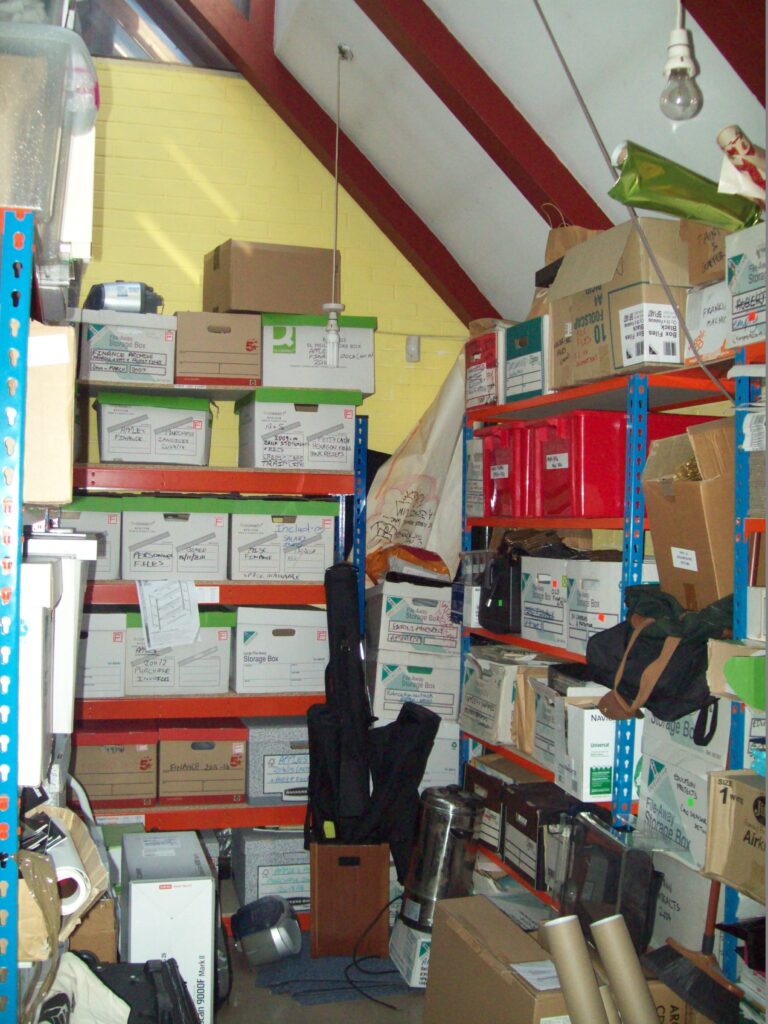
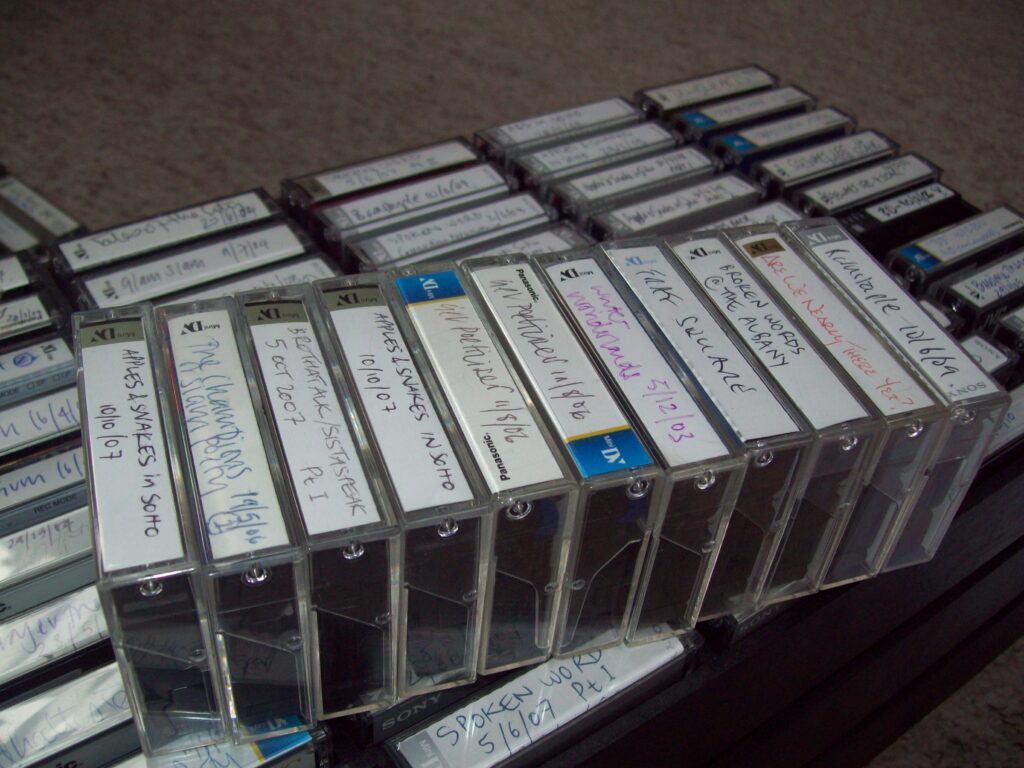
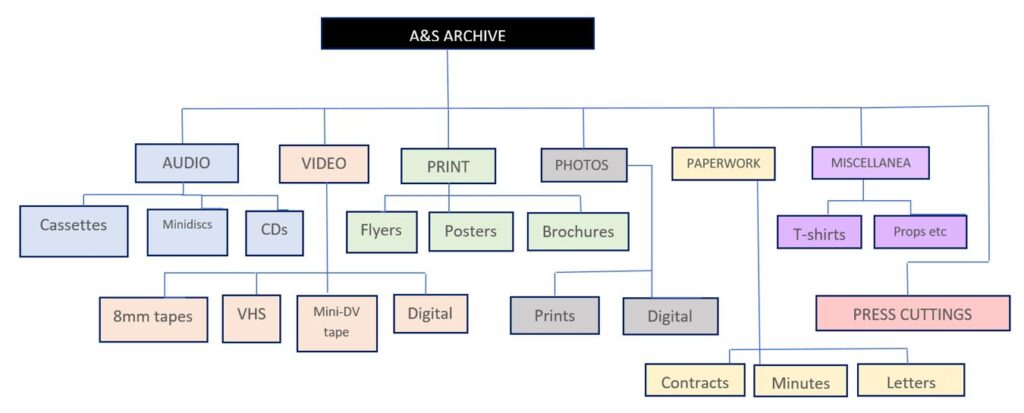
[4]This has been visible with ELO’s, thus the Electronic Literature Organization’s, archive of e-literature called ELA https://eliterature.org/electronic-literature-archives/, or Poetry Off the Page’s project partners at Spoken Word Archive, a collaboration with the UK poetry organizer Apples and Snakes, see https://www.spokenwordarchive.org.uk.

[5]See https://poetryoffthepage.net/project-bibliography/.

[6]This blog post builds upon my PhD project, for which I chose to follow a multiple-step methodological approach that will be discussed in a soon-to-be published book. For it, I specifically chose the term multimodalpost-digital ethnography as an extension of digital ethnographic methodology to instapoetic media art and instapoetry.

[7]For additional information, readers are advised to consult handbooks such as Monique Hennink’s, Inge Hutter’s, and Ajay Bailey’s Qualitative Research Methods for an overview on possible research design and for various types of toolkits such as codebooks or guides on field note–taking (for quantitative instruments like software program uses for scalable data visualizations see e.g. Jonathan Bowen and others).

[8]I borrow this term from ANT, that is Actor-Network-Theory by sociologist Bruno Latour (“Reassembling the Social.”)

[9]A methodological inclusion of online and offline spaces is also present in Liz Przybylski’s Hybrid Ethnography.

[10]See https://ec.europa.eu/assets/rtd/ethics-data-protection-decision-tree/index.html.

[11]See Digital Ethnography Collective: https://zoeglatt.com/?page_id=545; Digital Ethnography Initiative: https://digitalethnography.at;Emerging Technologies Research Lab: https://www.monash.edu/emerging-tech-research-lab/research/research-themes/research-methods.

[12]https://www.poetry-digital-age.uni-hamburg.de/en/forschung/laufend/social-media-poetry.html (abstract).

[13]See https://dlcplus.org with Tanja Grubnic, Camilla Holm Soelseth, Kiera Obbard, and Hannah Jorgensen.

[14]See https://www.instagram.com/ercpoetryda/reels/.

[15]See https://www.instagram.com/poetry_offthe_page/reels/.

The Significance of Breathing in Poetry Performances

by KILA VAN DER STARRE, Utrecht University

What is the function of breath in poetry performances?

In this contribution, I investigate the significance of breathing in the recitation of poems. As a theoretical starting point, I use the typology introduced by modern literary scholar Yra van Dijk in her dissertation Leegte, leegte die ademt. Het typografisch wit in de moderne poëzie (2006) (Emptiness, Emptiness That Breathes. The Typographical Blanks in Modern Poetry). In her work on the functions of white space in modern poetry, she focuses on the typographic blank spaces on the page that surround a poem, such as at the beginnings and ends of lines and in empty lines. Her research offers tools to explore emptiness and silence in poetry. According to her – and to the poets she studies – these concepts are related to breathing, which the title of her study indicates. In her analyses, she explicitly links blank spaces with breath several times (Van Dijk 231, 245, 255, 258, 365).

In this blog post, I focus on the self-reflexive, rhythmic, theatrical and genre-characteristic role of breathing. This contribution is an abridged version of a Dutch article I wrote on this topic for the journal Spiegel der letteren.[1] I aim to foreground the diverse functions of breath in live poetry performance – specifically self-reflexive, rhythmic, theatrical, and genre-characteristic breath – to demonstrate how these forms of breathing are not only integral to the expressiveness and interpretation of poetry, but also central to understanding the material and performative dimensions of contemporary poetic practice. My analysis positions these categories at the heart of performance poetry studies, arguing that breath itself becomes a primary vehicle for meaning-making on stage.

Poetry Performances and Breath

The corpus of this exploratory research consists of the poetry readings which took place during the past five editions[2] of the well-known De Nacht van de Poëzie (The Night of Poetry), an annual event in TivoliVredenburg in Utrecht, the Netherlands. For my research, I investigated almost a hundred poetry readings in total, a total of over fourteen hours of video material. This corpus offers a collection of poetry readings that are diverse in terms of poetry subgenres, performance styles, themes, and form. It includes more traditional performances (paper-oriented recitals by poets who stand behind a lectern), light verse and children’s poetry performances (including more outspoken and theatrical forms of performance), and spoken word or poetry slam performances. The collection of poets in the corpus also shows diversity in terms of gender, age, cultural identity, nationality, variant of spoken Dutch (Dutch, Belgian and Surinamese Dutch), and other languages (including Arabic, English, French, Spanish and Sranantongo). This diversity in performers is likely to produce a wide range of practices of and engagements with breath. For example, I have found that one specific type of breathing –frequently inhaling at surprising moments in the syntax – is related to genre, gender, and cultural identity. In this corpus, this is only performed by female spoken word artists of colour (see the category ‘Genre-Characteristic Breath’ below). 

Close Listening to Audiotexts

This research adopts the method of “close listening,” first proposed by Charles Bernstein and further refined by Julia Novak, to analyse poetry performances. Close listening means attending to every element of a live poetry reading: not only verbal features such as rhyme or meter, but also intonation, rhythm, and vocal timbre. Importantly, this approach considers nonverbal vocalisations like gasps, coughs, hesitations, and, most notably, breath – sounds that do not form words, yet contribute meaning to the performance (Bernstein 13-14).

Bernstein argues that such “extralexical” elements, i.e. sounds outside the lexical content of the poem, are nonetheless “not extrasemantic,” as they open new possibilities for interpretation (Bernstein 5). Expanding on this, Novak distinguishes between verbal and nonverbal elements, drawing on Fernando Poyatos’s theory of “paralanguage.” Paralanguage includes features like silence and hesitation, phenomena in which breath plays a vital role and which shape listeners’ experiences (Novak 75–76).

In my project, close listening is applied to video recordings from De Nacht van de Poëzie Festival (Utrecht, 2019-2024), accessible via the YouTube channel of VPRO Poëzie (editions 37, 38 and 39) and the YouTube channel of the International Literature Festival Utrecht (ILFU) (editions 40 and 41). These “audiotexts” form my primary corpus, allowing for an investigation of how breath operates as a significant paralinguistic feature in live poetry performance (Bernstein 13).[3]

Due to the high quality of the video recordings, the poets’ breathing is perceptible both auditorily and visually. I was also physically present at all the mentioned editions of De Nacht van de Poëzie in TivoliVredenburg and can thus also use my personal experiences and memories of the live performances for my interpretation.

Such analytical challenges are well recognised in performance studies. Novak explicitly mentions that analysing paralingual aspects of poetry performances is challenging, because “there is no dictionary of non-verbal sounds: their meaning is often strongly context-dependent […] No tangible ‘grammar’ exists to regulate paralanguage” (76). In the case of breath, it is also essential to realise that performances by human beings without breathing do not exist. Breathing is, of course, essential for life in general and speaking in particular. This means that breaths in poetry performances vary in degree of meaningfulness and that this degree depends more on the listener’s interpretation than on the performer’s intention. According to Novak, the listener can draw conclusions in relation to emotions, attitudes and styles through paralingual elements of the performance that are not always consciously communicated by the speaker and that do not necessarily correspond with the speaker’s intended meaning (77). The non-verbal aspects of the audiotext therefore have a potential meaning that only takes shape in the context and can differ from listener to listener.

Research into Breath

The research presented here is part of a growing academic interest in breath within the humanities and beyond. Over the past ten years, four impactful global developments related to breathing have boosted this increase. The first is the global spread of COVID-19, a virus that is not only transmitted by breath but also impairs breathing, which some of the 65 million long COVID patients worldwide still suffer from (Davis et al.). The second development is the impact of the words “I can’t breathe” that George Floyd uttered in 2020 and which more than seventy other citizens in the US, more than half of them people of colour, had uttered over the past ten years just before being suffocated to death by police officers (Baker et al.). The third development is the increase of people drowning in the Mediterranean Sea (IOM) and the way in which the non-breathing of migrants who die in the sea has come to symbolise the global refugee crisis (Noeth et al.). The fourth development is the deterioration of air quality due to climate change, with social class and economic status having a major impact on the quality of the air a person breathes (Rentschler & Leonova).

There is also growing academic interest in the relations between these four medical, political, social, and ecological developments. The fact that all people on earth breathe, even though the capacity to breathe can vary enormously, has put humans on the map as “respiratory beings” and humanity as a group of “co-respirators”, as gender scholar Magdalena Górska aptly puts it in her book Breathing Matters (2016). Breathing connects these major developments in a globalised world: “‘I can’t breathe’ will become the condition of the world [if we] ignore the deadly warnings of climate catastrophe,” poet Ben Okri stated in The Guardian.

Academic interest in breath has also increased in literary studies over the past decade. The relationship between breath and poetry in particular has been investigated, yet often on a much more abstract level than the concrete role that breath plays in the global developments described above. It is typical of existing research into the relationship between breath and poetry to focus on breath as a theme, metaphor and symbol in poetry, especially in written form. This contribution also features a list of relevant resources on this topic.

Breathing is examined here not as a theme, metaphor, or symbol but as a tangible physical element that actively shapes meaning in poetry performances. Through close listening, this study explores breath as a paralinguistic feature functioning beyond the words yet still contributing significantly to the overall interpretation of the performance.

The Self-Reflexive Breath

The self-reflexive function of breath refers to moments when breathing draws attention to the poem’s own form and meaning-making processes. This occurs when the act of breathing is explicitly addressed or highlighted within the recited poem. This function comes into play when breathing is thematized verbally. In the multilingual Dutch, Arabic, and Spanish poem “Tong” (tongue), Nisrine Mbarki[4] draws attention to the many words that have to do with breathing and speaking, such as “trachea”, “larynx”, “vocal cords”, “chest”, “oral cavity”, “pronouncing”, “tongue”, “lips” and “language” (0:08-2:57).[5] Her recitation draws attention to the meanings of the words. Within this isotope of “bodiliness”, foregrounding takes place in both the area of the visual physicality of the performer – reinforced by gestures, for instance Mbarki pointing to the described body parts with her fingers and hand – and her auditory physicality: Mbarki’s breathing is particularly noticeable just after pronouncing the word “trachea”, just before “in my vocal cords” and just before “through my chest”. In these moments, the function of breathing is both thematic and iconic and it is relevant that the poem is heard and seen instead of read. This also makes breathing self-reflexive in this case, because they reveal something about the way in which the poem signifies (Van Dijk 14). The poem thematizes its own poeticity and expresses that both in form and content (29).

The Rhythmic Breath

In the editions of De Nacht van de Poëzie studied, many poets vary the rhythm of their performances with the help of breath. Sometimes, poets combine rhythmic breathing with other rhythmic physicalities. While pronouncing the words “the [inhalation] desolate [inhalation] homeless thousand dead again [inhalation] a thousand deaths more [inhalation] than a thousand deaths”[6] (1:29-1:34), Lisette Ma Neza[7] strikes her flat right hand on her chest with every strongly stressed syllable, accelerating slightly in her delivery and thus creating a rhythm.

In her encore,[8] Ma Neza also actively involves the audience in her creation of rhythm. “I don’t have a band with me,” she says at the beginning of her second performance, “so you’re my band, you’re going to snap your fingers [pause] but to a rhythm [laughs]”[9] (0:28-0:36). She then indicates a rhythm that the audience copies; throughout her performance, she sings and talks over that rhythm, with audible inhalations and exhalations that sound both on the beat and against the beat. When the content of the poem becomes more personal, direct, and painful – she discusses sexual violence among other topics – the collaboration with the audience ends. The room falls silent and Ma Neza’s sharp inhalations are audible in a way which is both emotionally charged and characteristic of spoken word recitations. The use of rhythmic breathing gives Ma Neza the opportunity to make connections between rhythm, interaction, affect, and genre. Her invitation to the audience to become a co-performer, a feature of many spoken word performances, creates space for the emergence of affect between her and the audience.

The Theatrical Breath

When breath is used theatrically, poetic recitation moves towards the genre of dramatic monologues. Often, there is emotion in the breaths, and the performance evokes associations with acting. For example, Mahat Arab[10] uses breath to create a theatrical effect that captures the disinterest, nonchalance, and denigrating attitudes of the French, Italian, and British colonists who redrew national borders in the homeland of Arab’s lyrical “I” (3:23-3:32). Arab does this by inserting pauses in his speech and emulating the body language and intonation of a theatre actor.

Babs Gons[11] uses theatrical breath in the following excerpt to emphasize the erotic charge of the poem:

[inhalation] and I lie behind you and I kiss paths over your back paths over which I want to [inhalation] wander for days and [inhalation] get lost because [pause] isn’t love nothing more than finding the way [inhalation] back home [pause] arriving home [inhalation] and when you place your lips on my skin then [inhalation] a hole grows underneath in which I disappear [exhalation][12] (1:47-2:05)

In this example, breath indicates the difference in tempo in both the actions described and the breathing associated with those actions. Breathing additionally reflects the time that passes in which emotions and physical feelings grow. The final exhalation also reinforces the meaning of “disappear” theatrically. Gons’ hand gestures, facial expressions and emotional intonations, in their deliberate deployments, are akin to those actors use on stage.

The Genre-Characteristic Breath

The moments at which speakers breathe can say something about the genre of poetry they are performing. Regarding the genre-characteristic function of breath, spoken word stands out in the corpus studied. Close listening shows that some spoken word artists use breath in a way that can be described as characteristic of the genre: inhalations are fast and loud, thus clearly audible, there is emotion in the inhalation in that it evokes associations with, for instance, agitation, exhaustion, or frustration – and  inhalations regularly happen in syntactically surprising places.

Outside the Dutch-speaking area, spoken word artists also use breathing in this way.[13] Hannah Silva calls this specific phenomenon in spoken word performances “phrasing that disrupts syntax” (Silva 314). They explain that “[i]t can be identified when the poet inserts a pause (and usually a breath) after rather than before words that mark a break in the syntax, such as conjunctions, pronouns and prepositions. The breath tends to come after a word that on the page would usually have a comma before it.” (Silva 314, original emphasis)

Lisette Ma Neza’s[14] breathing is an example of this genre-characteristic type of breathing, for example in the following performance:

[inhalation] the little sister [inhalation] who wanted to [pause] comfort her mama [inhalation] but didn’t know that she [inhalation] couldn’t comfort Rwandan mothers it started [inhalation] between Congo Burundi [inhalation] Tanzania and Uganda [inhalation] mama mia [pause] we are going [inhalation] into Rwanda [inhalation] the [inhalation] desolate [inhalation] homeless thousand deaths again [inhalation] a thousand deaths more [inhalation] than a thousand deaths German African East and I [inhalation] am the daughter of the refugee [inhalation, pause] I was born in the Netherlands [inhalation] yet made in [inhalation] Africa just too late I am an Afro-[inhalation]European [inhalation][15] (1:03-1:47)

This fragment features inhalations in syntactically surprising places, such as in “the [inhalation] desolate [inhalation] homeless thousand deaths again [inhalation]” and in ‘yet made in [inhalation] Africa,” while in other places, that is, positions that split syntactic units rather than mark their boundaries, the poet does not breathe where listeners would expect a breath to mark a full stop or other syntactic boundary, such as between “mothers” and “it”, and between “late” and “I”.

These inhalations in syntactically surprising places sometimes seem to stem from a desire to express emotion and to indicate time jumps, as in the example of Gons[16] (1:47-2:05), or to build tension and/or anticipation, as in “[pause] we are going [inhalation] into Rwanda [inhalation]” in Ma Neza’s performance. At other times, they seem to stem from the desire to have enough breath for a long stream of words that follows, like when spoken word artist Daniëlle Zawadi[17] breathes before and after “because” in the following fragment and then does not breathe for a long time, even when the syntax would suggest punctuation (e.g. between “tomorrow” and “pressure”): “[inhalation] because [inhalation] streets don’t meet each other but people do so I’ll meet you tomorrow pressure in the hand quickly being in each other’s arms [inhalation] strange eyes make us better [inhalation]”[18] (2:29-2:40).

According to Silva, the “phrasing that disrupts syntax” echoes “the rhetorical trope of the speech giver, the preacher, and the politician” (Silva 315). Although an influence of these roles can indeed be recognised in the aforementioned case studies from my corpus, I would like to emphasise that Silva also points out that when certain performance patterns are consistently used by a poet or a group of poets, these aspects do not always “communicate meaning alongside the content […] It has simply become the way that this mode of poetry is performed” (317).

The Meaning of Breath

Just like blank spaces in written poetry, breath in recited poetry “rarely [turns out to be] a mere emptiness or a silence”[19] (Van Dijk 383). If we take a step back and look at the aforementioned collection of categories, we see a structure emerge that divides the typology into subcategories based on the factors of form (such as the rhythmic role of breathing), content (such as focus on themes and topics through breath), audience (such as the theatrical role of breathing) and the relationship between all three, thus form-content-audience (such as the self-reflexive role of breathing). I reflect more extensively on this typology in my article in Spiegel der letteren.

Especially the category “Genre-Characteristic Breath” calls for follow-up research, specifically on the meaningful relationship between genre, breath, gender and cultural identity. The examples of that category in this corpus – in performances by Lisette Ma Neza, Daniëlle Zawadi and Babs Gons – show women of colour who use a similarly striking way of breathing in a spoken word tradition, occasionally inhaling in syntactically surprising places and not inhaling in syntactically expected places. According to Silva, this “phrasing that disrupts syntax” is one of three most prominent characteristics of “British spoken word voice” (Silva 308).[20] The similarities between these case studies and Silva’s description suggest that perhaps specifically Dutch-speaking women of colour are influenced and inspired by British spoken word artists and their “Poet Voice”. More research is needed to understand these relationships in more detail.

More generally, research on the meaningful role of bodiliness in poetry performances, with an emphasis on paralingual aspects of audiotexts, can provide more profound insights into the process of meaning-making in poetry off the page. This would form an extension of my previous research on poetry off the page like street poetry and Instagram poetry (Van der Starre 2021). The conclusion that breath contains many different types of meanings is promising for such follow-up research. The method of close listening has the potential to help researchers understand such meanings. Similar research could be carried out, for example, on tempo, volume, intonation, facial expressions, gestures and more paralingual aspects of poetry performances that, according to the analyses presented here, are sometimes related to breathing. This field of research is still largely open.

Further Reading

***

Dr. Kila van de Starre is assistant professor of modern literature at Utrecht University. She is specialised in modern and contemporary Dutch language poetry. In 2021 she defended her dissertation Poëzie buiten het boek. De circulatie en het gebruik van poëzie (Poetry Off the Page. The Circulation and Use of Poetry, with an English summary), which is available online as a free open access e-book. Her main supervisor was prof. dr. Geert Buelens and her co-supervisor was dr. Laurens Ham. Van der Starre received PhD funding from NWO (‘Promoties in de geesteswetenschappen’). She is interested in the ways people use poetry in their everyday lives, in poetry education and in the relationship between the medium of poetry and the meaning of poetry.

***

To cite this blog post: Van de Starre, Kila. “The Significance of Breathing in Poetry Performances.” Poetry Off the Page, 24 March 2026, https://poetryoffthepage.net/the-significance-of-breathing-in-poetry-performances/.

***

Works Cited

Baker, Mike, et al. “Three Words. 70 Cases. The Tragic History of ‘I Can’t Breathe’”. The New York Times, 29 June 2020, https://www.nytimes.com/interactive/2020/06/28/us/i-cant-breathe-police-arrest.html

Bernstein, Charles, editor. Close Listening. Poetry and the Performed Word. Oxford University Press, 1998.

Davis, Hannah E., et al. “Long COVID: Major Findings, Mechanisms and Recommendations”. Nature Reviews Microbiology, no. 21, 2023, pp. 133-146.

Górska, Magdalena. Breathing Matters. Feminist Intersectional Politics of Vulnerability. Linköping University Press, 2018.

IOM. “Dodelijkste jaar ooit voor migranten: Bijna 8.600 sterfgevallen in 2023”. IOM Nederland, 6 March 2024, https://iom-nederland.nl/nieuws/dodelijkste-jaar-ooit-voor-migranten-bijna-8-600-sterfgevallen-in-2023

Noeth, Sandra, et al. “Freedom of Breath”. Breathe. Critical Research into the Inequalities of Life, edited by Sandrah Noeth and Janez Janša. Transcript, 2023, pp, 54-83.

Novak, Julia. Live Poetry. An Integrated Approach to Poetry in Performance. Rodopi, 2011.

Okri, Ben. “‘I Can’t Breathe’: Why George Floyd’s Words Reverberate around the World”. The Guardian, 8 June 2020, https://www.theguardian.com/commentisfree/2020/jun/08/i-cant-breathe-george-floyds-words-reverberate-oppression

Rentschler, Jun and Nadezda Leonova. “Global Air Pollution Exposure and Poverty”. Nature Communications, volume 14, 22 July 2023, https://doi.org/10.1038/s41467-023-39797-4

Silva, Hannah. “British Spoken Word Voice”. Spoken Word in the UK, edited by Lucy English and Jack McGowan. Routledge, 2021.

Van Dijk, Yra. Leegte, leegte die ademt. Het typografisch wit in de moderne poëzie. Vantilt, 2006.

Van der Starre, Kila. Poëzie buiten het boek. De circulatie en het gebruik van poëzie. 2021. Universiteit Utrecht, PhD dissertation.

Page header by Daniele Levis Pelusi on Unsplash.


[1] In that article, I investigate the thematic, iconic, poetic, self-reflexive, temporal, rhythmic, liminal, grammatical, metaphysical, empty, genre-characteristic, form-technical, theatrical, affective, and ambiguating functions of breathing, the meaningful aspects of non-breathing, and the paratextual function of breath in poetry performances.

[2] By the last five editions, I mean the 37th in 2019, the 38th in 2021, the 39th in 2022, the 40th in 2023 and the 41st in 2024. In 2020, De Nacht van de Poëzie did not take place due to the COVID-19 pandemic.

[3] The timespan, mentioned in number of minutes and seconds, can be consulted via the URL in the corresponding footnote.

[4] “Nisrine Mbarki | 39e Nacht van de Poëzie.” YouTube, 2025, https://www.youtube.com/watch?v=zeoDQbxPzRc.

[5] Originally: “luchtpijp”, “strottenhoofd”, “stembanden”, “borstkas”, “mondholte”, “uitspreken”, “tong”, “lippen”, “taal”. These and all following translations are my own.

[6] Originally: “het [inademing] troosteloze [inademing] dakloze duizend doden weer [inademing] duizend doden meer [inademing] dan duizend doden.”

[7] “Lisette Ma Neza | 38ste Nacht van de Poëzie.” YouTube, 2025, https://www.youtube.com/watch?v=DoVQ8DFt_O0.

[8] “Lisette Ma Neza toegift | 38ste Nacht van de Poëzie.” YouTube, 2025, https://www.youtube.com/watch?v=DJCSs7hXDQM.

[9] Originally: “dus jullie zijn mijn band, jullie gaan vingerknippen [pauze] maar op een ritme [lacht].”

[10] “Mahat Arab op de 41ste Nacht van de Poëzie.” YouTube, 2025, https://www.youtube.com/watch?v=TAoCwHm3J_0.

[11] “Babs Gons op de Nacht van de Poëzie 2019 – VPRO Poëzie.” YouTube, 2025, https://www.youtube.com/watch?v=S2vsCsH-VKc&t=89s.

[12] Originally: ‘[inademing] en ik lig achter je en ik kus paden over jouw rug paden waarover ik dagenlang wil [inademing] dwalen en [inademing] verdwalen want [pauze] is liefde niets meer dan de weg [inademing] terug naar huis vinden [pauze] thuiskomen [inademing] en als jij jouw lippen op mijn huid zet dan [inademing] groeit daaronder een gat waarin ik verdwijn [uitademing]’.

[13] Amanda Gorman applied a similar type of breathing in her world-famous recitation of the poem “The Hill We Climb” during the 2021 inauguration of President Joe Biden and Vice-President Kamala Harris that put spoken word on the map internationally. For example: “[inhalation] the loss we carry a sea we must wade [inhalation] we [inhalation] braved the belly of the beast” (0:17-0:23) “Amanda Gorman recites stunning poem at Biden inauguration.” YouTube, 2025, https://www.youtube.com/watch?v=whZqA0z61jY.

[14] “Lisette Ma Neza | 38ste Nacht van de Poëzie.” YouTube, 2025, https://www.youtube.com/watch?v=DoVQ8DFt_O0.

[15] Originally: “[inademing] het kleine zusje [inademing] dat haar [pauze] mama troosten wou [inademing] maar niet wist dat ze [inademing] Rwandese moeders niet troosten kon het begon [inademing] tussen Congo, Burundi [inademing] Tanzania en Oeganda in [inademing] mama mia [pauze] we gaan [inademing] Rwanda in [inademing] het [inademing] troosteloze [inademing] dakloze duizend doden weer [inademing] duizend doden meer [inademing] dan duizend doden Duits Afrikaans Oosten en ik [inademing] ben de dochter van de vluchteling [inademing, pauze] ik ben in Nederland geboren [inademing] toch in [inademing] Afrika gemaakt net te laat ik ben een Afro-[inademing]Europeaan [inademing].”

[16] “Babs Gons op de Nacht van de Poëzie 2019 – VPRO Poëzie.” YouTube, 2025, https://www.youtube.com/watch?v=S2vsCsH-VKc.

[17] “Daniëlle Zawadi | 39e Nacht van de Poëzie.” YouTube, 2025, https://www.youtube.com/watch?v=Sn-i_J7oGKs.

[18] Originally: ‘[inademing] want [inademing] straten die ontmoeten elkaar niet maar mensen wel dus ik kom je morgen tegen druk in de hand gauw in elkaars armen begeven [inademing] vreemde ogen maken ons beter [inademing]’.

[19] Originally: ‘zelden louter een leegte of een zwijgen [te zijn]’.

[20] The other two are “consistent use of falling tones at the end of every phrase” and “a narrow range of pitch, clustering around a high tone” (Silva 308).

Deconstruction and the Spoken Word, or: Embracing Différ( )nce

by MARIE KREBS, University of Vienna

Deconstruction has sometimes been seen as a terroristic belief in meaninglessness. It is commonly opposed to humanism, which is then an imperialistic belief in meaningfulness. […] Deconstruction is not a form of textual vandalism or generalized skepticism designed to prove that meaning is impossible. […] Rather, it is a careful teasing out of the conflicting forces of signification that are at work within the text itself. If anything is destroyed in a deconstructive reading, it is not meaning per se but the claim to unequivocal domination of one mode of signifying over another. (Johnson 347-348)

Upon first glance, there appears to be a conflict between theories of deconstruction, which aim to de-familiarize and de-essentialize humanist epistemologies, and more author-centred or autobiographical reading practices, which focus on the humanist proliferation of the individual as the entity both producing and articulating meaning. The former work against assumptions of coherence, subjectivity, and notions of unified selfhood, while the latter at least partially rely on them. Within the emergent field of poetry performance studies, more author-centred approaches appear to dominate,[1] potentially because most poetry performance pieces are written, performed, and potentially even distributed by poets themselves (Novak 62, 51). The appeal of poetry performance and spoken-word poetry, particularly when it self-stylises as autobiographical, is frequently traced to its potential to make visible, tangible, and experientially salient the individuality of its author and thus provide an empathetic aesthetic education through teachingits audiences to identify with the lived realities of others (Osborne “Didactic Poetics” 413).[2] While work on deconstructive tendencies in poetry performance studies indubitably exists,[3] there appears to be some resistance to an outright engagement with deconstructive terminologies in such research because of the purported “absence of reference to the sonorous voice” (Silva “Defamiliarisation” 2) in writings by Jacques Derrida, the central figure of deconstructive thinking. However, in this essay, I argue that despite a seeming conflict between the project of deconstruction and (autobiographical) poetry performances’ centring of individual, agential meaning-making, there is much to be gained from drawing on both fields to propel critical engagement with categories of selfhood, identity, and truth beyond essentialist interpretations thereof. In fact, there are many primary and secondary texts which already display an undeniable deconstructive impetus,[4] which is why it may be useful to explicitly deploy deconstructive vocabularies to engender synthesis between the fields of deconstruction and poetry performance studies.

My argumentation is terminologically, methodologically, and epistemologically based in Derrida’s writings on “Différance” as well as (perhaps more implicitly) Barbara Johnson’s deconstructive pedagogies.[5] Both of these thinkers help to add much-needed distance between poetry performance studies as a field and the assumptions and pitfalls of author-centred approaches which focus primarily on the articulation of meaning instead of its construction. There is, from my vantage point, a fundamental value in introducing deconstructive frameworks to readings of poetry performance, particularly for texts which do not self-stylize as autobiographical. This synthesis may help to denaturalize enforcements of coherent subjecthood and individual cohesion. In this, the seeming dissonance between deconstruction and this field of application might be a point of generative friction instead of incommensurability. However, importantly, this should not be read as an attempt to abandon humanist modes of cultural production and reception or to supplant them with the purported meaninglessness of which deconstruction is so often accused (Johnson 347; see also Saïd xxix).[6] Instead, I want to open points of contact that might be explored in future research or have already been made yet not explicitly articulated through deconstructive terminologies. Below, I provide two interconnected working theses to suggest where exchange between poetry performance studies and deconstructive theories may not only be possible, but also greatly fruitful.

Thesis 1: Deconstructive terminologies can be effective in decentring binary relations between ‘truth’ and ‘fiction’ and thus allow for greater distance between author, performer, and lyrical persona.

As stated above, in poetry performance, poets often perform their own work. Because of this, audiences may assume that there is an autobiographical angle in performances, and thus level problematic expectations of ‘truth’ and ‘authenticity’ at them: the ‘I’ of the poem approximates that of the author’s own physical voice and thus, their poetry is evaluated differently than written works. In addition to writing and performing their texts, poets are expected to perform an authentic persona and a ‘likeable presence,’ i.e. one that audiences identify and sympathise with. Katie Ailes writes at length about the problematic (and often racialized) implications of this ‘authenticity effect,’ which is often articulated in demands for ‘true’ and ‘real’ performances of the self that centre ‘truth’ as a marker of quality (150). While telling one’s own story is an indubitably empowering act, as it lends visibility to those who have been forcefully made absent from canonized histories (i.e. racialized, non-male, LGBTQ+ or disabled individuals; Hartman 3), it is important not to level authenticity expectations at every text. In the case of racialized, Indigenous, and otherwise marginalized performers, for instance, ‘truth’ is sometimes a cypher for ‘trauma’, which can be mined and extracted by white Western readers to function as pseudo-ethnographic data: “[t]he subaltern can speak, but is only invited to speak her/our pain” (Tuck and Yang 813). Utilizing an approach grounded in deconstruction, however, could provide some valuable tools to destabilize a terminology of authenticity, which, while problematized at length within the poetry performance research discipline, retains a marked epistemological standing within discourses about poetry performance at large.

Poetry performance studies have utilized, explicitly and implicitly, a deconstructive impetus to centre the intricate fabric of meaning-making onstage. Julia Novak’s Live Poetry (2011) is the first study to propose a detailed terminology for each increment of meaning-making, from paratextual framings of poetry to vocal timbre as well as gestures and body language. Novak’s toolkit functions broadly in conjunction with myriad theoretical concepts, and, I argue, also accommodates a deconstructive terminology. For instance, in their work on defamiliarization, Hannah Silva utilizes a close reading of physical gestures and paratextual interventions, based on Novak’s terminology, in the performances of Lemn Sissay. Sissay, in his own words, deconstructs poetry performance traditions by working against audience expectations levelled at the poet as an affable, authentic individual who shares their individual life story onstage. Sissay interrupts his performances with (rather Derridean) false starts[7] and seeming failures or defamiliarizes gestures through repetition, for instance (Silva “Defamiliarisation” 2, 8, 17). While Silva does not explicitly claim a deconstructive focus, their analysis invokes deconstructive vocabularies and thus exemplifies how poetry performance analyses, attentive to the intricacies of performance and performer conventions, can discuss deconstructive gestures undertaken by poets themselves.

To push this existing body of work further, however, I suggest that it may be of use to explicitly name the deconstructive influences present in readings of poetry performances. For an illustration, I briefly turn to the Grenadian poet Merle Collins’ “Crick Crack,” which she delivered at an event staged by spoken word organization Apples and Snakes in 1992, and which overtly deconstructs the binary relation between ‘truth’ and ‘fiction’ in a postcolonial context.[8] The poem’s title is a reference to a Caribbean storytelling tradition, in which stories (particularly those about the trickster Anansi) end with the phrase “crick crack / monkey break he back on a rotten pomerack” (Baldwin par. 1).[9] Collins also explains in her paratextual framing that this phrase, often performed as a call-and-response (“I say crick / you say crack”), indicates that the story being told is fictional. In view of the poems’ sparse self-reference (“Once an African child told me” (Collins 195, emphasis added)), the autobiographical mode is, at best, tangentially evoked. Rather than showcase a narrative of self that centres on the personal truth of a sovereign subject, the poem alludes to historical ‘truths’ which are predominantly enforced throughout Eurocentric historiography – e.g. the ‘discovery’ of the Americas, or the abolition of slavery in the United States by Abraham Lincoln (who is described as a “tall, tall, tall white man / in a tall, tall, tall hat”). This is followed / preceded by the phrase “not a krik or a krak” – i.e., the poem indicates that the factuality of these events is, at the very least, debatable. At the same time, however, there is no outright assignment of fictionality to these items either. Instead, the poem places them in an in-between space, a third option between ‘truth’ and ‘fiction’.

This is reflective of an understanding of historiography being a highly constructed narrative which cannot be posited as a universal ‘truth’ of any kind, especially in a colonial context. What Collins’ text deconstructs, in this context, is the claim to unequivocal domination of Eurocentric historiography. While it may have been true that Columbus saw the Americas (or, more accurately, the Caribbean) for the first time in 1492, the poem implicitly refers to the fact that this is not the only truth in this context. All of the Americas were already inhabited; Indigenous populations had already known the land. In a similar vein, Abraham Lincoln’s abolishment of the legal frameworks of enslavement was only made possible because of the resistance of the enslaved population, global networks of solidarity and, to a degree, the allyship of (white) abolitionists. While the text does not outright place a “crick crack” next to these narratives, it comments on its absence, thus remaining suspended between reinforcing or denying their factuality. What is more, it does so in a way that is particularly suited for performance: Collins’ delivery of “Crick Crack” occurs in a humorous tone, with a sarcastic inflection on the rhetorical question “I say for true?”. I will discuss the performance aspects more under Thesis 2, but for now, it is important to note that part of the poem’s deconstructive thrust stems from its playfulness, the laughter it evokes, and the voices of the audience joining in on “crick crack.”

Collins’ text thereby sets itself apart from the epistemological violence of Enlightenment humanism, which suggests the existence of a truthful, objectifiable historiography. This reading is usefully traced through a deconstructive approach to categories of ‘truth’ and ‘fiction’. This mode of historicization, thoroughly inflected by the vocabularies of colonialism, has been criticized at length, not least by postcolonial thinkers Dipesh Chakrabarty (4) or Michelle Wright (40). Importantly, however, both these thinkers work at the intersection between poststructuralist and postcolonial or deconstructive and decolonial thought. In this, I want to stress that the value of deconstructive approaches should not be read apolitically, but significantly also in its potential to decentre the coloniality that is implicit in (some) humanist thought.

Thesis 2: Deconstruction and différance provide the vocabulary to consider oral modes of delivering poetry in their difference to written forms, yet they do not enforce a qualitative judgement in this regard.

Theorists of poetry performance have laboured for a long time to dispel the qualifying language of prescriptive literary studies, which somehow posits oral modes of poetic delivery as ‘lesser’ than printed poetry. This is a necessary argument; an overly zealous emphasis on print culture enacts racialized, gendered, and otherwise epistemic oppression in traditionally gatekept modes of production (Silva Live Writing 33; Dawes 44). However, it is also impossible to suggest that written and oral poetries function in precisely the same ways – in this case, différance may provide a prism through which difference can be acknowledged but not hierarchized, i.e. that allows for examinations of the specificities of delivery forms without arguing about the superiority of one or the other. A deconstructive consciousness may thus help to tease apart the congruent, conflicting, or mutually constitutive mechanisms of meaning-making through spoken and written poetries.

This argument is based more directly in Derrida’s “Différance,” in which he refers to his “discreet graphic intervention” (3) explicitly as a contrast that can be seen but not heard: It is impossible for a listener of his lectures to discern whether he is referring to ‘différance’ (his neographism) or ‘différence’ (the ‘correct’ French spelling), which is why it has to be verbalized as ‘différance-with-an-a’ or ‘différence-with-an-e’. Thus, the word itself needs written modes to produce difference. At the same time, however, the written version ‘différance’ does not explicitly transport the ambiguity, simultaneity, deferral, and overlapping or conflicting meanings of the term (4). Only when voiced, its dimension of simultaneity (in the parallel evocation and existence of both difference and deferral) can be grasped. This indicates that deconstructive thinking does not assign orality or orthography a subordinate or dominant role in the cosmos of communication. Rather, it acknowledges that an utterance is very much defined by how it is uttered; i.e. that the medium is (part of) the message.

Analogously, it can be posited that performed poetry and written poetry carry respective absences and presences that function in dialogue and conflict with each other. For instance, Merle Collins’ “Crick Crack,” as noted above, exists both in a written version from 1996 and a performance in the Apples & Snakes Archive from 1992. Neither can be posited as a deficient variant of the other – they are simply two texts, closely resembling each other, but articulated in different ways and thus expounding different meanings. In Thesis 1, I argued that the poem humorously refers to practices of Eurocentric historicism. However, here, I aim to illustrate that the performed poem, read parallel to and in conflict with the printed version, articulates “différance” in a way that dispels hierarchical thinking about the written/spoken divide.

Collins’ delivery of “Crick Crack” effectively utilizes the affordances of poetry performance through its navigation of vocal timbre, intonation, and a reliance on collectively uttered call-and-response forms of “crick crack, monkey break he back on a rotten pomerack.” Through this, I argue, the text becomes différance performed. It functions as a carrier of difference on the one hand, as the performance creates a humorous, lightly sarcastic tone that is not clearly present on the page. Furthermore, the recording also features laughter from the audience which stress the text’s playfulness. In this regard, the difference to the page version of the poem lends more impact to the cursory reading I provided under Thesis 1: the tonal delivery destabilizes the idea of clearly delineable ‘truth’ and ‘fiction,’ as the laughter following the sarcastic “I say for true?” stresses the outlandishness, from a non-white/non-European vantage point, of claiming that North America was discovered in 1492, for instance. On the other hand, deferral is also enacted through Collins’ performance in that the ‘event’ character of the text may not make it possible for listeners to grasp ‘the entirety’ of the poem. Complete reading is deferred in that sounds are muffled by laughter; the poet omits verses from the printed poem (or perhaps adds more verses for the printed version?); listeners may get distracted and miss a few lines. “Crick Crack” is différance: In performance, it is experientially different from a written poem and simultaneously enacts deferrals of meaning, all at the same time, in its artistic complexity and articulatory specificities. Deploying Derrida’s deconstructive vocabularies, in this sense, addresses a facet that poetry performance studies have always been aware of – that written and spoken poetry are not the same and that neither one is a deficient variant of the other – and expands the critical vocabulary used to trace the meaning-making mechanisms of poetic texts.

Embracing Différ( )nce

Ultimately, there is no single way to productively read (with) poetry in performance. It is certainly useful for critical engagements to operate from a biographically situated standpoint, in which the performer’s individual identity and articulatory agency are centred; however, I argue that it is equally fruitful to approach texts with a deconstructive framework. This, I believe, creates necessary and important distance between notions of unified ‘selfhood’, which are too often inflected by the language of Enlightenment coloniality, and the poet-performer, who writes themselves live and onstage.

The two theses above suggest some of the ways in which it may be useful to work with and through Jacques Derrida’s différance, which articulates the importance of acknowledging the simultaneous existence of different subjectivities and meanings. I hope that in this article, I have managed to open potential fields of contact between deconstructive theories and the field of poetry performance studies and to contribute to this rapidly expanding field by arguing against a sense of theoretical incommensurability and for an ultimate embracing of both différance and difference.

***

Marie Krebs (she/her) is a doctoral candidate and university assistant at the University of Vienna, Austria. Her current research focusses on the politics and poetics of contemporary genre film, television, literature, and audiodrama, primarily within the realm of horror. Her PhD thesis will examine and theorize the temporalised and temporalising aesthetics of 21st-century horror across multiple media contexts.

In addition, she works as an administrative and research assistant for the ERC/FWF-funded project “Poetry Off the Page”, which investigates the history of UK and Irish spoken word poetry and poetry performance from 1965 to the present day.

***

To cite this blog post: Krebs, Marie. “Deconstruction and the Spoken Word, or: Embracing Différ( )nce.” Poetry Off the Page, 23 October 2025, https://poetryoffthepage.net/deconstruction-and-the-spoken-word-or-embracing-differ-nce/.

***

Bibliography

Ailes, Katie. “‘Speak Your Truth’: Authenticity in UK Spoken Word Poetry.” Spoken Word in the UK, edited by Lucy English and Jack McGowan, Routledge, 2021, pp. 142–53.

Baldwin, Lenore. “Crick Crack Money Break His Back.” Naturaleza, 2008, https://naturalesa.wordpress.com/2008-writing-about-nature-pages/crick-crack-monkey-break-his-back-lenore-baldwin/.

Chakrabarty, Dipesh. Provincializing Europe: Postcolonial Thought and Historical Difference. Princeton University Press, 2020.

Collins, Merle. “Crick Crack.” Conjunctions, vol. 27, 1996, pp. 193–96.

—. “Crick Crack.” Apples and Snakes Archive, Master, Cassettes, 1992, 3 Merle Collins Progress, 00:00-05:15.

Dawes, Kwame. “Black British Poetry, Some Considerations.” Wasafiri, vol. 18, no. 38, 2003, pp. 44–48.

Derrida, Jacques. Margins of Philosophy. University of Chicago Press, 1982.

Hartman, Saidiya. “Venus in Two Acts.” Small Axe, vol. 12, no. 2, 2008, pp. 1–14.

Johnson, Barbara. “Teaching Deconstructively.” The Barbara Johnson Reader: The Surprise of Otherness, edited by Melissa Feuerstein et al., Duke University Press, 2014, pp. 347–56.

Novak, Julia. Live Poetry: An Integrated Approach to Poetry in Performance. Brill, 2011.

Osborne, Deirdre. “Black British Writing: Benjamin Zephaniah’s Didactic Poetics.” The Cambridge Handbook of Intercultural Communication, edited by Guido Rings and Sebastian Rassinger, Cambridge University Press, 2020, pp. 412–31.

—. “The Body of Text Meets the Body as Text: Staging (I)Dentity in the Work of SuAndi and Lemn Sissay.” Crisis and Contemporary Poetrs, edited by Anne Karhio et al., Palgrave, 2011, pp. 230–47.

Phillips, John W. P. “The Poetic Thing (On Poetry and Deconstruction).” Oxford Literary Review, vol. 33, no. 2, 2011, pp. 231–43.

Saïd, Edward. Orientalism. Vintage Books, 1979.

Silva, Hannah. Live Writing: A Psychophysical Approach to the Analysis of Black British Poetry in Performance. 2018. University of Stirling.

—. “Lemn Sissay: Defamiliarisation and Performed Palimpsests.” Journal of British and Irish Innovative Poetry, vol. 12, no. 1, 2020, pp. 1–29.

Spivak, Gayatri Chakravorty. An Aesthetic Education in the Era of Globalization. Harvard University Press, 2013.

Tuck, Eve, and K. Wayne Yang. “Unbecoming Claims: Pedagogies of Refusal in Qualitative Research.” Qualitative Inquiry, vol. 20, no. 6, 2014, pp. 811–18.

Wright, Michelle M. Physics of Blackness: Beyond the Middle Passage Epistemology. University of Minnesota Press, 2015.

Page header by Nick Fewings on Unsplash.

This blog post is part of a project that has received funding from the European Research Council (ERC) under the European Union’s Horizon 2020 research and innovation programme (Grant agreement No. 101002816).


[1] For instance, see Andrea Brady’s Radical Tenderness (2024) or Deirdre Osborne’s work on Benjamin Zephaniah (“Didactic Poetics” 2020) or SuAndi and Lemn Sissay (“Staging Identity” 2011).

[2] It is worth noting that particularly Gayatri Chakravorty Spivak has problematized the concept of ‘aesthetic education’ extensively, as it functions as an extension of Enlightenment-imperial epistemology (9).

[3] For instance, see Silva (“Defamiliarisation” 2020).

[4] Importantly, deconstruction should be understood as an aesthetic practice by authors and artists instead of an act inflicted upon texts by critics – primarily because the latter would imply a violence not unlike the “textual vandalism” (Johnson 347) of which deconstruction is accused. A deconstructive reading utilizes terminologies of deconstruction to trace a text’s conflicting, overlapping, or parallel lines of meaning.

[5] The overall pedagogical focus of deconstruction is explicated in detail by Phillips (235).

[6] For examples of this, one might look toward the utterly scathing obituary “Why I won’t be mourning Derrida” by Johann Hari (https://www.independent.co.uk/voices/commentators/johann-hari/why-i-won-t-be-mourning-derrida-543574.html), which makes a strawman-shaped argument about the seeming ‘meaninglessness’ of postmodernism and calls Derrida, with palpable malice, “the mad axeman of Western philosophy.” 

[7] Particularly in “Différance,” the false start plays an important role. The text repeatedly gestures at ‘beginning’ through phrases like “first let us” (8) or “first off” (5) almost halfway through the text, yet the beginning is perpetually deferred.

[8] This reading is based on an audio-only recording taken from the Apples and Snakes archive. Therefore, I unfortunately cannot rely on any imagery from the event, but the sound recording alone provides many fascinating leads for analysis. However, for any transcribed portions, I do rely on a printed version of the poem from 1996, in which the spelling varies between “crick crack” and “krik krak”.

[9] There are many variations on “crick crack,” cf. also Haitian-American author Edwidge Danticat’s short story collection Krik? Krak!. In this article, I mostly use Collins’ spelling of “crick crack” for the sake of consistency, except in verbatim quotations where it is spelled “krik krak” in the printed version.  

Spoken Word Poetry and the Wonder of the Archive

Spoken Word Poetry and the Problem Wonder of the Archive

by SHEFALI BANERJI, University of Vienna

“Archives can […] open a metaphorical window onto the past” (04:24-04:28)“Archives are the first draft of history” (09:14-09:17) (Sara Wheeler, “The Joy of Archives”

Introduction

I arrived at the writing of this blog entry out of a desire: a desire to address the dearth of poetry performance archives in the UK, suggesting (however subtly) it was a matter that required ‘urgent fixing’. Hence the title’s erstwhile declared, now discarded, ‘problem’. This approach stemmed from a reverence for the archive, mostly institutional archives, which I had inherited in the course of my university education. However, over the past three years, as my understanding of archives and the associated methods of engagement evolved, so did the intent of this blog entry. This entry now seeks to explore the wonder of and potential for archival research in poetry performance studies. The aim here is twofold: 1) To reflect on the evolving role of archives in poetry performance studies and how they shape legitimacy, memory, and scholarly practice; 2) To suggest alternative archival methodologies beyond institutions (personal collections, community-created repositories, and practices of listening and documentation that resist the idea of a single ‘official’ record). Here, I am only concerned with archives containing audio-visual recordings of poetry performances, rather than ephemera and interviews, since these recordings serve as the primary material for my project, and are crucial for close analysis and critical study. My doctoral project investigates the origin, development and influences of spoken word theatre in the UK and is part of the “Poetry Off the Page” project at the University of Vienna, directed by Julia Lajta-Novak.

On Archives

Archives engender legitimacy. They not only record but write histories. So, what are archives? Achille Mbembe considers the dual nature of the archive – first, as a brick-and-mortar building, an institution, a relic of architecture; and second, as documents, or fragments of documents, or the spectre of a past, that dwells in the institution and gives it meaning (19-20). Similarly, Laura A. Millar defines archives in three primary ways:

1. Documentary materials created, received, used and kept by a person, family, organization, government or other public or private entity in the conduct of their daily work and life and preserved because they contain enduring value as evidence of and information about activities and events. 2. The agency or institution responsible for acquiring and preserving archival materials and making those items available for use. 3. The building or other repository housing archival collections. (4)

In this entry, I am concerned more with the second and third classifications, that is, organisations and entities who acquire and archive materials as well as the repositories and platforms holding these materials. However, the joint power of all three components of archives defined by Millar elevates the archive’s status, entangling it in bureaucratic rituals of safeguarding and seeking, of inclusion and exclusion. Herein lies the paradox of the archive. In trying to preserve certain records, it chooses to forego others. Mbembe informs us: “The archive, therefore, is fundamentally a matter of discrimination and of selection, which, in the end, results in the granting of a privileged status to certain written documents, and the refusal of that same status to others, thereby judged ‘unarchivable’” (20). The unarchivable and the unarchived are what become forgotten histories. 

However, alternative archives exist. Whether manifesting as community archives, self-archives or accidental ones, there is room for alternative histories to be recorded. In a performance practice such as spoken word poetry, which has its origins in countercultural movements within the practice of poetry as an art form, alternative archives appear to be more effective than institutional ones. While institutional archives could imply different things for different disciplines, in this blog entry, institutional archives “are defined as repositories that operate within the traditional archival framework and are attached to larger organisations such as government archives, university archives, and historical societies” (Galper). This categorisation also includes public libraries.

In the context of institutional archives in the UK, while the British Library’s Sound and Moving Image Collection, the National Poetry Library, the Scottish Poetry Library and the National Library of Wales hold some audio-visual poetry performance recordings from the past few decades, there are significant gaps that make tracing the history of poetry performance in the UK a task laden with frustration. For the most part, poetry performance has remained unarchived, owing to, firstly, its marginalised status within both poetry and performance studies; secondly, it having been considered inchoate for decades, stuck in a perpetual state of nascency, forever in the ‘now’, such that the archival fever never arrived in its full force. Nicky Marsh et al. write of this unarchived history in “‘Blasts of Language’: Changes in Oral Poetics in Britain since 1965”:

Since the proliferation of readings and other more performative, theatrical, and musical forms of poetry events has not attracted historians, much of this work is already lost—neither recorded nor reviewed, despite its evident importance for poetry, for both poets and audiences. (46)

If the history of poetry performance or spoken word poetry in general is cast with gaping holes, institutional archival traces of spoken word theatre are even more difficult to come by. Spoken word theatre is an art form comprising shows that are typically hour-long in duration, written and performed by poets themselves in their customary oratory styles, incorporating poetry performance. The art form arrived in the UK in the 1990s and its scope ranges from one-person shows with minimal or no props to complex, multimedia productions. Since my research is focused on spoken word theatre, it is important for me to examine archival material, especially audio-video recordings, pertaining to the art form. The next section of this blog, for this reason, relates my experience of looking for and working with audio-visual archives of spoken word theatre. The typology of archives found and the associated methodology that arises out of it, which form the latter sections of this blog entry, however, can be applied to most poetry performance research.

Journeying into Performance Archives

As noted earlier, my project traces the origins, developments and influences of spoken word theatre in the UK. For such historical research, engaging with archives is crucial. If one has not familiarised themself with the carefully curated records of an art form’s past, how could they possibly imagine untangling its process, progress, and presence? I started working with archival material within the first few weeks of beginning my PhD, thanks to the work done by the Poetry Off the Page team previously. In November-December 2021, the PoP team undertook a research trip to the archives of our project partner in London, the British poetry organisation Apples and Snakes, and worked with its archivist Russell Thompson to procure digitised audio-visual recordings of poetry performances. Apples and Snakes has recently started archiving four decades of their spoken word history on the Spoken Word Archive website. The vital digitised material procured through the efforts of the team made it possible for me to already delve into archival recordings and engage with spoken word theatre shows when I joined the team in June 2022. For this introduction, I am grateful. I was provided access to recordings of early spoken word shows such as Roger Robinson’s Shadow Boxer (2001) and Lemn Sissay’s Something Dark (2005), among others, through the Apples and Snakes archive. However, the London-centricity of the archive implied that I also had to look elsewhere, if I wanted to do justice to the geographical remit of my project. This led to my own archival journey, which complemented the interview element of my methodology. PoP PhD researcher Claire Palzer has already provided a detailed account of the team’s interviewing process and its importance to our project of creating a “‘historiophony’ of poetry performance in the UK and Ireland” (“The Role of Interviews”) in previous entries published in this blog series (“The Role of Interviews”, “Developing the Poetry Off the Page Interviews” and “Implementing the Poetry Off the Page Interviews”). In January and February 2023, I visited the archives of the British Library Sound and Moving Image Collections, Scottish Poetry Library and the National Library of Wales in search for audio-visual recordings of spoken word theatre. On my visit, I was able to procure historic material pertaining to poetry performance such as audio recordings of Cathal O’Searcaigh and Gwyn Parry’s readings from the “Poetry Meets Music” event at the 1999 Gwyl Ty Newydd Festival from the National Library of Wales, and poetry reading recordings of David Dabydeen, Lynford French, Edwin Morgan, John Agard, Liz Lochhead, Fred D’Aguiar and Grace Nichols from the “Rum and Scotch” event, hosted by Joy Hendry, at the 1986 Commonwealth Writers Conference from the Scottish Poetry Library. These recordings, especially those acquired from the Scottish Poetry Library, have proven useful to other researchers on the team for their research strands. However, I was unable to find any recordings of spoken word theatre shows at these archives. In fact, a significant number of the archival recordings for my project came from poets themselves, who often, though not always, maintain an audio-visual record of their own performances and productions. Additionally, where I was unable to establish contact with poets, I was able to find traces of their shows, or even full recordings on online platforms such as YouTube and Vimeo. A few of these recordings were uploaded by the poets themselves, others by the organisations that hosted the performances, some by the videographers of the performances, and others by untraceable users who may have either attended the event in person or received the recording through unverifiable channels. Thus emerged the outline of non-institutional repositories of poetry performance recordings, scattered all over the place (mostly the internet). The survey of institutional archives prodded me to consider archival research differently. I now looked for leads elsewhere. The resources I primarily consulted beyond the institutional ones then can be divided into three categories: community archives, self-archives and rogue archives. 

Before expanding upon these categorisations, a note on the materiality of archival recordings, that is, the first classification of archives. While deliberating the use of analogue resources vs. digital ones may be fruitful for discussions on other forms of archival resources, for audio-visual recordings of poetry performance, it is irrelevant. Most analogue items have been digitised by archives, institutional and alternative, due to the delicate conditions of cassettes, vinyls and other formats of recordings, and in a move towards digital preservation. To access audio recordings at both the Scottish Poetry Library and the National Library of Wales, I had to place requests in advance so that the materials could be prepared for digital access upon my visit. While the Scottish Poetry Library has digitised a lot of its analogue audio material in a joint project with the National Library of Scotland, at the time of my visit in January 2023, there were still some recordings that could not be accessed because they had not been digitised. At the National Library of Wales, I had placed my request to access audio material about 3 weeks in advance so that the recordings could be digitised into audio files from cassettes and CDs for research access. The British Library’s Sound and Moving Image Archive has also largely digitised its collections and on my visit in January 2023, I was able to access audio recordings of poetry performances on library computers.[1] In terms of materiality hence, all audio-visual resources I have ever consulted, whether in institutional archives or others, have been either digitally recorded or remediated to the realm of the digital. What is of importance here is the form of archive that holds this material and the kind of access they provide. For most institutional archives, definitely for the ones I visited, it was important to be present on-site to access audio-visual material, before requesting for copies to be made. As a global majority scholar who required a visa to even enter the UK, these archival trips were only made possible because the Poetry Off the Page project covered not only the travel but also the (hefty) visa costs. These forms of structural barriers can hinder a researcher’s ability to access even digital resources that are restricted by procedures of access at institutional archives. This is another way the institutional “archive preserves and reserves, protects and patrols, regulates and represses” (Voss and Werner i). Most alternative forms of archives, on the other hand, are more accessible or flexible in their modes of access. In the following section, I discuss the three categories of alternative archives I consulted in my project, as outlined earlier.

A Typology of Alternative Archives

Alternative archives allow researchers to not only engage in the wonder of archival research, but also to unsettle it by bringing in diverse voices that contest archival silences, where, “[b]y unsettling and speaking back to the silences found in institutional archives, [researchers and alternative archivists] contribute not only to ‘remember[ing] differently’ […] but also to creating more socially just futures that center previously marginalized or untold narratives” (Carvajal Regidor 109). Further, while institutional archives insulate the material from community members and partakers through restrictions and controlled access, alternative archives allow us to access them with ease as well as to come in contact with the people who constitute these archives. The quest to trace the origin and history of spoken word theatre brought me in contact with three forms of non-institutional archives that became key resources for my project, as I “[strained] against the limits of the archive to write a cultural history” (Hartman 11). These three types of archives, namely community, self and rogue, are discussed below.

1. Community Archives

Community archives emerge out of “the endeavour by individuals and social groups to document their history, particularly if that history has been generally subordinated or marginalised, is political and subversive” (Flinn and Stevens 3). It entails “the (often) grassroots activities of creating and collecting, processing and curating, preserving and making accessible collections relating to a particular community or specified subject” (5). These archives, aimed at filling gaps in cultural history recorded by institutional archives, depend on the (often unpaid) labour of community members. In the case of poetry performance, several such community archives exist. One vital archive is Apples and Snakes’ Spoken Word Archive, which has been discussed above. The archive preserves about four decades of the organisation’s history as well as records of their programming. The archive’s digitisation and cataloguing on the Spoken Word Archive website was overseen by Russell Thompson and also relied on volunteers. Thompson himself is not an archivist by training but a poet and former programmer for Apples and Snakes, who “entered archiving through a back door” (“2,500 Poets and Counting”), as he states in an entry in this blog series. More recent poetry organisations and communities formed post 2000s already maintain a digital record of their history and programming. For instance, Manchester-based Young Identity platforms videos of their shows and events on their YouTube page. Up north, Scotland-based Loud Poets has a comprehensive archive of their events, shows, poetry slams, films and more on YouTube. They also provide access to additional spoken word resources and exclusive videos through their Patreon. In Ireland, Cork-based Ó Bhéal has a substantial audio and video archive of their own dating from 2007 to the present-day[2]. Another remarkable initiative is poet-photographer-video editor Tyrone Lewis’s Process Productions which largely documents various spoken word events, performances and scenes in the UK. These are, of course, only few of the community archives of poetry performance found in the UK. There are many others. What differentiates community archives from institutional ones is that “[m]ost, if not all, community archivists are prompted to act by the (real or perceived) failure of mainstream heritage organisations to collect, preserve and make accessible collections and histories that properly reflect and accurately represent the stories of all of society” (Flinn and Stevens 6). These extensive archives maintained by organisations, communities (and even individuals) recording the poetry performance history (and present) of the UK, thus redress the informational gap of institutional archives, and are a valuable resource for poetry performance research. 

2. Self-Archives

Most poets and practitioners have a detailed record of their own performance journey. On the one hand, this aids them in tracing their own development as an artist. On the other, it builds a record of their work within a practice that is yet to be instituted into the formal architecture of an archive. “[I]n absence of any sustained attention or critical dialogue with the dominant institutions of the art world and given a systematic marginalisation over the years […] practitioners themselves have been obliged to act first as curators, and now as archivists” (264), observes Stuart Hall on the constitution of the African and Asian Visual Artists’ Archive in the UK. While stated in the context of a community archive, this statement not only holds true for self-archives but also the case of spoken word theatre, and poetry performance at large, since a) both the practice and the art form have been marginalised within the literary and performance establishments, and b) both have been hugely shaped and advanced by Afro-Caribbean and Asian diasporic communities in the UK. It is widely recognised now that both points are the mutual basis for each-other. Apropos the practice, spoken word theatre is a new and exciting, yet narrowly recorded art form. So, practitioners build their own digital record to sustain its memory, its history. Most contemporary poets have their work saved as audio/visual files in digital storage systems, whether it be cloud servers or their own devices. Many poets, such as Imogen Stirling, Clare E. Potter, Mark Blayney, and Ross McFarlane, were kind enough to share these performance files with me using file sharing systems during our interviews. Other poets also upload their work to YouTube or Vimeo and limit access to only those with a link to the video. Poets Luke Wright and Kevin P Gilday shared their work with me through this mode. Poets also archive their work on their personal websites. These websites often have a record of their appearances, their accomplishments and sometimes videos of their performances embedded into individual pages. For instance, Hannah Silva has embedded the archival recordings of their shows Schlock! (2014-2017) and Total Man (2014) on their personal website. The video recordings were originally uploaded to Vimeo by their publisher Penned in the Margins and then linked through embedding on Silva’s website. In our personal communication in November 2023, Silva expressed their intention of making more of their performance work publicly accessible on their website. In this way, the poet becomes a self-archivist, partaking in a democratic form of digital archiving, countering the structural deterrents of institutional ones.

3. Rogue Archives

Ephemeral traces of spoken word theatre shows surface all over the internet in the form of photographs, video snippets, reviews, social media posts and comments, and in some opportune instances, as full-length audio-visual recordings. These traces demonstrate the archival impulse of audience and community members of the art form. I borrow the term “archival impulse” from Hal Foster who uses it to refer to archival art created by artists out of fragmentary bits of history and creative work, where “these artists are often drawn to unfulfilled beginnings or incomplete projects – in art and in history alike – that might offer points of departure again” (5). While Foster uses the phrase to describe the conscious work of an artist, I use it to denote both the conscious and unconscious impulse of audiences and spoken word community members to weave traces of the performance, its existence, and their experience of it into public memory. Whereas community archives are driven by the desire to constitute an archive, to build a record of the art form’s history, rogue archives are born reflexively out of an enthusiastic impulse to record a specific work of art or an individual poet’s oeuvre. This impulse takes over enthusiasts of the art form, who then act as what Abigail De Kosnik calls “techno-volunteers” (46) and create rogue digital archives. According to De Kosnik, rogue archives are defined by:

constant (24/7) availability; zero barriers to entry for all who can connect to the Internet; content that can be streamed or downloaded in full, with no required payment, and no regard for copyright restrictions (some rogue archivists digitize only what is already in the public domain); and content that has never been, and would likely never be, contained in a traditional memory institution. (10)

While De Kosnik considers specific websites that collate different records of a specific subculture as rogue archives, to me, social media websites and video streaming platforms too can host rogue archives through their various features like playlists, dedicated accounts, story highlights, tags and so on. Scrolling through platforms such as YouTube, Instagram and Twitter (now called X), I have often stumbled upon photographs, video snippets, audience reviews of spoken word shows which became part of my corpus. The story feature on Instagram has often enabled me to virtually experience, albeit in fragments, a poet’s live show. I have borne witness to performances through a borrowed digital lens, through the eyes of an audience member via the virtual medium. And this audio-visual material has refined my own engagement with spoken word theatre. Sometimes I come across rare footage of poetry performances whose details are hard, though not completely impossible, to trace. For instance, this old video of Benjamin Zephaniah performing “Dis Poetry” at “Narberth Children’s Festival in West Wales” (sic) on YouTube is a valuable resource for our project that I found while looking for poetry performances through YouTube. Beyond audio-visual material, comments by audience members on poets’ social media posts after a show, detailing significant elements of the performance or memorable moments during the entire event, have also served as valuable information pertaining to the work. Indeed, using any of this material requires permission from the ‘uploader’ and then potential anonymisation. However, this gives us another chance to engage with the community, to build relationships, and adds to the wonder of archival research. After all, “[a]n archive too can be built; we can be more or less at home there, even if we assemble our own archives from bits and pieces that are available because of where we have been” (Ahmed 20). Here, researchers take on the role of techno-volunteers themselves as they collate these disparate resources into their own personal research archives. Where institutional archives fail, audiences, community members, enthusiasts (and researchers!) of spoken word step in to fill the gaps, each contributing a thread to the vast web of material that constitute unstable, volatile, yet autonomous rogue archives. [3]

Developing a Methodological Framework for Poetry Performance Archival Research

Alternative archives invite alternative methods of entanglement. Accessing alternative archives requires a methodological framework that considers the volatility of these archives and the distinct needs of the researchers. Indeed, there is no fixed method to undertake archival research. As Sara Ahmed proposes, “[m]aybe methods are not simply tools, or if they are tools, maybe they are different things depending on who uses them, with this who being understood as not simply an individual but someone shaped by many histories – intellectual, social, other” (17, emphasis in original). Our methods are informed by the type of material available and in the case of poetry performance and its limited records, it is imperative to broaden our approach. My archival research journey taught me to look for material elsewhere, everywhere, and to patch it together to form my corpus. While adopted intuitively, out of necessity, these methodologies do have names and frameworks of their own: namely, scavenger and patchwork methodologies. I was first introduced to scavenger methodology by poet and scholar liz breslin over personal communication in March 2024, who later also incorporated it in their conference talk exploring “the interactions between funding bodies […] and embodied poems in long-form spoken word shows” (Abstract Booklet 9) at the Poetry Off the Page, Around the Globe conference in June 2025. I further explored the framework using sociologist Sophie Marie Niang’s work, who posits that scavenging as a methodology “believes that the valuable knowledges created and shared by marginalised groups outside the bounds of academia need to be meaningfully engaged with, even if that requires bringing disparate or less traditional material together and finding new methods to work with them” (54–55). In the case of poetry performance archival research, especially in the case of audio-visual recordings, this means looking for sources beyond institutional archives, and often making peace with the fact that we might not have access to every detail pertaining to these informal resources and we might not always find what we need, especially when engaging with rogue materials on the internet. The idea however is “to look towards and meaningfully engage with existing material” while refusing the “imperative desire to know extensively, to catalogue and categorise” (Niang 54). Instead, we accept these imperfect resources and practice “[n]arrative restraint, the refusal to fill in the gaps and provide closure” (Hartman 12). The next step then becomes the reconciliation of these disparate materials, ranging across institutional and alternative archives. Scavenging can be complemented by patchworking as a methodology. Once we have gathered the bits and pieces and scraps of material, it is possible to patchwork our narrative using these sources. As Marc Higgins et al. explicate, “[p]atchwork methodologies take shape as key theorists and theories pierce, (un)stitch, snag, embroider, patch, and mend the fabrics of distinct research contexts, components, and commitments” (16). A typical metaphor for patchworking as methodology is the quilt. Psychologist and scholar Lori E. Koelsch proposes “virtual quilting as a research method and product” (825) which takes into account and builds upon all “the disparate elements that combine to form what is experienced as a unified identity” (823). To this end, patchworking for poetry performance research not only limits itself to stitching together disparate archival materials as primary resources for analysis but also considers these materials as vital sources for theory-building. For instance, a professional recording of a spoken word performance and an audience’s video clip of the same performance can offer us two perspectives and gazes/lenses through which to analyse the performance and contextualise it. It can then be linked to similar instances of informal and formal recordings to theorise upon the various ways performances are experienced by different partakers, and the theory can serve as batting of a quilt, wedged between layers of material. Here, the idea is not to disregard an amateur, informal recording to favour an official record, or to create hierarchies within primary material, but to treat both materials as equivalent sources that add to the fabric of theory and analysis. 

Both scavenging and patchworking as methodologies, the former more than the latter, has been intuitively deployed in my work, throughout my archival research journey, in varying degrees. (And my conversations with colleague Claire Palzer have revealed a similar process on her part.) However, what began as an intuitive response to scarcity of material has now evolved into a purposeful commitment to alternative methodologies, having found the terminology and framework that accommodates non-institutional archives and histories and helps us “[reassess] the roles that institutional archives play in our scholarship” (Carvajal Regidor 108). Throughout this entry, I have used disparate sources to build my narrative and to practice scavenging as a continuing research method. For a tangible example of a virtual patchwork quilt as a method, see Koelsch. With this blog entry, I hope I was able to offer you a glimpse into the wonders of archival research and of engaging with alternative sources and (hi)stories in poetry performance studies.

***

SHEFALI BANERJI is a poet-performer from India, currently a PhD researcher on the ERC project “Poetry Off the Page” at the University of Vienna. Their research investigates the origin, development and influences of spoken word theatre in the UK. Their recent academic publications include “Digital Spoken Word Theatre in the UK: Navigating the Theatre Screen with Rose Condo’s The Geography of Me” in Journal of Contemporary Drama in English, 13(1) and “Staging Intermediality and Queerness in Jasmine Gardosi’s Dancing to Music You Hate” in Open Library of Humanities Journal, 11(1).

***

To cite this blog post: Banerji, Shefali. “Spoken Word Poetry and the Problem Wonder of the Archive.” Poetry Off the Page, 28 August 2025, https://poetryoffthepage.net/spoken-word-poetry-and-the-problem-wonder-of-the-archive/.

***

Bibliography

“About”. I am Loudhttps://www.iamloud.co/about. Accessed 27 Apr. 2025.

Ahmed, Sara. “Introduction: A Useful Archive”. What’s the Use?, Duke University Press, 2019. usearch.univie.ac.at,https://doi.org/10.2307/j.ctv11hpr0r.4. Accessed 16 Feb. 2025.

“Benjamin Zefaniah Dis-Poetry”. YouTube, uploaded by Colin Riddle, 4 Dec. 2011. https://www.youtube.com/watch?v=Q2jSG2dmdfs.

breslin, liz. “Performing Bodies for Funding Bodies: A Performance Review.” In Poetry Off the Page, Around the Globe Conference Abstract Booklet, 2025, p. 9. Poetry Off the Page. https://popconf2025.univie.ac.at/wp-content/uploads/2025/06/POPAG-Abstract-Booklet.pdf. Accessed 22 Jul. 2025.

Carvajal Regidor, María Paz. “(En)Countering Archival Silences: Critical Lenses, Relationships, and Informal Archives”. Unsettling Archival Research: Engaging Critical, Communal and Digital Archives, edited by Gesa E. Kirsch et al., Southern Illinois University Press, 2023, pp. 107–27.

“Cyber-Attack Recovery Update”. British Libraryhttps://www.bl.uk/about/cyber-attack. Accessed 25 Jul. 2025.

De Kosnik, Abigail. Rogue Archives: Digital Cultural Memory and Media Fandom. E-book, The MIT Press, 2016. 

Flinn, Andrew, and Mary Stevens. “‘It Is Noh Mistri, Wi Mekin Histri.’ Telling Our Own Story: Independent and Community Archives in the UK, Challenging and Subverting the Mainstream”. Community Archives: The Shaping of Memory, edited by Ben Alexander and Jeannette A. Bastian, Facet, 2009, pp. 3–28. Cambridge University Presshttps://doi.org/10.29085/9781856049047.003. Accessed 18 Apr. 2025.

Foster, Hal. “An Archival Impulse”. October, vol. 110, 2004, pp. 3–22.

Galper, Hailey. “Archives Large and Small: Institutional Archives, Community Archives, and the Archival Gap”. Graduate Student Symposium, May 2017. COinShttps://cedar.wwu.edu/grad_conf/oral_presentations/oral_presentations/10. Accessed 18 Apr. 2025.

Hall, Stuart. “Constituting an Archive”. Third Text, vol. 15, no. 54, 2001, pp. 89–92. 

Hartman, Saidiya. “Venus in Two Acts”. Small Axe: A Journal of Criticism, vol. 12, no. 2, 2008, pp. 1–14. 

Higgins, Marc, et al. “De/Signing Research in Education: Patchwork(Ing) Methodologies with Theory”. Educational Studies, vol. 43, no. 1, Jan. 2017, pp. 16–39. DOI.org (Crossref), https://doi.org/10.1080/03055698.2016.1237867. Accessed 18 Apr. 2025.

“Home”. Welcome to Ó Bhéal – Fáilte Go Dtí Ó Bhéalhttps://www.obheal.ie/blog/. Accessed 26 Jul. 2025.

“Home”. Young Identityhttps://www.youngidentity.org/. Accessed 26 Jul. 2025.

Koelsch, Lori E. ‘The Virtual Patchwork Quilt: A Qualitative Feminist Research Method’. Qualitative Inquiry, vol. 18, no. 10, 2012, pp. 823–29. usearch.univie.ac.athttps://doi.org/10.1177/1077800412456957. Accessed 28 Dec. 2024.

Marsh, Nicky, et al. “‘Blasts of Language’: Changes in Oral Poetics in Britain since 1965.” Oral Tradition, vol. 21, no. 1, 2006, pp. 44–67, https://doi.org/10.1353/ort.2006.0016.

Mbembe, Achille. “The Power of the Archive and Its Limits”. Refiguring the Archive, edited by Carolyn Hamilton et al., Springer Netherlands, 2002, pp. 19–27. 

Millar, Laura A., editor. “What Are Archives?” Archives: Principles and Practices, Facet, 2017, pp. 3–22. Cambridge University Presshttps://doi.org/10.29085/9781783302086.005.

Niang, Sophie Marie. “In Defence of What’s There: Notes on Scavenging as Methodology”. Feminist Review, vol. 136, no. 1, 2024, pp. 52–66. usearch.univie.ac.athttps://doi.org/10.1177/01417789231222606. Accessed 21 Mar. 2025.

Palzer, Claire. “Developing the Poetry Off the Page Interviews”. Poetry Off the Page. 15 Apr. 2025, https://poetryoffthepage.net/developing-the-poetry-off-the-page-interviews/. Accessed 17 Jul. 2025.

—. “Implementing the Poetry Off the Page Interviews”. Poetry Off the Page. 3 Jul. 2025, https://poetryoffthepage.net/implementing-the-poetry-off-the-page-interviews/. Accessed 17 Jul. 2025.

—. “The Role of Interviews in Poetry Performance Research”. Poetry Off the Page. 1 Feb. 2024, https://poetryoffthepage.net/the-role-of-interviews-in-poetry-performance-research/. Accessed 17 Jul. 2025.

“What Is an ‘Alternative Archive?’” Searching for a Black Pacific: An Alternative Archivehttps://scalar.usc.edu/works/searching-for-a-black-pacific-/what-is-an-alternative-archive. Accessed 29 Nov. 2024.

“Spoken Word | Process Productions | England”. Process Productionshttps://www.processproductions.net. Accessed 26 Jul. 2025.

“Spoken Word Archive | Over 40 Years of Performance Poetry”. Spoken Word Archivehttps://www.spokenwordarchive.org.uk. Accessed 21 Jul. 2024.

Thompson, Russell. “2,500 Poets and Counting: My Life as a Spoken Word Archivist”. Poetry Off the Page. 2 May 2024, https://poetryoffthepage.net/2500-poets-and-counting-my-life-as-a-spoken-word-archivist/. Accessed 19 Dec. 2024.

Voss, Paul J., and Marta L. Werner. “Toward a Poetics of the Archive: Introduction”. Studies in the Literary Imagination, vol. 32, no. 1, 1999, pp. i–viii.

Wheeler, Sara. “The Joy of Archives”. A Point of View from BBC Audio, 14 February 2025.https://www.bbc.com/audio/play/m0027v4y. Accessed 10 Jul. 2025.

Thumbnail by Erol Ahmed on Unsplash

This blog post is part of a project that has received funding from the European Research Council (ERC) under the European Union’s Horizon 2020 research and innovation programme (Grant agreement No. 101002816).


[1] However, the British Library was cyberattacked in October 2023 (“Cyber-attack recovery update”), and on subsequent visits, I was unable to access any audio recordings.

[2] I was introduced to this archive by Claire Palzer.

[3] While digital archives in all their forms may seem more accessible and democratic than analogue ones, the unpredictability of the virtual medium as a whole make these archives volatile. As mentioned in Footnote 1, due to a cyber attack on the British Library in October 2023, visitors lost access to all digital material archived in the institution for months. For alternative archives not maintained by institutions, risks of losing access for good for researchers are higher. Websites falter, social media posts can be ephemeral, videos on YouTube and Vimeo disappear. Or, as is the case of a recent 2025 update, Vimeo in the UK and EU is no longer searchable. Researchers must take cognisance of the precariousness of digital material when making use of it, and where possible, have backup files, save offline versions and screenshots, and make notes to mitigate the loss.

Implementing the Poetry Off the Page Interviews

by CLAIRE PALZER, University of Vienna

“Interview research is a craft, which is learned through practising interviewing.” (Kvale xviii)

There comes a moment when preparing and thinking about doing something has fulfilled its purpose and you need to do said thing; for me, moving from interviews in theory to conducting interviews in practice was a nerve-wracking experience. Even now, over 30 interviews later, I have a healthy respect for the situation and for the many in-the-moment decisions that need to be made in order to make the interview into a generative and ideally enjoyable experience. And I am lucky enough to get to say that mine have been wonderful encounters that I am grateful for.  Following on from the first blog post about the Poetry Off the Page (PoP) interviews, this piece outlines many of the practicalities of conducting interviews as part of poetry performance research, including the stages of the interviewing process and the uses of these interviews in relation to the public.

The Interviewing Process

As a team, we discussed various facets of the interview process, both during our workshop with Rosa Reitsamer in November 2021 and during the development of our ‘critical path’. This document outlines the steps in our interviewing process, from approaching interviewees to organising and preparing for the interviews, conducting the interview, and processing it afterwards. Team members with interview experience shared their experiences with the rest of the team during this process. We also included our reflections about potential difficulties which could emerge in the process and how to address them. This guideline proved invaluable as more members joined the team in 2022 and 2023. Many of the points in the critical path are explored below.

The next step was to set the interviewing process in motion. As the opening quote by Steinar Kvale expresses, in order to learn how to interview, we had to actually approach interviewees, conduct interviews, and learn from those experiences. The active phase of the interview inquiry began in January 2022 when I conducted the first interview with the Irish poet Hazel Hogan via Zoom. This interview served as a trial run that we reflected on as a team afterwards. I was also the first person to conduct in-person interviews. In the spring of 2022, I interviewed 26 more individuals, both in person and online via Zoom, during a research stay in Ireland. As I was conducting these interviews, the initial interview guides were being revised, which accounts for some differences in questions between my early interviews and those conducted subsequently by myself and others.

Pre-Interview Procedure

Before interviews could take place, interviewees needed to be selected. This process was collaborative for those PoP team members focused on the UK spoken-word scene.[1] At various points throughout the project, researchers created lists of potential interviewees together, combining insights and interests from their own research strands with the overall aims of creating an oral history that included both well-recognised figures as well as more marginalised voices. There is no such thing as a complete (oral) history; nonetheless, we attempted to balance the perspectives in our collection by being attentive to differences in participants’ ages, periods of activity in the scene, regions of activity, performance styles, genders, and ethnicities.

My process of selecting interviewees was somewhat different from that of the rest of the team. Being the only researcher with a specific regional focus, namely on Northern Ireland and the Republic of Ireland, I was more independent in my choice of interview participants. During the initial months of my PhD project in 2021, I immersed myself in poetry performance recordings, read extensively, and created a comprehensive Excel sheet to track various performers and event series. Building on this foundational work, I began contacting poets who seemed to be central figures. Subsequently, I supplemented my judgement calls with the snowball sampling method (c.f. Noy), asking interviewees during the process to direct me towards other potential participants. As the events central to my work became clearer later in the project, I naturally interviewed participants involved in those events. Like the rest of the team, I also remained attentive to providing a broad sample of interviewees in relation to geographic and demographic features.

We had different approaches to contacting prospective interviewees, depending on whether we had previous contact with them before requesting an interview. If we did not have a connection to the participant, we sent an email based on a template which introduced the PoP project, explained our interest in speaking to them, and outlined the procedure. If the person expressed interest in the interview, we sent them the informed consent form and the participant questionnaire. We informed them that they could receive either the questions or the topic areas in advance if they wished, although we made it clear that they did not have to prepare anything ahead of time and were free to skip any questions they did not want to answer. We were unable to remunerate participants for their time, which we acknowledge made participation unfeasible for some. We are incredibly grateful to all those who donated their time to provide us with their invaluable contributions.

After this stage, the time and location were agreed upon. Considerations relating to the meeting place for in-person interviews were manifold. Ideally, interviews were conducted in quiet, neutral, safe, and easily accessible spaces. The best locations for audio recordings involved minimal outside noise and avoided echoes; however, since we lacked funding for studio recordings, small rooms in university buildings often turned out to be the best options in terms of sound quality. It was also crucial to consider the comfort and safety of both interviewees and interviewers when selecting a location. This ensured that interviewees did not have to travel extensively and that the spaces were suited to their needs. We conducted interviews in university rooms, libraries, cultural centres, and occasionally in cafés, although these were not ideal environments for sound. Other interviews involved travelling to participants’ homes when requested by the interviewee and deemed comfortable for the interviewer.

Before conducting interviews, each researcher performed additional research on the interviewee in relation to their work, including watching performances, reading their written works, and listening to other interviews, among other activities. As Ritchie recommends in his work on oral histories, “[i]nterviewers first get acquainted with the outline of interviewees’ lives and then allow them to fill in the details,” or more bluntly: “do your homework” (Ritchie 74). Based on our research, questions from the guide were adapted where necessary. Furthermore, the other members of the PoP team were informed about the interview and invited to submit specific questions they wanted the interviewer to ask. At this stage, we also identified questions that we considered particularly important based on prior research. This was essential because the interview guide was extensive, and if we had always posed every question, the interviews would have become unreasonably long; keeping them under two hours was challenging.

The Interview

On the days of the individual interviews, I reviewed the checklist that was part of the critical path. Depending on whether I was conducting the interview in person or online, the necessary steps I needed to take varied. For in-person interviews, I made sure that I had printed copies of the informed consent sheet and declaration of consent, as well as the interview guide. I usually brought a bottle of water for participants too. Importantly, I always double-checked the technical components: Did I have backup batteries for the audio recorder?[2] Was there sufficient space on the memory card? For Zoom-based interviews, I rechecked the technology: Was my internet connection stable? Had I sent the correct type of Zoom link (note: fully encrypted Zoom meetings cannot be recorded)? Sometimes, I triple-checked the recordings by conducting a trial recording with a friend before the interview. Preparing a list of last-minute checks was helpful, even if I couldn’t anticipate every circumstance. Then I waited at my computer or at the agreed-upon venue.

Once the interviewee arrived, either in person or online, the briefing phase began (cf. Kvale 55–56). In this phase, before starting the recording, I welcomed and thanked the interview participant, discussed the informed consent sheet with them, and answered any remaining questions before they signed it. In person, this was a relatively easy task. For virtual interviews, the signing of the documents usually took place before or after the interview. Processing paperwork digitally was sometimes challenging, as participants had different levels of familiarity with various technologies, which occasionally led to insufficiently filled-out documents or delays in response time. Technical challenges like this should be considered when planning an interview inquiry.

Often the briefing phase included explaining the origins of the PoP project and my connections to Ireland and poetry, as participants were interested in learning more about me. Sharing more about myself was essential for building a trusting relationship with the interviewees. I also detailed the recording process, either by explaining the Zoom procedure or by gesturing to the audio recorder positioned on the table between us. I informed the participants that they could pause the interview at any time for any reason and decline to answer any question. Moreover, mindful of the interviewees’ time, I made sure to check how much time they had for the interview, if this hadn’t been established previously. Once all these preliminaries were clarified, the interview officially began, and I started the recording.

The interview always began with the same introductory sentence: “This is [Interviewer’s Name] interviewing [Interviewee’s Name] on [Date] at [Time], and we are meeting at [Location].” After a brief welcome and thanks, I began with the introductory question about the interviewee’s history with poetry performance, which usually elicited a lengthy response that could then be built upon throughout the conversation. The rest of the interview followed the interview guide in terms of the questions and topics covered, but it was up to the researcher’s “judgement and tact how closely to stick to the guide and how much to follow up the interviewees’ answers and the new directions they may open up” (Kvale 56). For me, this freedom meant that I frequently changed the order of topics to accommodate the flow of conversation and asked follow-up and clarifying questions when appropriate or paused after an answer, since “[t]he quality of an interview relies not only on the questions posed; the way the interviewer reacts after an answer may be just as important,” as Kvale (65) reminds us.

In a similar vein, due to the nature of the qualitative interview as a conversation, it is the interviewer’s responsibility to make ethical decisions in the moment and navigate the conversation carefully (Kvale 29). This included sharing our own perspectives, allowing space for interviewees to express what they considered relevant, and responding sensitively to vulnerable acts of sharing without, as Jean Duncombe and Julie Jessop put it, “‘faking friendship’ in order to encourage the interviewee to open up” (119). As a team, we discussed various situations in advance that might require particularly sensitive responses or be especially challenging. Additionally, as a closely-knit team, we provided each other with a space to reflect on our interview experiences, the choices we made, and the questions that arose for us.

I usually ended the interviews by asking for suggestions of other people to talk to, as well as offering a final chance for poets to talk about their most recent and upcoming projects. This was followed by a thank-you, after which I stopped the recording.

After the interview recording was ended, there was a debriefing (Kvale 56), or a short period of informal chatting. During these moments, I reiterated my thanks, and the interviewees sometimes commented on how they felt about the process. When it felt appropriate, I inquired about potential archival material the interviewee had or had mentioned in the interview and whether I could receive access to it. Before parting ways, I told interviewees that they would hear from me in the future regarding the recording and that I would keep them updated on developments in the project.

Post-Interview Procedure

After the interview, the audio files were stored on a password-protected data server of the University of Vienna, accessible only to the PoP team. The researcher then listened to the recording before returning it to the interviewee via a password-protected online folder for their perusal. The interviewee had 14 days to decide how they wanted us to proceed with the data. Participants were informed about this in the consent sheet, which detailed the process as follows:

The post-interview emails sent to participants explained this procedure once more and included time stamps for passages that the individual researchers deemed especially worth re-listening to.

This procedure was developed to give participants control over their data (including the interview material itself), support our adherence to the General Data Protection Regulation (GDPR) of the European Union, and help us avoid potential libel claims. In accordance with the GDPR, we were transparent about the data we collected and its uses, and in alignment with the data minimization principle, we ensured that the data collected was related to the stated purpose (meaning, directly connected to the interview subject) (see also “GDPR” art. 5) . To ensure participant control, we provided the opportunity to approve the recording without additional changes (aside from those we deemed appropriate); they could have certain passages anonymised, allowing us to refer to them in publications without including those passages in the final public recording; they could have passages removed from the public files, and these would not be referenced by the PoP team in any publications; and, of course, they could withdraw their recording entirely.

We felt it was particularly important to give interviewees various ways of interacting with the recorded material, given the interview’s nature as an oral source and a more-or-less spontaneous offering of perspectives, insights, and stories. By providing these ways of interceding, we also hoped to retain as many interviews as possible. 

In my experience across 30 interviews, most participants only asked for minor changes. None withdrew from the process, and almost none used the pseudonymisation clause. The changes requested often involved removing opinions they felt were not stated in a representative way, streamlining their stories and arguments, removing inaccurate information, or smoothing over certain passages.

For the interviewer, the cutting process meant that while listening to the interview recording, we took notes on passages that we felt were particularly important to flag for participants to re-listen to, as well as those we wanted to exclude from the final file. Regarding the former, I often highlighted passages to interviewees when they had made comments during the recording that seemed to signal a reluctance to have this material published (e.g., “off the record”) or when they had shared something they might reconsider having disclosed so candidly. Concerning the passages we as researchers wanted to remove, these decisions were based on the GDPR data minimisation principle, potential libel, and other instances we judged to be sensitive. In practice, there were not many instances in which this type of intercession was necessary. The most common situation in my interviews was the use of incorrect pronouns for other poets. This was pointed out to the participants, and with their consent, we attempted to correct these instances by splicing sentences or removing the relevant passages. In my experience, most of the cuts I made were related to interruptions during the interview itself, such as closing windows, getting glasses of water, taking short breaks, or long pauses. In a few cases, I removed passages that referred to personal matters concerning third parties when the information shared seemed too private to be shared by the interviewee without the third person’s consent.

In addition to our editing process, which involved listening to our interviews carefully, we also created numerous supplemental text documents for our research. During the period when only my interviews had been conducted, I matched each of my questions with a timestamp in writing and added rough notes about the interviewee’s responses. At this point, we began thinking about transcripts, which had not been part of our original critical path but would surely make our interviews more easily searchable for our future research. In spring 2022, Marie Krebs, our research assistant, and I spent many hours transcribing two of my interviews in detail for our second workshop. However, we quickly discovered that this resource-intensive practice was not sustainable, given our aim of conducting 120 interviews for PoP. Therefore, we attempted to utilise speech-to-text software to create transcripts; however, this also proved rather difficult. Most options involved a breach of GDPR (data protection) regulations or did not produce transcripts of remotely usable quality. Eventually, the English Department’s IT expert at the time, Alexander Kurmayer, was able to create a private transcription server based on a speech recognition model called ‘Vosk’, which compiled semi-accurate text transcripts. We later progressed to using Microsoft Azure’s Batch Speech Recognition at Kurmayer’s recommendation, which further improved the quality of our transcriptions. These required only minimal editing, either by the interviewers themselves, sometimes in dialogue with the interviewees, or by Marie Krebs, which created helpful supplemental documents for each researcher. When it came to the actual interpretation and incorporation of interview material, however, we frequently returned to the audio files themselves to preserve the oral quality of our history and to pick up on nuances that cannot be perceived through written text alone.

We revisit our interviews often, especially when they become relevant to a smaller research idea, such as a conference paper, a podcast episode, a journal article, or a book chapter. For instance, the Poetry Off the Page Podcast serves as an ideal platform for sharing extracts from the interviews because the audio files can be integrated, allowing all the nuances of spoken language to come through. Incorporating interview extracts not only lets the interviewees speak for themselves but also creates a compelling listening experience.

In our written work, integrating interview quotes requires a more complex approach, as it involves a medium change. As Linda Shopes demonstrates in her work on oral history publishing,

editing for publication aims at making the spoken word […] accessible to the reader, more or less according to the conventions of written language. Yet it aims at doing so in a manner that remains faithful to the oral, to the narrator’s words and word order, speech patterns and rhythm, as well as to the sense of what she is trying to say and the way that sense unfolds (472–73).

While Shopes discusses longer publications that undergo an extensive editing process, we can nonetheless take the above passage and see how it applies to PoP’s work. When we identify a passage we want to include in our written work, we return to the audio recording along with the partial transcript and re-transcribe it, including the relevant timestamp. During the final quotation process, we attempt to clarify meaning and address the imbalance between our own academic writing and the spontaneous spoken utterances of the interviewees. This involves removingcertain elements of spoken language, such as false starts and filler words, as well as adding punctuation to the transcribed passage. Before submitting this work for publication, as per the guidelines described in the informed consent form, participants are offered a clearance read of their passages; this includes a brief contextualisation of the passage followed by the transcribed version of what they said. In this way, we adhere to best practice models regarding participant control (Shopes 472).

The Interviews and the Public

Our interviewing process is still ongoing at the time of publication. However, we have been working with the completed interviews since mid-2022 and have been able to begin publishing both our research and the interviews themselves. I have already shown how the interviews have been integrated within our research publications. In the following section, I explore the functions of the interviews as a tether between ourselves as researchers and the scene(s) we are researching, as well as the process of preserving the interviews for posterity.

Fostering Relationships

As previously indicated, one function of the interviews was to foster contact with the communities at the centre of our research. Conducting interviews during our research stays in the UK and Ireland has led to a significant connection to the scenes we are researching. As Kat François mentioned in the consultation session, it is vital to spend time connecting with the people whose work we analyse and, in a way, (re)present in our academic work. In early 2022, when I spent two months in Ireland, the poetry performance scene was gradually emerging from the Covid-19 pandemic lockdowns. I attended as many performances as possible, but it was the interviews that were vital in involving me and informing me about the poetry performance scene in Ireland. The interviewing process accelerated my understanding and knowledge of the scene beyond what would have been possible through participation or reading alone, especially since there is little published scholarship on the Irish spoken word scene. The interviews were a way of reaching out to the communities and giving them opportunities to shape the (academic) conversation about the spheres in which they work and create.

Another benefit of the interviews was their ability to foster extended relationships and contact with participants, which led to more trust. Shefali Banerji, the second PhD researcher on the team, has explained how conducting the interviews and building relationships with poets was essential. Through these connections, Banerji was granted access to archival recordings of spoken word theatre shows, which were rarely found in institutions or official archives. Thus, the interviews served an additional purpose, helping them to create a more extensive corpus. An upcoming blog post by them will discuss the issue of archiving spoken word theatre soon!

Preservation & Access

Providing access to the interview material has always been central to the PoP project, as it aims to serve the poetry performance community, researchers, and the wider public. As I mentioned in my previous blog post, interviews play a vital role in preserving the history of this ephemeral art form. However, many interviews conducted by other poetry performance researchers in the UK remain inaccessible for various reasons. In contrast, the PoP team has already begun publishing our recordings with UK poets through the University of Vienna’s digital repository, Phaidra, where they are publicly accessible. On the website, interviews are attributed to the participants by name, assigned to the appropriate researcher, and include metadata about the interview circumstances along with keywords related to the content. In the near future, links to these recordings will also be featured in Apples and Snakes’ Spoken Word Archive. The interviews I have conducted with poets working primarily in Ireland and Northern Ireland will be available through the National Library of Ireland’s Born Digital Collection. Those already cited in publications have been temporarily made accessible via a folder on the University of Vienna’s cloud service.

A final note on the public availability of the transcripts: As indicated above, the machine-generated transcripts are only partial and frequently inaccurate. Making them publicly accessible would require not only more resources than the project possesses, but also re-approval from the interviewees, as this was not included in our consent form. We acknowledge that not publishing transcripts does mean more work for future researchers and that some people may lack the time to listen to the interviews, leading them to exclude these sources from their research, which is unfortunate yet understandable. The absence of transcripts also means that we must trust in future users’ (ethical) standards of transcription and citation (Good 462). All this said, there is an additional reason for not publishing transcripts, a reason which resonates with our approach to our primary objects of study: the recordings of poetry performances. Poetry research has long been dominated by the written word; our project is an intervention into this practice, aiming to create literary history that attends to poetry as an oral medium. In our performance analyses, we focus on the audiotext and body communication, asserting the importance of the produced sound and the orality and aurality of poetry in performance. In our interview work, we have chosen to work with and make available the oral sources themselves instead of a written transcript. In both cases – poetry performance and oral interviews – transcripts can never capture all the nuances of the originals (Good 459; Novak 125–26). Therefore, we encourage engagement with the oral sources in all their particularities, as we believe that the experience of listening to voices is essential to poetry performance research.

So here, have a listen!

***

CLAIRE PALZER is a PhD researcher at the University of Vienna in the Poetry Off the Page project. Her doctoral work focuses on spoken word poetry in Ireland from the 1990s to the present day and the particularities of this performative and situated art form. She has conducted over thirty interviews to date with participants in the Irish poetry performance scene. Other research interests include Irish Studies more broadly, historical fiction, cultural memory, feminist, and queer studies. She is also a published poet.

***

To cite this blog post:

Palzer, Claire. “Implementing the Poetry Off the Page Interviews.” Poetry Off the Page, 03 July 2025, https://poetryoffthepage.net/implementing-the-poetry-off-the-page-interviews/.

***

References

Duncombe, Jean, and Julie Jessop. “‘Doing Rapport’ and the Ethics of ‘Faking Friendship.’” Ethics in Qualitative Research, edited by Melanie Mauthner et al., Sage, 2002, pp. 108–21, https://study.sagepub.com/sites/default/files/Duncombe%20&%20Jessop.pdf.

Good, Francis. “Voice, Ear and Text: Words, Meaning and Transcription.” The Oral History Reader, edited by Robert Perks and Alistair Thomson, Routledge, 2015, pp. 458–69. www-taylorfrancis-com.uaccess.univie.ac.at, https://doi.org/10.4324/9781315671833-34.

Kvale, Steinar. Doing Interviews. SAGE, 2010.

Novak, Julia. Live Poetry: An Integrated Approach to Poetry in Performance. Rodpoi, 2011.

Noy, Chaim. “Sampling Knowledge: The Hermeneutics of Snowball Sampling in Qualitative Research.” International Journal of Social Research Methodology, vol. 11, no. 4, Oct. 2008, pp. 327–44. DOI.org (Crossref), https://doi.org/10.1080/13645570701401305.

“Regulation (EU) 2016/ 679 of the European Parliament and of the Council of 27 April 2016 on the Protection of Natural Persons with Regard to the Processing of Personal Data and on the Free Movement of Such Data, and Repealing Directive 95/46/EC (General Data Protection Regulation).” Official Journal of the European Union, no. L 119, May 2016, pp. 1–88.

Ritchie, Donald A. Doing Oral History. Oxford University Press, 2014, https://web-p-ebscohost-com.uaccess.univie.ac.at/ehost/ebookviewer/ebook/bmxlYmtfXzgzOTEwOV9fQU41?sid=cf712377-4122-49cb-8765-f3f688ea71ba@redis&vid=0&format=EB&lpid=lp_xi&rid=0.

Shopes, Linda. “Editing Oral History for Publication.” The Oral History Reader, edited by Robert Perks and Alistair Thomson, Routledge, 2015, pp. 470–89. www-taylorfrancis-com.uaccess.univie.ac.at, https://doi.org/10.4324/9781315671833-35.

This blog post is part of a project that has received funding from the European Research Council (ERC) under the European Union’s Horizon 2020 research and innovation programme (Grant agreement No. 101002816).


[1] Shefali Banerji, Rachel Bolle (who was not part of the team at the time), Julia Lajta-Novak, Martina Pfeiler, Shalini Sengupta, Helen Thomas (who also joined PoP later on), and Emily K. Timms.

[2] After consulting Jörg Mühlhans from the University of Vienna’s Faculty of Philological and Cultural Studies’ MediaLab, the PoP project purchased Zoom Hn2 recorders for the in-person interviews. Mühlhans also did workshops with the team on how to use these audio recorders and how to create the best possible recording conditions.

Stand-up Poetry, Spoken Word Comedy: Exploring Humour in Poetry Performance Through a Stand-up Lens

by CHRISTINA SANCHEZ MATTSON, University of Vienna

Introduction

A performer stands on stage, telling jokes into a microphone to a live audience. Weaving together shorter ‘bits’ and longer narratives, they use “I” statements and delve into personal and political subjects; the audience audibly reacts to their material, alternating between laughter and applause, cheers and jeers. This description could provide a working definition of stand-up comedy; it could just as easily refer to a performance of spoken word poetry. Indeed, beyond their formal similarities, both stand-up comedy and spoken word poetry are interdisciplinary genres with porous borders, making them difficult to explicitly delineate and define.[1] Many performers lean into their similarities, performing under alternating labels of either spoken word poetry or stand-up comedy; some (for example, Rob Auton, Greg Byron, and Hal Sirowitz) are even characterised, by themselves and by reviewers, as “stand-up poets.”

A key point of connection between the genres is their incorporation of humour. While, as Oliver Double argues, only “stand-up comedy is defined by the fact that it is funny, […] Spoken Word performers do get laughs” (79), and humour has long been a prevalent element of poetry performance. Steve Larkin traces the rich and enduring history of humour within UK spoken word poetry, following the “absurd, comic, and satirical traditions that have flourished [in the UK] for such a long time” (38). While Larkin compares this tradition to a ‘heavier’ confessional style emerging from North American poetry slam spheres (30-31), Cristin O’Keefe Aptowicz notes that “humorous poetry has always been a good strategy to win over a rowdy audience” in US poetry slam (384). However, while humour is a central aspect of scholarship within stand-up comedy studies, it remains a largely under-researched element within analyses of spoken word poetry, with little methodological consideration. Further, despite their formal similarities, spoken word poetry and stand-up comedy scholarship remain distinct academic fields with little interaction. Kate Fox suggests that stand-up comedy is “a form with which [spoken word] would bear much more comparison and whose body of scholarship could produce generative comparisons and methodologies” (290-291). One such realm of potential exchange is the use of humour in poetry performance. 

This blog post aims to suggest a framework for research on humour in spoken word poetry that builds from a productive dialogue between stand-up comedy and poetry performance scholarship. The first section considers how humour operates and functions within stand-up. It investigates how poetry performers generate and incorporate humour within their performances and proposes methodological tools for such examinatons. The second section works to demonstrate the usefulness of these guidelines for performing a close reading of a humorous spoken word poem: Harry Baker’s “An Ode to the Postcode.” The article concludes by suggesting future directions for analyses of humour in spoken word poetry.

I. Humour in Stand-up and Spoken Word: A Closer Look

Humour has long had a curiously tense relationship with analysis. As Elwyn B. White’s oft-cited maxim posits, “[e]xplaining a joke is like dissecting a frog. You understand it better, but it dies in the process” (xvii); something ineffable about humour is considered lost in examination. Scholars from various fields have long worked to explain how and why we find things funny and to uncover the physical and mental processes that lead to laughter. Contemporary comedy scholars generally agree that there are three main theoretical schools for understanding humour (Critchley 2-3; Morreall 4-23; Quirk 20-22). The earliest, dating back to Plato and Aristotle, is the ‘superiority theory,’ which considers humour as pleasure arising from a feeling of superiority over others, in which one is the “agent rather than the target of laughter” (Willett and Willett 7). This theory is useful for examining jokes related to hierarchies, such as instances of self-deprecation, where the speaker encourages the audience to see the performer as the ‘target’. A more physiological theory, the ‘relief theory’ conceives of humour as a physical experience of catharsis, the pleasurable release of tension resolving into laughter (Critchley 3), and is useful for examining the exchange between performer and audience. The ‘incongruity theory’ arises from a subversion of expectations and “locates humour not primarily in bodily and emotional relief but rather in the pleasant surprise that occurs through the violation of normal mental patterns and expectations” (Willett and Willett 13). As each theory considers a different element of humour, and no single theory can fully explain all of its instances, Sophie Quirk suggests that these be considered and wielded as complementary models for examining humour (20). These alternative models not only explain why an audience might find something funny but also provide useful lenses to discuss and analyse incarnations of humour. In utilising these theories, identifying a piece as ‘humorous’ does not necessarily convey a subjective judgment of funniness but rather that the work may be attempting a humorous affect through superiority, relief, and/or incongruity—the success of which is often measured in laughter. 

In a stand-up comedy performance, humour is generated in multiple different ways. Within the verbal ‘material’ of the performance, humour is often created through a joke, defined as “a very specific speech act, that is, a short formulaic utterance, ending with a punch line, which produces (or is meant to produce) laughter” (Coates 30). Ian Brodie suggests that while “[j]okes should be understood more as instances of humour than as a particular form […], they often take a form, like riddle jokes, or have recurrent motifs […] and verbal patterns […] so that they are more quickly recognizable as jokes” (25). Tone, expression, and gesture can also support a joke’s humour. As Double notes, material and delivery are ideally “inseparable and indivisible, working together in perfect synthesis” (387), and that “[p]retty much the whole of a joke’s funniness can be contained in the merest gleam of an eye or the quirky way a particular word is pronounced” (386). However, Brodie crucially explains that “jokes do not provide their own resolution. The listener restores equilibrium by ‘getting it,’” but “[g]etting it differs from finding it funny” (26). The key to a joke’s success—and the elicitation of laughter—lies in the audience’s understanding that a joke is being made and that the statement is intended to be perceived as humorous. In a stand-up comedy performance, this understanding does not occur in isolation; the conventions of the genre help audiences recognise that jokes are being delivered, thus facilitating humour and encouraging laughter. Sophie Quirk borrows from Johann Huizinga’s conception of ‘playgrounds’ as spaces removed from daily life and usual methods of communication that operate under individual rules and etiquette to suggest that stand-up comedy performances create, and operate within, a frame of “play” (74). The venue of a comedy club for a live performance or the label of ‘stand-up’ for an event or recording work to establish a play-frame in which “jokers can operate outside of the restrictions which govern most regular interaction” (36). This activates “comic licence, telling the audience that it is acceptable to interpret the stories as jokes and to laugh at them” (48). Quirk stresses that “[t]he primary aim of any stand-up performance is to make the audience laugh” (13). The label of stand-up comedy plays a significant role in achieving its goal by fulfilling the essential element of ‘getting’ a joke. By positioning the audience to see the performance as intended to be humorous, it fosters an interpretation of the performance as comedic, thereby generating humour within the act. 

For all of the similarities between spoken word poetry and stand-up comedy, a key site of difference is therefore perhaps not in the content of the performances, but in their framing and the expectations they carry. While spoken word poetry can and does incorporate humour, a label of spoken word poetry on a venue or recording does not necessarily engender an expectation of laughter. As Larkin acknowledges, international trends in spoken word poetry and slam are increasingly shifting toward confessional, ‘authentic’ poems, often rooted in experiences of trauma (33, 34, 37). Spoken word poetry performances do not occur in an established frame of play; for humour to be effective and to elicit laughter, performers must themselves signal and establish that comic licence is active and that their material is intended to be humorous. Crucially, the process of framing a performance is embedded within spoken word poetry conventions. “[P]aratexts,” as Julia Novak expands Gérard Genette’s term, describe “a part of the verbal audiotext that accompanies the ‘poem proper’ in the form of introductions, comments, etc” (75). As this “can have considerable effects on the audience’s experience of live poetry” (143), these elements of commentary can work to establish a frame of play for a spoken word performance, encouraging the audience to view both the poem and the entire performance as humorous. In an interesting connection to stand-up comedy, in contrast to the ‘poem proper,’ this paratextual commentary is meant to be viewed as ‘ad lib’ and improvised during performance, though remarks are often pre-planned (138). Similarly, “[m]ost stand-up performances maintain the appearance of being spontaneous” (Quirk 77). The similarities between the illusion of ‘real-time’ elements of a performance further blur the boundaries between spoken word poetry and stand-up comedy. This suggests that highlighting similarities to stand-up comedy, or invoking conventions of the genre, can encourage the enactment of comic licence within spoken word poetry. An incorporation of humorous elements in paratexts can be a key method for establishing a play frame in a poetry performance, encouraging a reception of the poem as humorous, and an incorporation of stand-up scholarship can be useful for analysing these incarnations of humour in live poetry.  

II. Analysing Humour in “An Ode to the Postcode”

Using this synthesised theoretical framework, this section analyses British poet Harry Baker’s “An Ode to the Postcode,” both to examine how Baker creates and encourages humour within the performance and to serve as an example of the methodological possibilities for analysing humour within poetry performance. An award-winning spoken word poet, Baker performs poetry that ranges between philosophical, emotional, and comedic registers. He has performed “An Ode to the Postcode” in various contexts—this analysis draws on a recording of his performance at the Loud Poets x Bad Betty Press November 2023 Showcase,[2] which features Baker alongside three other poets performing multiple poems over the course of the evening. “An Ode to the Postcode” occurs roughly one third of the way through, during a “Poetry Jukebox” round in which the four featured poets stand together on stage and must volunteer a poem that fits a randomly selected category. When the category of ‘dream’ is given, Baker steps up to perform a poem he describes as written for his “dream” commission: a celebration of the concept of postcodes that must also fulfil extremely niche criteria. This performance provides a useful site of analysis for two key reasons. Firstly, as both Baker’s previously performed poem and the Jukebox poem that precedes this performance operate in more emotional and vulnerable registers, Baker must work to establish a frame of play to ensure his poem is received comedically, work which can be analysed using the preceding synthesis of stand-up comedy and spoken word poetry scholarship. Second, the performance’s humour arises from multiple different angles and can be considered alternately using the different models of humour theory discussed above.

Before the poem proper, Baker’s paratextual introductory remarks establish comic licence as active, encouraging the audience to laugh at the material that follows. This begins as he justifies his poem selection. “This poem was a commission,” he says, pressing his hand to his heart and grinning widely. He continues, “and it was the dream commission for me” (Baker 38:18-38:27). 

Fig.1 (Credit: I Am Loud Productions/ Loud Poets)

These introductory lines immediately subvert expectations; rather than fitting the prompt category ‘dream’ by way of subject, as had the previous poets, Baker proposes a connection based on his experience of writing the poem, and the exaggerated earnestness of Baker’s gestures suggest an acknowledgement of this connection as tenuous; the audience responds with laughter. Baker explains this dream commission as the request, “Can I write a poem…that makes postcodes sexy…but that also reflects the glory of God?” (Baker 38:51-38:59). His pauses (denoted here by ellipses) build dramatic tension for the increasingly surprising reveals of the commission’s niche, wildly disparate subjects, culminating in the incongruous juxtaposition of “sexy” and “the Glory of God.” The audience reacts uproariously, and he pauses again, this time a bit longer, letting the laughter linger before pressing his hands together in prayer form and saying, “Which, as we can all agree, is…the dream” (Baker 39:03-39:07). 

Fig. 2 (Credit: I Am Loud Productions/ Loud Poets)

His declaration of this commission as “the dream” carries an ironically hyperbolic solemnity, encouraging the audience to laugh at the incongruous seriousness with which he approaches the subject. Baker’s paratextual introduction effectively frames the upcoming poem as a playfully grave consideration of something mundane, encouraging the audience to view the material as humorous and respond with laughter.

The instances of humour in the poem proper, occurring within this frame, can be examined using alternate humour models. Baker begins with the lines, 

Some heroes wear capes
Some come dressed in Lycra
Some swing on webs 
Once they’re bitten by spiders
But often the heroes are ones that we don’t know
This goes out to the unsung hero: the postcode. (Baker 39:18-39:35)

Baker again utilises pauses to build to a punchline revelation. As the audience knows the poem’s subject from the introduction, this does not necessarily subvert expectations, but the comparison of superheroes—larger-than-life, powerful, life-saving—to an inanimate and intangible administrative system is humorously incongruous. There is also an ironic layer to this incongruity: Baker seems to encourage an acknowledgement of the absurdity of the poem’s central tenet. After a series of puns built from postcode area codes and districts—such as “You might pop to Preston for the good PR” (Baker 39:52-39:56)—successively increasing in length and outlandishness, Baker says, “Or this happens all of the time/ Does a German reluctant to solve workplace conflict in Outer Herefordshire go and see HR? / Nein” (Baker 40:29-40:41). Baker delivers the “Nein” in an almost pleading tone while spreading his arms. 

Fig. 3 (Credit: I Am Loud Productions/ Loud Poets)

He then motions as if to continue, stops, and softly laughs to himself, looking down and shaking his head. 

Fig. 4 (Credit: I Am Loud Productions/ Loud Poets
Fig. 5 (Credit: I Am Loud Productions/ Loud Poets)

Baker’s own laughter and dismissive gestures seem to invite the audience to laugh at both the extended reach of the wordplay—emphasized by the extended length of the second cited line—and the absurdity of the poem as a whole. Viewing this through a lens of ‘superiority,’ Baker appears to present himself, along with the poem, as the target of the audience’s laughter, and the absurdity as beneath him. These lines can also be examined regarding the building and release of tension. Once the incongruity of the central premise is established, the surprise comes from discovering how Baker will relate his set-ups back to postcodes, and the extended longer line builds such tension; the punchline of “HR/Nein (9)” becomes a surprising and cathartic release. 

The poem ends with its most incongruous angle. After Baker has spent the bulk of the poem on the “sexy” and exciting portion of the brief, the audience may have forgotten the other half of the request, until the line, “And all of this founded on strong, Christian values” (Baker 41:24-41:27). Laughing as he speaks, Baker launches into an extended metaphor comparing postcodes, and the software company’s use of them, to Jesus Christ, as in his linking of Jesus’ cleansing of sins to the company’s cleansing of databases (Baker 41:46-41:55). The peak of the poem’s absurdity occurs when Baker connects the mundane to the divine, eliciting laughter, cheers, and loud applause. Through careful work, by the end of the poem, Baker has positioned the audience to view it as humorous and brought them on a journey of subverted expectations and cathartic release of tension; the audience’s reaction suggests a successful fulfilment of this endeavour. Understandings of humour derived from stand-up scholarship lend useful tools for examining how Baker successfully encourages and sustains this humour throughout his poetry performance.

Conclusion

Stand-up comedy scholarship has much to offer the study of poetry performance, and the humour within spoken word poetry is a site deserving of increased academic attention. The exploration initiated in this blog post could be further expanded to examine how humour is deployed within more overtly serious poetry performances, or to delve more deeply into how elements like rhythm, timing, and movement contribute to humour in spoken word poetry. In another direction, poetry performance scholarship has much to offer studies of stand-up comedy, particularly as stand-up comedy increasingly leans towards self-reflexivity and taboo, traumatic topics. This post aims to demonstrate the methodological benefits of such interaction between the two fields and serve as a call for further scholarship. 

***

Christina Sanchez Mattson is a PhD candidate at the University of Vienna and an independent researcher on contemporary culture, with a focus on stand-up comedy. Her MA thesis, for which she received the Department of English and American Studies Student Award, explores a recent phenomenon of genre-blurring, “queered” stand-up comedy that raises vital questions about the aesthetic premises and cultural functions of stand-up comedy. She has joined the “Poetry Off the Page” project as a junior research associate to continue work on such hybrid forms and explore how comedy studies can be fruitfully applied to poetry performance research.

***

To cite this blog post:

Sanchez Mattson, Christina. “Stand-up Poetry, Spoken Word Comedy: Exploring Humour in Poetry Performance Through a Stand-up Lens.” Poetry Off the Page, 07 June 2025, https://poetryoffthepage.net/stand-up-poetry-spoken-word-comedy-exploring-humour-in-poetry-performance-through-a-stand-up-lens/.

***

Works Cited

Aptowicz, Cristin O’Keefe. “Funny Poetry Gets Slammed: Humor as Strategy in the Poetry Slam Movement.” Humor vol. 22 no. 3, 2009, pp. 381– 393. 

Auslander, Philip. Liveness: Performance in a Mediatized Culture. Routledge, 2022. 

Baker, Harry. “An Ode to the Postcode.” Patreon, uploaded by I Am Loud Productions, 25 November 2023,https://www.youtube.com/watch?v=dXx_UsA6BWc.

Brodie, Ian. A Vulgar Art: A New Approach to Stand-up Comedy. University of Mississippi Press, 2014. 

Coates, Jennifer. “Talk in a Play Frame: More on Laughter and Intimacy.” Journal of Pragmatics vol. 39, no. 1, 2007, pp. 29 – 49. 

Critchley, Simon. On Humour. Routledge, 2002.

Double, Oliver. Getting the Joke: The Inner Workings of Stand-up Comedy. Bloomsbury Methuen Drama, 2014.

English, Lucy, and Jack McGowan, editors. Spoken Word in the UK. Routledge, 2021.

Fox, Kate. “Fish out of Water or Creative Chameleon? Spoken word as a form of social mobility.” English and McGowan, pp. 280 – 291.

Larkin, Steve. “Suffering Fools: The survival and adaptation of British absurd, comic, and satirical traditions in the era of poetry slams.” English and McGowan, pp. 27–40. 

McGowan, Jack. “The Spoken Word Experience: Affect Transmission in Contemporary Performance Poetry.” English and McGowan, pp. 109 – 121.

McGowan, Jack, and Lucy English. “Introduction: Setting the Stage: An Introduction to Spoken Word Poetry in the UK.” English and McGowan, pp. 1 – 13.

McNamara, Lauren. “Audience as Co-Author: Poet–audience relationship in performance poetry.” English and McGowan, pp. 154 – 165.

Morreall, John. Comic Relief: A Comprehensive Philosophy of Humor. John Wiley & Sons, 2009. 

Novak, Julia. Live Poetry. Brill/Rodopi, 2011.

Quirk, Sophie. Why Stand-up Matters: How Comedians Manipulate and Influence. Bloomsbury Methuen Drama, 2015.

White, Elwyn B., and Katharine Sergeant Angell White. A Subtreasury of American Humor. Coward-McCann, 1941.

Willett, Cynthia and Julie Willett. Uproarious: How Feminists and Other Subversive Comics Speak the Truth. University of Minnesota Press, 2019. 

Thumbnail by Hai Nguyen on Unsplash.

This research was funded in whole or in part by the Austrian Science Fund (FWF) [10.55776/Y1263].


[1] For example, see Jack McGowan and Lucy English’s Introduction to Spoken Word in the UK: “We have chosen to define spoken word relatively broadly, preserving the potential to explore the influence of many different forms of oral performance and acknowledging similar mediums such as stand-up, postdramatic theatre, and 1-2-1 performance” (3), and Oliver Double’s summation from “What’s the Definition of Stand-up Comedy” in his book Getting the Joke: “It’s an instantly recognisable form of entertainment, but putting a finger on what makes it so easy to recognise is not so simple” (18-19). 

[2] This analysis is based in viewings of a privately hosted YouTube recording of the full showcase (found here on the I Am Loud Patreon: https://www.patreon.com/posts/93501038?collection=835351); a clip of the performance of “An Ode to the Postcode” alone (missing some of Baker’s introductory remarks) is also publicly available on YouTube (https://www.youtube.com/watch?v=dXx_UsA6BWc). While both Jack McGowan in “The Spoken Word Experience: Affect Transmission in Contemporary Performance Poetry” and Lauren McNamara in “Audience as Co-Author: Poet-Audience Relationship in Performance Poetry” make convincing cases for something essential being lost in the consumption of live poetry via recording, this article follows Philip Auslander’s conception of “live and mediatized performance as parallel forms that participate in the same cultural economy” (5) and challenge to the “grounding of the distinction between the live and the mediatized in ostensible ontological differences between live and mediatized forms” (7) to consider a recording of the performance a valid site for analysis.

Developing the Poetry Off the Page Interviews

by Claire Palzer, University of Vienna

If you want to know how people understand their world and their lives, why not talk with them? (Kvale 1)

When I began my PhD work on spoken word poetry in Ireland in the fall of 2021, I realized that learning about poetry performance in Ireland from written scholarship would not take me very far. I found a handful of subsections in articles (Mulhall, “Contemporary Irish Women’s Poetry”; Mulhall, “Arrivals”), as well as magazine and newspaper articles on the topic, but there was no book I could turn to for a history of the scene, let alone for the answers to my specific questions. It was clear that a different method was needed: interviews.

My PhD research is part of Poetry Off the Page (PoP), a five-year project investigating the significance of anglophone poetry performance in British and Irish literary history from the 1960s to the present. The project aims to take account of the aesthetics and politics of poetry performance in conjunction with the alternative institutional structures, publication channels, career pathways, presentational formats, styles, and poetic genres that have emerged from its dynamic performance scenes. It is directed by Julia Lajta-Novak at the University of Vienna and began in the fall of 2021. It is supported by an ERC Consolidator Grant and the START-Prize of the Austrian Science Fund (FWF) and maintains ongoing collaborations with Apples and Snakes, Goldsmiths, University of London, Queen Mary University of London, University College Dublin, and the National Library of Ireland.

Alongside archival research and close listening/viewing of poetry performances, interviewing serves as one of PoP’s three methodological pillars. To date, the PoP team[1] has conducted 79 semi-structured, qualitative interviews with participants – including poets and organisers – in the British and Irish poetry performance scenes. Together, these audio recordings contribute to “An Oral History of Poetry Performance in the UK and Ireland”. By elaborating on our process and experiences here, I aim to provide not only a background for future research drawing on the interviews we have conducted but also to explore the challenges and potentials of interviewing from the perspective of literary scholars interested in poetry performance.

Conceptualisation & Design

As I outlined in my previous blog post, “The Role of Interviews in Poetry Performance Research,” interviews are a touchstone of poetry performance research in the UK. Interviews conducted by researchers with poets and members of poetry performance scenes are used to provide context and details for individual events. Moreover, they contribute to the writing of literary history and are often conducted as oral history. Finally, interviews often provide vital insider perspectives on a scene that is in the ongoing process of being defined and theorised.

For these reasons, from the inception of PoP, interviews have played a crucial role in our project. PoP’s approach to analysing poetry performances focuses on the performance, the event, and the overall scene. Our work is centred on the life worlds of poetry performance practitioners as we analyse poetry performances in their respective contexts. The aims for the PoP interviews were to contribute to answering specific questions that drive the PoP project or its individual sub-projects, and to create what Lajta-Novak refers to as a “historiophony” of poetry performance in the UK and Ireland – a truly oral oral history (Lajta-Novak 8) that includes a multiplicity of voices. These two objectives guided the conceptualisation and design of the interviews.

Developing the Interviews

In November 2021 and May 2022, Rosa Reitsamer, a music sociologist from the University of Music and Performing Arts Vienna, conducted workshops with us, as most of the PoP team had limited experience with interviewing as a method. In these workshops, we discussed the creation, practice, and interpretation of interviews. This initial period involved establishing a shared approach to interviewing, which required us to navigate expectations and differences arising from the team’s various academic backgrounds and experiences. Additionally, throughout the process of designing the interview inquiry – including all stages from conception to analysis and publication – the PoP team engaged with critical scholarship on oral history and qualitative research processes to ground our research and practice.

Oral history holds an important place in poetry performance research. According to historian Donald Ritchie, “oral history collects memories and personal commentaries of historical significance through recorded interviews” (1). Furthermore, oral histories “should be collecting not what is already known but information, observations, and opinions unavailable elsewhere” (35). This is clearly the case in our area of interest. Poetry performance in the UK and Ireland has been – and frequently still is – neglected by reviewers and literary historians (Marsh et al. 46). Only recently have written poetry performance histories of these regions begun to emerge, drawing heavily on the authors’ experiences and oral sources (English and McGowan 2021; Marsh et al. 2006; Casey 2022). While some archival material documents past poetry performances, much of the history of the practice is accessible only through practitioners’ recollections. Given the advanced ages of key figures from the 1960s poetry performance scene – a period often considered the beginning of contemporary poetry performance in the UK – conducting oral history interviews becomes a matter of urgency if these stories are to be preserved. Even for more recent events, the ephemerality of performance poses a challenge for scholars, and conducting interviews about both practices and individual performances can support future research.

Oral interviews can uncover new information, events that might otherwise be lost, or minutiae of events that we – or, in the future, other researchers – might be keen to investigate. Naturally, this new information, like all other forms of information, must be verified according to good scientific practice (Portelli 52). Interviews enable researchers to hear stories from different perspectives instead of simply repeating what has been written in books and other publications. They provide a means for us to hear and learn about significant performances and performers that we may not have encountered otherwise, who have been deemed relevant or significant by the interviewees themselves. Furthermore, as Alessandro Portelli describes, there exists “the unique and precious element” of oral sources, namely, “the speaker’s subjectivity […] Oral sources tell us not just what people did, but what they wanted to do, what they believed they were doing, and what they now think they did” (52). Poetry performances are embodied, culturally situated practices; meanings are continuously being created around the practices and decisions made by poet-performers and organisers. Thus, documenting and preserving practitioners’ accounts is crucial for understanding the poetry performance scene(s).

Furthermore, the interviews aimed to explore hypotheses related to poetry performance practices, such as the presentation of autobiographical material and the influence of specific oral traditions on poets’ work. These more specialised research questions were developed by individual researchers in relation to their research strands. The combination of specific individual interests with a broader historiographical remit required a careful balance of the questions to consider. Interviews serve as a method to evaluate our hypotheses against the knowledge generated by the community itself. Sometimes, the interviews confirmed our ideas, while other times they contradicted our positions or those found in other scholarship. These contradictions are neither inherently good nor bad; rather, they highlight how knowledge can be constructed by either reiterating familiar narratives or by putting forth different perspectives from the participants.

Our approach was informed by grounded theory, which Reitsamer introduced to us in our second workshop.[2] Grounded theory is a bottom-up approach that involves developing theories about specific phenomena based on interrelated categories discovered within the collected data (Flick 428–42). While we did not adopt grounded theory wholesale for our inquiry, our stance toward the data was informed by grounded theory’s emphasis on data as the foundation for theories. Many ideas that we developed were significantly informed or even generated by the interviews themselves. Additionally, in my work on Irish spoken word poetry, I found thematic coding of the interviews quite helpful, as it allowed me to triangulate similarities and differences across interviews related to certain categories. These sociological approaches to qualitative material enabled us to discover new phenomena; they validated and occasionally challenged our perspectives and findings.

It should be noted that, while the interviews were generative, poetry performances have always been our primary objects of analysis. In addition to helping us answer specific research questions and validating or contradicting our hypotheses, the interviews made substantial contributions to our analyses of poetry performance recordings. They enabled a richer analysis by providing facts, opinions, narratives, and a variety of perspectives and personal theories on the practices of poetry in performance. Learning directly from a poet about their work allowed us to critically incorporate meanings constructed by the poet into our analyses of the performances.

We understood that our interviews would be hybrids combining traditional qualitative research and oral history. Further, Reitsamer encouraged us to consider the interviewing process as something active. As James A. Holstein and Jaber F. Gubrium argue,

Both parties to the interview are necessarily and ineluctably active. Meaning is not merely elicited by apt questioning, nor simply transported through respondent replies; it is actively and communicatively assembled in the interview encounter. Respondents are not so much repositories of knowledge – treasuries of information awaiting excavation, so to speak – as they are constructors of knowledge in collaboration with interviewers. Participation in an interview involves meaning-making work. (Holstein and Gubrium 114)

While Holstein and Gubrium are referring to interviews as part of qualitative research, theorists of oral history interviewing similarly foreground how interviews are indelibly shaped by the interviewer’s interpretations both during the interview and afterwards, and the meanings extracted from it (Ritchie 123). It is important for researchers to remain aware of what they are bringing to the interviews and to their interpretation.

After clarifying our research objectives and envisioning how the interview inquiry would support those aims, we began creating interview guides which reflected these various intentions. These guides can be conceived of as “a script that structures the course of the interview more or less tightly” (Kvale 56). For the PoP interview inquiry, three interview guides were developed: one for poets, another for organisers/programmers/journalists, and a third specifically focused on memories of individual events or performances. Before the first workshop, each researcher independently formulated questions related to their research strand and to the overarching project. These questions were clustered around the following topics: the performance scene, the practitioner’s career in poetry performance and their craft, and specific events. During the workshops and in a series of follow-up meetings, these questions were refined, rephrased, and added to as necessary.

Each of the three guides began with a broad opening question that we hoped would elicit a narrative, centring either on the interviewee’s biography or a specific event. The poet-performer interviews typically began with a generative question about how they came to poetry, which, in my experience, often led to lengthy answers that could spark new avenues of inquiry. The guide would then transition into various areas of interest, asking interviewees to define and discuss their artistic practices, explore their influences and networks, delve into the minutiae of their writing and performance practices and reflect on economic aspects.

As we developed the guides, we began adding examples, alternate questions, potential follow-up questions, instructions to ourselves, and transition sentences to enhance the flow of conversation. During the interviews, we asked follow-up questions and requested clarifications. Asking for specifics, even if the interviewer already had that knowledge (e.g., the year of a performance), makes the interviews more comprehensive and useful to future researchers. The interview guides were edited throughout the spring and summer of 2022, and we always had the option to ask personalised questions at our discretion.

Research Design Ethics

An interview inquiry includes ethical decision-making at all stages of the process, from the project’s inception to its final publication (see also Kvale 23). In the next paragraphs, I discuss how the PoP team reflected on ethical issues concerning our research at the design stage, which fundamentally shaped the interview work.

An essential component of ethical research practices regarding interviews is obtaining the informed consent from participants. For the PoP project, the basis of this informed consent was based on a three-page information sheet. This document outlined the study’s purpose, the broad interest of the interview questions, an explanation of data handling, as well as outlining the risks of the study, and whom to contact for further information. This information sheet, along with the declaration of informed consent to be signed at the end of the form, was provided to interviewees ahead of time for them to peruse at their convenience. It was important to emphasise to the interviewees that their participation was voluntary, that they could withdraw from the process without it being to their disadvantage, that their written consent was indispensable, and that we were available to answer any questions regarding any aspect of the process.

Participants were also informed about how we would store their data and the options available for controlling and reviewing their contributions before these were made public via the University of Vienna’s digital repository, Phaidra. These methods of control were especially important since we did not default to anonymisation for our interview material. As Ritchie states, “anonymity clashes with some of oral history’s most fundamental objectives. Having sought to give ‘voice to the voiceless,’ it is inconsistent to render them nameless” (120). Identifying and naming major stakeholders in the history of poetry performance is key to the PoP project’s research aims, so defaulting to anonymisation would not have been ideal. However, participants had the option to request the anonymization or pseudonymization of parts of the interviews.

The PoP project underwent ethical approval processes at both the University of Vienna and the funding body, the European Research Council. Initial approval was granted by the ERC in January 2021, contingent upon certain changes to the informed consent forms and the approval of the University of Vienna. The interview study was submitted to the University of Vienna’s Ethics Committee in November 2021 and was approved in December 2021. Further confirmation was provided by the ERC in January 2022. All concerns were addressed, and adjustments were made to further secure the security of participants’ personal data. It is worth noting that ethics monitoring continued until 2023, when an additional statement was required. Researchers interested in conducting interview studies should plan for the considerable time and effort involved in the ethics review process.

In addition to these institutional mechanisms, we consulted with poets from the UK poetry performance scene, who advised us on the interview guides and the informed consent forms. We are indebted to these consultants, namely Patience Agbabi, Kat François, Amerah Saleh, Russell Thompson, and the late Benjamin Zephaniah, for their invaluable oral and written feedback and reflections on our questions and our research overall. These consultation sessions made our interview guides more collaborative and better attuned to the concerns and requirements of our interview constituency. The consultants were acknowledged in the informed consent forms. We discussed certain decisions we had made, reflected on and addressed gaps in our work, and reviewed the interview guides and informed consent forms based on the poets’ feedback. Broadly speaking, the feedback fell into the following categories: elaborating on the formal procedure (the informed consent form), phrasing of questions, the length of the guide, accounting for our positionality in terms of ethnicity and distance to the poetry scenes, and our relationship with the interviewees and the scene we are researching.

As regards phrasing, the language of our initial interview guides was unnecessarily elaborate or complex. Where possible we rephrased questions to be clearer. In other instances, we added examples to clarify our meaning or provided alternative phrasings in simpler terms; as ideally, interview questions should be brief and simple (Kvale 60). The poets highlighted questions that would be difficult to answer spontaneously and suggested providing participants with the interview questions in advance. We implemented this option moving forward: participants could receive the questions or topics before the interview if they wished, although we stressed that we were not asking them to prepare for the interviews, as we did not want to add to their workload. Moreover, the poets we consulted shared their answers or concerns about some of the questions and suggested new questions that they believed would be relevant to our research.

Another issue raised by consultants, which we were aware of, was the length of our interview guides, and consequently the duration of the interviews themselves. Our interview guide for poets was indeed quite lengthy; the final Word document spanned seven pages. One challenge we faced as interviewers was balancing the number of questions with the available time, particularly since we wanted to give interviewees the opportunity to share what they felt was important. This issue persisted throughout the interviewing process, requiring us to adapt to/in each individual interview situation.

Furthermore, we specifically asked the consulting poets about the issue of gatekeeping within the poetry performance community. We wanted input on how to best create space in the interviews for interviewees to speak to this, especially poets of colour. The responses from the consultants generally indicated that it was important to inquire about barriers, but that there might be communication challenges since at that time (June 2022), we were a team of only white researchers. We needed to be mindful of our positionality not only when asking about the barriers poets faced but throughout the entire interviewing process. It was crucial that we signal our awareness of our ethnicity and our status as outsiders to the scene at some point in our communication with interviewees. Only by acknowledging our own positionality, sensitively engaging with participants, and creating space for interviewees to share their perspectives at their own pace would it be possible to gain insights into the power dynamics in the lifeworld we were researching.

One theme that emerged in several sessions was the relationship between the researcher and the interviewee, as well as between the researcher(s) and the scene(s) overall. This meant establishing trust with our interviewees prior to the interviews. Therefore, we approached the interview situation having conducted thorough research and demonstrating our familiarity with and appreciation of their work and their participation in the project. We aimed to create a caring environment during the interview, which involved emphasising the option to decline questions, take breaks, and ensuring there was space for participants to share what mattered most to them. Building relationships also meant creating a connection with the scene, both as individual researchers and as part of the project. The consultants supported our intentions to engage with the people we intended to write about, making these relationships mutually beneficial for the poets and the broader scene. We undertook research stays where we not only interviewed people but also attended performances and spoke informally with practitioners. Individual researchers hosted spoken word events in the UK[3] and invited poets from both the UK and Ireland to perform, conduct workshops, or give talks in Vienna[4].

We finished the development of the interview guides in the summer of 2022, though more questions were added as researchers joined the team. With these guides in hand, we began the procedure of actually interviewing poets and organisers across the UK and Ireland. To learn more about the relationships facilitated by the interviews and how we prepared for, conducted, processed, and preserved the individual interviews for posterity, make sure to return for part two of this blog post series, “The Poetry Off the Page Interviews 2: The Interviewing Process,” which will be published shortly.

***

CLAIRE PALZER is a PhD researcher at the University of Vienna in the Poetry Off the Page project. Her doctoral work focuses on spoken word poetry in Ireland from the 1990s to the present day and the particularities of this performative and situated art form. She has conducted over thirty interviews to date with participants in the Irish poetry performance scene. Other research interests include Irish Studies more broadly, historical fiction, cultural memory, feminist, and queer studies. She is also a published poet.

***

To cite this blog post:

Palzer, Claire. “Developing the Poetry Off the Page Interviews.” Poetry Off the Page, 08 May 2025, https://poetryoffthepage.net/developing-the-poetry-off-the-page-interviews/.

***

Bibliography:

Braun, Virginia, and Victoria Clarke. “Using Thematic Analysis in Psychology.” Qualitative Research in Psychology, vol. 3, no. 2, Jan. 2006, pp. 77–101. https://doi.org/10.1191/1478088706qp063oa.

Casey, Paul. “Spoken Word Poetry in Ireland: 1990-2014.” The Stinging Fly: New Writers, New Writing, vol. 2, 2022, pp. 221–30.

English, Lucy, and Jack McGowan, editors. Spoken Word in the UK. Routledge, 2021.

Flick, Uwe. An Introduction to Qualitative Research. 4th ed, Sage Publications, 2009.

Holstein, James A., and Jaber F. Gubrium. “Active Interviewing.” Qualitative Research: Theory, Method and Practice., edited by David Silverman, Sage Publications, 1997, pp. 113–29.

Kvale, Steinar. Doing Interviews. SAGE, 2010.

Lajta-Novak, Julia. Poetry Off the Page: British Literary History and the Spoken Word, 1965-2020. ERC Consolidator/FWF START Project Description.

Marsh, Nicky, et al. “‘Blasts of Language’: Changes in Oral Poetics in Britain since 1965.” Oral Tradition, vol. 21, no. 1, 2006, pp. 44–67. https://doi.org/10.1353/ort.2006.0016.

Mulhall, Anne. “Arrivals: Inward Migration and Irish Literature.” Irish Literature in Transition: 1980–2020, edited by Eric Falci and Paige Reynolds, vol. 6, Cambridge University Press, 2020, pp. 182–200. Cambridge University Press, https://doi.org/10.1017/9781108564373.013.

—. “Contemporary Irish Women’s Poetry, Beyond the Now.” A History of Irish Women’s Poetry, edited by Ailbhe Darcy and David Wheatley, Cambridge University Press, 2021, pp. 431–51. Cambridge University Press, https://doi.org/10.1017/9781108778596.026.

Portelli, Alessandro. “What Makes Oral History Different.” The Oral History Reader, edited by Robert Perks and Alistair Thomson, Routledge, 2015, pp. 48–58. www-taylorfrancis-com.uaccess.univie.ac.at, https://doi.org/10.4324/9781315671833-5.

Ritchie, Donald A. Doing Oral History. Oxford University Press, 2014, https://web-p-ebscohost-com.uaccess.univie.ac.at/ehost/ebookviewer/ebook/bmxlYmtfXzgzOTEwOV9fQU41?sid=cf712377-4122-49cb-8765-f3f688ea71ba@redis&vid=0&format=EB&lpid=lp_xi&rid=0.

This blog post is part of a project that has received funding from the European Research Council (ERC) under the European Union’s Horizon 2020 research and innovation programme (Grant agreement No. 101002816).


[1] During the initial interview and critical path creation, the PoP team consisted of Franziska Klein, Marie Krebs, Julia Lajta-Novak, Claire Palzer, Martina Pfeiler, and Emily K. Timms. In 2022, Shefali Banerji and Shalini Sengupta joined the team and contributed to the interview guides and critical path. In 2023, Helen Thomas and Rachel Bolle-Debessay joined the team and have since contributed to the interviewing component of the PoP project.

[2] In this workshop, Reitsamer also introduced us to the software programme MAXQDA, a tool for analysing data. I was the only researcher who proceeded to use the programme, as it was not as useful for the other research strands as it proved to be for my sub-project.

[3] Shefali Banerji, a PhD researcher with the PoP project, hosted a spoken word event in collaboration with Safe Word Poetry at Goldsmith’s during their stay in the UK in 2023. 

[4] Shefali Banerji invited Birmingham poet Jasmine Gardosi to perform and host a workshop in Vienna in fall 2023; Julia Lajta-Novak invited Ty’rone Haughton to facilitate a workshop with her class in spring 2023 and I was lucky enough to have Irish poet Kalle Ryan host a Q&A session with my students via Zoom after teaching his work in summer of 2024.

‘Talking Back’ in Poetry Performance: Black Feminist Thought, Matricentric Feminism & Maternal Loss

by Helen Thomas, University of Vienna

Content and Trigger Warning: This blog post contains a discussion of death, bereavement, sexual abuse and sexual violence. Readers may find this content difficult, confronting and challenging.

This blog post considers the ways in which four black female poet performers – Storme Webber, June Jordan, Karen McCarthy Woolf, and Shagufta K Iqbal – disrupt idealised stereotypes of motherhood by revealing the grief of maternal loss, maternal rejection from the perspective of a daughter, and motherhood as a result of rape. By analysing archival and online recordings through postcolonial and feminist theoretical frameworks, it argues that these performances (which took place between 1990 and 2015) present public instances of what the black American writer and critic bell hooks refers to as “talking back”: acts and practices of resistance against “oppressive mechanisms of silencing, suppressing, and censoring” (Talking Back 16) which hooks sees as vital to black women’s efforts to amplify silenced voices, and speak words of healing, solidarity and self-love. In particular, it is argued that these performances expose the dynamics between social constructions of motherhood, oppressive patriarchal ideologies and state-imposed violence. In “moving from silence into speech” (hooks Talking Back 9), these poetry performances transform and redefine the potential function of motherhood as a force of questioning and resistance capable of political and social collective agency. As bell hooks contends, they offer opportunities to “stand and struggle side by side in a gesture of defiance that speaks out against oppression, and make new life and new growth possible” (“Choosing the Margin” 15). Drawing on matricentric feminist critiques such as Adrienne Rich’s Of Woman Born: Motherhood as Experience and Institution (1976) and Andrea O’Reilly’s article “Matricentric Feminism: A Feminism for Mothers” (2019), it is suggested that these poet performers articulate the more complex, difficult and ambiguous layers of motherhood, including the suffering of bereavement, subjection to political violence and/or social neglect, and the impact and vulnerabilities of child-mothers whose pregnancies arise from traumatic experiences of sexual violence and rape.[1] Moreover, using an intersectional lens, this blog post highlights the ways in which these poets’ performances correlate with gendered and racialised aspects of postcolonial theory, most especially hooks’ caution that “for our efforts to end white supremacy to be truly effective,  individual  struggle  to change consciousness must  be  fundamentally linked  to collective effort to transform those structures that reinforce and perpetuate white supremacy” (Talking Back 119). By finding their voices and speaking out against injustices and expose the ambivalence of motherhood and the pain of maternal loss, these poet performers engage in what hooks defines as critical acts of “rebellion and resistance” (Talking Back xi) which continue to be the most powerful modes of feminist thinking and life-changing practice.

In her influential text Of Woman Born, the US-based poet and feminist writer Adrienne Rich examined the patriarchal systems and political institutions that defined motherhood as an oppressive institution. Prioritising her own experience as a mother and the struggles, rages, frustrations, extraordinary love and deep ambivalences of mothering, Rich identified motherhood as an identity and subjectivity defined by, yet also distinct from, such institutional oppressions: “I wanted to examine motherhood within a sociopolitical context, as embedded in a political institution […] and on feminist terms” (iv). Just as Rich shattered the silences and repressions surrounding motherhood – “The words are being spoken now […] taboos are being broken, the masks of motherhood are cracking through” (ix), the poetry performances discussed below expose the grief of maternal bereavement whilst shedding new light upon self-love, solidarity and healing. In her filmed poetry performance “Moving Towards Home” (1988), the black American activist, educator and writer June Jordan highlighted the plight of a mother whose child was a victim of neocolonial international war.[2] Two years later, at the Covent Garden Community Centre in London on 26 October 1990, the Two Spirit Sugpiaq, black, Choctaw poet and interdisciplinary artist Storme Webber addressed her unpublished autobiographical poem to “mothers who don’t know what love is” (0:07:50, my emphasis).[3] On 3September 2019, the British-Jamaican poet Karen McCarthy Woolf performed her poem “White Butterflies”, a memorial to her son Otto at the TEDx Talks Glasgow. And in 2015, the award-winning poet, filmmaker and founder of the South Asian women’s poetry collective Yoni Verse Shagufta K Iqbal performed a poem about the experience of a child-mother at “Public Address”, the Apples and Snakes Festival in Bloomsbury, London.

In their performances, these poets centralise the experience of motherhood and align with O’Reilly’s theory that in a sense, motherhood constitutes:

[T]he unfinished business of feminism. […] A matricentric feminism seeks to make motherhood the business of feminism by positioning mothers’ needs and concerns as the starting point for a theory and politic on and for women’s empowerment. This repositioning is not to suggest that a matricentric feminism should replace traditional feminist thought […] Indeed, a mother-centred feminism is needed because mothers arguably more so than women in general – remain disempowered despite forty years of feminism. (O’Reilly 51-52).

In their efforts to talk back and speak in their own voices about maternal loss, these poets embark on what hooks identifies as the efforts of marginalised groups to struggle for self-identification, self-representation and self-realisation. In fact,hooks cites lines from Adrienne Rich’s poem “The Burning of Paper Instead of Children” – “this is the oppressor’s language, yet I need it to talk to you” (“Choosing the Margin” 16) – as the source of inspiration for her own theoretical work.[4] “Language is also a place of struggle […]. Dare I speak to oppressed and oppressor in the same voice? […] The oppressed struggle in language to recover ourselves, to reconcile, to reunite, to renew. Our words are not without meaning, they are an action, a resistance. Language is also a place of struggle” (hooks Talking Back 28). Thus, hooks defines “talking back” as “speaking as an equal to authority figures,” as “speaking for oneself,” “object[ing] to practices of domination,” “challenging the existing social hierarchy” and refusing “silence” as the “right speech” for the oppressed (hooks Talking Back 2, 5, 18, 19, 25). Silence, she contends, is not the lack of speech but an act of submission. Conversely, in the “emergence from silence to speech,” the poetry performances discussed here present courageous acts of speaking “when one is not spoken to” (hooks Talking Back 5; my emphasis). In other words, their speech act performances are not addressed to specific individuals, but function as liberated acts of sociopolitical critique, poetic acts of risk and daring in which their voices not only perform counter-hegemonic discourse but also critical consciousness. It is within poetry performance that these artists can move beyond silence and censorship, creating “invent[ed] spaces of radical openness” in which solidarity and self- and communal healing can take place with “mind intact, [and] with an open heart” (hooks “Choosing the Margin”4).

Mothers Grieving: June Jordan and Karen McCarthy Woolfe

In their performances about maternal loss, the poets June Jordan and Karen McCarthy Woolfe disrupt social taboos, problematise Sigmund Freud’s definition of melancholy as a private, interior psychological process and expand Elisabeth Kubler-Ross’s framework of the stages of bereavement (1969). In Melancholy and Melancholia (1917), Freud defined mourning as “the reaction of the loss of a loved person, or to the loss of some abstraction which has taken the place of one, such as one’s country, liberty, an ideal, and so on,” (244)  and suggested that “we can rely on [mourning] being overcome after a certain lapse of time” (ibid.) In contrast, as Jordan and Woolfe’s performances suggest, and as contemporary grief theorist such as Robert Gaines proposes, a person may mourn for a lifetime:

Mourning is not something that can be finished. Rather, it is a process that is carried on continuously, at times nearly quiescently, and then, at times of change or developmental progression, it is reintensified as one again confronts the sadness of one’s loss and experiences in a new way the need for a sense of continuity and connection with one’s departed objects (Gaines 144).

It can also be argued that poetry performance practice constitutes a version of what Freud termed “the work which mourning performs” (Freud 244). In the context of maternal loss, the work of mourning is actually a work of remembering, which serves a double and ambivalent function of binding and unbinding the mother to her lost child. As Woolfe remembers her dead child and shares that experience with her audience via her poetry, Otto is made present or “psychically prolonged” (Prodromou 17), whilst this same work of mourning enables a detachment or freedom from the beloved (Hagman 14-15). Poetry performance provides a vehicle for asking questions rather than providing answers; it is a form that allows for the expression of gaps, absences and irresolution, the loss beyond words. In How We Grieve: Relearning the World (1996), Thomas Attig defines bereavement as “a state of deprivation that arises after a person dies and we see his or her absence in the world of our experience as a loss” (xxvi-xxvii). For Attig, this life-altering experience “redefines and limits our life circumstances and possibilities” (xxvii). Moreover, he argues that grieving is active: “Grief is more than just grief reaction; it includes grieving response […] Grieving is our reaction when we experience the death of another as a loss” (xxix – xxx, emphasis in original). I would argue that in a sense, Woolfe’s audience takes on the role of caregiver as defined by Attig, as it witnesses “a continuing, albeit transformed love for the deceased” whilst “listening patiently and understandably to the pain” of the loss and the “narrative of the life now ended” (Attig 189).

Archived at the Schlesinger Library, Radcliffe Institute, the recording of June Jordan’s poem “Moving Towards Home”, which she delivered at the “UNICEF Humanitarian Relief for the Children of Lebanon” event hosted by Congressman Conyers in Detroit in 1982, begins with the words spoken by a mother who has lost her child during the violent Israeli invasion of Lebanon in June 1982.[5] Jordan’s performance focuses on the massacre of circa 3,500 Palestinian refugees at the Sabra and Shatila refugee camps on the outskirts of Beirut, an attack which was officially declared an act of genocide by the United Nations General Assembly.[6]

I do not wish to speak about the bulldozer and the
red dirt
not quite covering all of the arms and legs
Nor do I wish to speak about the nightlong screams
that reached
the observation posts where soldiers lounged about. (00:24-00:46)

In the recording, we hear the patterns and texture of Jordan’s voice carry the rhythm and intensity of her words, her body absolutely still, as if she must hold herself back while she delivers her poem.

For Jordan, motherhood is a site of loss in the midst of inhumane terror: “the woman who shoved / her baby / into the stranger’s hands before she was led away” (00:50-00:57). This mother’s actions take place during the “unspeakable events” that Jordan cites as being enacted by those “who dare / to purify / a people,” who “close the universities, abolish the press,” who “tighten the noose” and haul families “into / the world of the dead” (02:30-02:45). The poet will not speak about this mother’s loss because it is too immense for language to shape. The violence of genocide is erasure, and words have been taken from her. The practice of freedom and talking back is transformation and creativity of imagining amidst the chaos of immense grief. Jordan seeks to create a “living room”, a space where she can sit without asking “Where is Abu Fadi?”:

I need to speak about home,
I need to speak about living room […]
where my children will grow without horror […]
I need to talk about living room
where I can sit without grief without wailing aloud
for my loved ones
where I must not ask where is Abu Fadi
because he will be there beside me
I need to talk about living room
because I need to talk about home (03:35-04:42).

In Jordan’s poem “Moving Towards Home”, motherhood becomes a site of solidarity between women of the African diaspora and Palestine; they too have lost loved ones, have been exiled from their homes and made to live a life, the parameters of which are increasingly tightened and restrained:

I was born a Black woman
and now
I am become a Palestinian
against the relentless laughter of evil
there is less and less living room
and where are my loved ones?
It is time to make our way home. (04:44-05:11)

Jordan’s words demand living room for the millions around the globe who face colonisation, dehumanisation, and brutal oppression from a ruling elite (such as Nicaragua, Lebanon and South Africa) while others speak out against injustice and the poverty gap in America. Her final line, “It is time to make our way home,” (05:09-05-11) addresses the listener as a call for action and change, demanding they participate in the poet’s manifesto of hope, anger and power. Poetry, as she passionately warns, is not a “soporific daydream”. It is “political action […] exorcism, and lyrical invention, that telling the truth makes possible. Poetry means taking control of the language of your life” (Jordan xvii).

Whereas Jordan’s poem talks back to a mother’s loss of her child in the context of war, McCarthy Woolf’s poetry performance in Glasgow in June 2019 breaks the silence around mothers’ experiences of loss due to neonatal death during childbirth, albeit in a small, wavering voice. Woolf’s poem about the birth of her stillborn baby, “White Butterflies,” begins without introduction, is slow-paced, punctuated by pauses that allow the audience to take in the full weight of her words, her hands moving only occasionally to indicate the “artichoke spikes” (00:15) that white butterflies land upon in a walled garden. She holds her body perfectly still, turning her body slowly to look to her audience without moving her feet, as if she too has been frozen in time, thus presenting embodied poetry in which the body and the emotion are relived intensely.

The “wind in the leaves” causes a “rush of sighs” (00:27-00:32) which the poet elongates to orally recreate the sounds of the natural world. Up until this moment, the poem’s symbolism resonates predominantly within the confines of a lyricised ‘naturalised’ garden landscape of white lavender borders and white hydrangeas. As the narrative perspective moves inwards to “linen on the bed” and the “white curtains shrunk in the wash” (01:05), a juxtaposition occurs between the external and interior scene that is mapped onto the dissonance between the poet’s controlled delivery of the poem and the emotional turbulence of the labour that ended so unexpectedly. Only now does the poem reveal itself as an elegy uttered to an absent addressee, “you”, and the significance of the fragile butterflies’ momentary “flutter” and the “spikes” of the artichoke (the only object of colour in the poem) gain depth. As the poet itemises the “white muslin squares” (01:10-01:11) and “your tiny white vests unworn” (01:17-01:19), we feel the absence that the unworn garments register, and the audience is held, as if within a spell.

As Woolf slowly contextualises the poem, explaining that her first reading of it took place at her son’s funeral, she grasps her hands together as if to still herself (01:36) and her gaze wanders momentarily away from her listeners as she pauses and sighs. The shock of loss registers once more as she explains that leaving the hospital without her baby had been completely unexpected; before, she had been concerned with the demands of juggling her life as a mother and a poet. Yet her voice deepens, and her gaze turns towards the floor as she articulates a critique of a system using language that echoes the labour: “Up until that point I’d had complete faith in a system that literally failed to deliver” (02:10-02:18). The National Health Service, staffed by exhausted medics and sabotaged by government policies intent on making profit, fails her.

As Woolfe goes on to explain, Otto died of heart failure during the process of labour; his death was classified as a stillbirth as he did not draw breath or utter a sound. But the words “his death” do not flow seamlessly on from the words that precede it; the poet needs to take a breath and gather herself. Similarly, having explained that such classification prompts people to mistake her experience as that of a miscarriage, Woolf reveals that it was very different to the three miscarriages she had experienced, that Otto weighed 8.5 pounds and that she could put “his feet into the palm of her hand” (06:56-07:05).

Woolf discloses that after Otto’s death, writing and performing poetry offered a means of processing loss and reconnecting with the world. It also inspired a form of “talking back” via a political reassessment of society’s treatment of women, their reproductive health and maternal loss, whilst generating her own new life.

So I lost my son and I discovered that poetry and creativity and art can transform trauma. Poetry can make people feel differently. It can make people think differently. It can change behaviours. It can make people act differently. I don’t think it’s an exaggeration to say that poetry can save lives. It saved mine. (10:37-11:14, my emphasis)

Whilst elegy pervades Woolf’s poetic performance, her speech act also functions as a form of testimony and transformation in the context of solidarity. For her, poems “connect to other people’s stories and grief […] [That is] when I feel the poems are doing their work in the world”.[7]

Breaking Taboos: Lost Childhoods and Mothers “Who Do Not Know What Love Is”[8]

As captured within the Apples and Snakes archive, Storme Webber’s performance in London on 26 October 1990 negotiates racialised intergenerational trauma as the poet talks back to an absent, abusive, unloving mother.[9] Via poetry, she publicly voices her mother’s neglectful and abusive treatment of her as a child, a behaviour informed by the racist and capitalist drug-fuelled economy of the U.S. during the 1960s and early 1970s. In her paratextual introduction to her poems, Webber explains that her mother would dismissively refer to her as the “ancient racist joke about her being the prodigal child” (07:56), “the only brown one” (08:13), possibly as the consequence of rape by a white man, and “the only lesbian one” (08:23), words which function as painful “razors beneath [her] feet” (08:41). The trauma of abandonment and attempted suicides, when her mother leaves her on the bank and wades into the stream, causes her incredible pain. She states that “the stream became a river with all we never say but a vast dark […] transoceanic conversation […] a sea [that] divides us” (08:42). By means of her performance, Webber daringly speaks out against her mother’s ostracization and cruelty, yet despite her skill as a wordsmith, she concedes that some of her words “never make the [3,000 miles] trip” (09:00), falling instead “just above my collar bone where they lodge” (09:05) – i.e. communication is no longer possible. However, the poet shares the fact that creativity and poetic performance constitute her “healing tools” (09:09). She explains that the poems she is performing are unpublished pieces and dedicates her second untitled poem to her mother. However, this dedication takes on an unsettling aspect when we discover that her mother “is the catalogue of too many caseworkers / and too few friends” (10:25): “So many of her [mother’s] contemporaries [have] gone / Od’d in motel rooms, on kitchen floors / One dealer’s head run over by a car / But still she persists / her spirit is numb covered over by layers of hurt and meaness / the bitter sap of self hatred” (09:55-10:14).

The poem also marks a turning point as Webber begins to see the complexities of motherhood, i.e. her mother as both a victim and perpetrator of abuse and shatters the silence surrounding her lived experience: “Hepatitis, seizures, addiction and violent rape at the age of four, mean that she is 44 going on 84 […] And no other way out […] My mother. My child / The Lazarus lesbian rising up from death for more times than I can remember […] lurching on / ‘I fucked to feed you,’ she spat” (10:30-11:01). As Webber articulates in the introduction to her poem, it is the incompleteness of her mother’s life that informs her own – that pushes her on as the inspiration for her creativity and her wish to inspire others to imagine their lives differently:

I was born in a web
of race, class, sex conflicts
The lifelong task is
to extricate myself
To explicate for others.
To dream for the dreamless mothers. (11:25-11:36)

Rape and Child Mothers

On 25 October 2015, the British-based poet Shagufta K Iqbal performed her opening poem, at Public Address III, part of Apples and Snakes’ Soapbox Tours at the Bloomsbury Theatre, London. As captured within the archive, Iqbal peaks in a haunting voice and describes the plight of her teenage friend, possibly an allusion to herself, or all victims of rape: “She’s not an Irish myth […] she is real” (0:13-0:25).[10] Her performance unfolds to reveal the unsettling uncertainty and fogginess around sexuality and sexual consent as experienced by young adults. During their conversation, the poet’s friend tries to appear grown-up: she “tries to blow [cigarette] smoke / like a film star” (04:01-04:05). Although the friends are trying to have a frank conversation, there are gaps and silences between them, the language of abuse, sexuality and pregnancy are not fully owned by them, and there is a sense of unspoken cultural prohibition: “She folds the truth into the pit of her stomach” (04:18). Deftly capturing and illuminating the untold stories of women’s lives, Iqbal’s performance dares to publicly speak out against the lived experience of child sexual abuse and patriarchal oppression.

Yet despite this act of bravery, the pain and trauma continue to surface in Iqbal’s poem: her friend was “manhandled and broken” by boys at school, and just as her friend has lost her childhood, she herself appears to have lost her friend.[11] “Yeah, I let him touch me” (03:10), her friend announces casually, but the speaker understands that her friend will never recover from such trauma: “Wishing will not give her body back” (01:50-01:52). Together, they begin to learn that black girls’ currency is “that of their bodies” – the region from their “lips” to their “legs” (03:47-03:48). In addition, despite the speaker’s rage against her friend’s experience, she now understands that none of her schoolteachers will seek justice or retribution on her friend’s behalf: “I anticipate tsunamis. I wait. Nothing happens […] Bodies like hers were made for violence” (04:24-04:46). Moreover, her friend’s silence about the abuse suggests that the act of ‘talking back’ is still partially muted, so she, the poet, must speak without her, yet on her behalf.

While it seemed that her friend’s “pregnancy could have stayed a secret / almost / almost” – as if by reciting a chant or staying in the water, “she could have slowed time down” (01:20) – these lines suggest the poet’s friend’s denial or lack of understanding about her body. The words uttered, “She still feels like pieces” (02:29), indicate the continued impact of her friend’s experience and it is not clear whether she suffered an involuntary abortion after 24 weeks, or whether her child, having been “ripped” from her womb, was taken away from her. Either way, Iqbal’s poem captures loss on a profound level. Motherhood in this context registers continued sexual inequality and the absence of social justice within a contemporary democracy, whilst marking the failures of Britain’s social and educational systems.

In their efforts to talk back, the poet-performers discussed here bravely uncover restrictive silences about maternal grief, maternal rejection and the complex emotions and consequences stemming from sexual abuse and rape-related pregnancies. By moving from silence to speech, the poetry performances of the black American and black British poets Jordan, Webber, McCarthy Woolf and Iqbal advance efforts to overturn oppressive systems of censorship and control over women’s bodies, experiences and narratives. As such, their performances both inform and reflect racialised matricentric and postcolonial feminist theoretical frameworks. As hooks suggests, “[m]oving from silence into speech is for the oppressed, the colonized, the exploited, and those who stand and struggle side by side a gesture of defiance that heals, that makes new life and new growth possible” (hooks Talking Back 9). It is the expression of our movement from object to subject — the liberated voice. Poetry performance helps us – poets and audiences alike – to end the silence and connect in solidarity with those who live in silence.

***

DR. HELEN THOMAS (she/her) is a poet, author and researcher whose work focuses primarily upon Black British writing, history and culture, and the medical humanities. After completing a BA in English Literature and American Studies, she received a DPhil in Literature from Oxford University. She is the author of Romanticism and Slave Narratives: Transatlantic Testimonies (Cambridge University Press, 2000) and other critical works including Caryl Phillips (2004), Malady and Mortality: Illness, Disease and Death in Literary Culture (2016) and a free 500-page book entitled Black Agents Provocateurs: 250 Years of Black British Writing, History and the Law, 1770-2020 (2020). In 2022, she published 1562, a volume of poetry voicing the fictional lives of 6 black women from 6 ports in C16th Britain. In 2022, her semi-autobiographical poetic / dance play, Salve, was showcased at the Theatre Royal Plymouth and in 2023, her historical poetic drama was longlisted by the RSC’s 37 Plays Competition. Currently, she is a postdoctoral researcher with Poetry Off the Page at the University of Vienna.

***

To cite this blog post: Thomas, Helen. “‘Talking Back’ in Poetry Performance: Black Feminist Thought, Matricentric Feminism & Maternal Loss.” Poetry Off the Page, 06 March 2025, https://poetryoffthepage.net/talking-back-in-poetry-performance-black-feminist-thought-matricentric-feminism-maternal-loss/.

***

Works Cited

Attig, Thomas. How We Grieve: Relearning the World. Oxford University Press, 2011.

Freud, Sigmund. “Mourning and Melancholia” in The Standard Edition of the Complete Psychological Works of Sigmund Freud (1917; repr. London: Hogarth Press, 1953) edited by James Strachey, Vol. 14, pp. 243-4.

Gaines, Robert. “Detachment and Continuity: The Two Tasks of Mourning.” New Models of Bereavement Theory and Treatment: New Mourning edited by George Hagman. Routledge, 2016, pp. 130-147.

hooks, bell. “Choosing the Margin as a Space of Radical Openness.”  Framework: The Journal of Cinema and Media, No. 36, 1989, pp. 15-23.

hooks, bell. Talking Back: Thinking Feminist, Thinking Black. Routledge, 2015.

Jordan, June. The Essential June Jordan, edited by Jan Heller Levi and Christoph Keller. Penguin, 2021.

O’Reilly, Andrea. “Matricentric Feminism: A Feminism for Mothers.” The Routledge Companion to Motherhood edited by Andrea O’Reilly, Melinda Vandenbeld Giles, and Lynn O’Brien Hallstein. Routledge, 2020, pp. 51-60.

Prodromou, Amy. Navigating Loss in Women’s Contemporary Memoir. Palgrave Macmillan, 2015.

Rich, Adrienne. Of Woman Born: Motherhood as Experience and Institution. W.W. Norton, 1986.

This research was funded in whole or in part by the Austrian Science Fund (FWF) [10.55776/Y1263].


[1] Although the definition of the term ‘mother’ has only recently been established under English common law, R (o.a.o. TT) v The Registrar General of England and Wales (2019) (controversially, according to this author) affords the status of motherhood solely to a person who undergoes the physical and biological process of carrying a pregnancy and giving birth. For the purpose of this blog post, ‘motherhood’ is defined as the experience of caring for and protecting one’s children regardless of their biological origin. ‘Maternal loss’ signifies the loss of a child, where a child as defined by UK law is a person who has not reached their 18th birthday.  ‘Neonatal’ refers to the first 28 days of life of a newborn.

[2] June Jordan, ‘Moving Towards Home’, poem recited at the UNICEF Humanitarian Relief for the Children of Lebanon, event hosted by Congressman Conyers Detroit (verify location), 1982. Available at Harvard Milton Public School Sound Recording Database. “Moving Towards Home (if available).” Milton Public Schools Sound Recording Archive, https://mps.lib.harvard.edu/sds/audio/442985101. Side 1 Program 14 (Accessed 09.01.25).

[3] Storme Webber, Apples and Snakes Archive, 26 October 1990; Apples and Snakes, 1990 Cassettes 90-10-26, ‘Storme, Leonora.WAV’ (07:49).

[4] bell hooks is quoting from Adrienne Rich’s poem “The Burning of Paper Instead of Children” published in Adrienne Rich, The Will to Change: Poems, 1968-1970.W. W. Norton & Company, 1971.­­

[5] June Jordan, ‘Moving Towards Home’, ‘UNICEF Humanitarian Relief for the Children of Lebanon’ event hosted by Congressman Conyers Detroit, 1982; https://mps.lib.harvard.edu/sds/audio/442985101 Side 1 program 14.

[6] United Nations General Assembly, Resolution 37/123, adopted 16-20 December 1982.

[7] Karen McCarthy Woolf, “In conversation with the Forward Arts Foundation”, 1 July 2015. https://forwardartsfoundation.org/in-conversation-with-karen-mccarthy-woolff.

[8] Storme Webber, Apples and Snakes archive, Storme Webber’s performance in London on 26 October 1990; Apples and Snakes, 1990 Cassettes 90-10-26, “Storme, Leonora.WAV.”

[9] Storme Webber, Apples and Snakes, 1990 Cassettes 90-10-26, “Storme, Leonora.WAV.”

[10] Shagufta K. Iqbal, Apples and Snakes, Film Archive 3, 2015, Tours, Public Address Podcasts; Public Address Podcast_Shagufta K.wav

[11] Iqbal, Apples and Snakes, Film Archive 3; Tours.

Queer Theory on the Spoken Word Stage

by FRANZISKA KLEIN

Navigating queer spoken word poetry with the potential expectations placed on queer performers by both heteronormative and non-heteronormative society can prove a challenge. As spoken word poetry continues to grow both through offline events and online platforms such as YouTube, queer spoken word poetry, poetry performed by queer poets and/or covering queer topics continues to grow with it. Yet, there is very little academic literature on queer spoken word performance and its analysis. This blog entry aims to provide a way of including queer spoken word poetry into academic discourse, bringing together studies on queer poetry and embodiment to shed light on spoken word poetry. I will focus on three concepts of queer theory and apply them to spoken word performance: queer spoken word and the death drive; the performativity and embodiment of spoken word performances; and queer life writing of pasts and futures.

As a case study, I will focus on Ethan Smith’s “A Letter to the Girl I Used to Be” performed 15 March 2014 at the College Unions Poetry Slam Invitational Final in Boulder, Colorado. Following the Slam Final, Button Poetry, the US spoken word company and event organizer, shared a video of Smith’s performance via its YouTube channel and gained an audience of over 1.5 million viewers and over 1,000 comments. In his poem, Ethan Smith speaks to his identity as a transgender man by performing a letter to ‘Emily’, presumably the female identity he was known as before coming out as trans. He takes the audience through his experience of growing up, including therapy sessions and suicidal thoughts, the changes his body went through during transition, and the sacrifices he made to become the man he is today.         

Queer Spoken Word and the Death Drive

Queer identity has been identified within critical and cultural theory as posing challenges to and transforming definitions of death, and of what it means to be – and stay – alive. For any individual, ‘the body’ forms part of the essential experience of being alive, and it is simultaneously regulated by social and cultural norms to fulfil normative conditions of ‘liveness’, a term used by Mel Chen in Animacies: Biopolitics, Racial Mattering, and Queer Affect (2012). Such established expectations and regulations imposed on the body, or ‘fictions’ as Mel Chen suggests, include integrity, autonomy, and heterosexuality (Chen 8). This compulsory heterosexuality is linked to reproductive futurism, the “belief that our participation in politics [and normative society] is motivated by a belief in and a desire for creating better futures for our children” (Poutinen par. 2; cf. Edelman 2) which will, in turn, keep society alive.

Queerness, both in terms of bodies as well as sexuality, challenges these understandings of liveness. Queer bodies call into question the fictions imposed by heteronormative assumptions about gender identities. For example, non-binary bodies break free of the binary gender system, and transgender people transition to the gender they identify with. By dismantling the fiction of how a body must look to be alive, queer bodies show that there are many more ways to fulfill this liveness. Similarly, queerness confronts normative ideas of heterosexuality. According to Edelman’s concept of reproductive futurism, the political and societal purpose of heterosexuality is to reproduce in order to preserve and maintain the existence of human society. This reproductive goal defines reproduction as the only normative means of securing society’s future. Queerness contributes to what Edelman calls the ‘death of society’, meaning the death of society as a system that equates children with the future, because queer sexuality is not inherently based on reproduction (29). By resisting compulsory heterosexuality, queer people and queer relationships highlight the possibilities of alternative modes of being, a counter discourses. Queerness complicates the singular heteronormative idea of society and creates new ways of living and identifies possible futures independent of reproduction. Queer spoken word performance, I contend, has the potential to highlight these discrepancies.

In Ethan Smith’s performance of “A Letter to the Girl I Used to Be,” the challenges that both queer bodies as well as queer sexualities invite on normative society’s definition of liveness are performed for an audience. In his autobiographical performance, Smith presents a letter to his past self, recalling how his body changed during his transition from female to male (Strudwick n.p.). He states: “My body is obsolete, scarred cosmetic, but never C-section.” While performing this phrase, he gestures first to his chest in reference to a double mastectomy as part of his transitional story (see Fig. 1). This gesture clearly references the scars left by surgery on his upper body. Following this, he underlines the statement “but never C-Section” with a gesture across his abdomen, where the scar of a C-section would be (see Fig. 1). These gestures play a significant part in the ways in which spoken word poetry can highlight the presence of the queer body, as they convey information that is not present within the written form of the text and are unique to Smith’s performance.

Figure 1: Ethan Smith, ‘A Letter to the Girl I Used to Be’ 2014.

By juxtaposing the scars of his transition with those that might (or should, according to the reproductive pressures of society) have been left upon a woman’s body via the act of giving birth, Smith highlights how queer and trans bodies construct their own notion of autonomy and aliveness. Rather than adhering to what heteronormative assumptions dictate a body to be in order to count as ‘alive,’ trans people follow their own queer definitions of what their body must look like in order for them to be alive as the person they feel themselves to be.   

Smith also links the scars from his mastectomy with another part of his transitional journey by recounting the effects of testosterone on his body’s potential to conceive children. He expresses the hormones’ sudden impact on his menstrual bleeding by using repetitions: “I was four days late … I was one week late … I was eleven days late … I was two weeks late … I was three weeks late … I was two months late.” This phrasing reinforces the connection to reproduction, as ‘being late’ is a term commonly associated with the cessation of periods following pregnancy. Additionally, Smith uses his hands to count out the numbers used in the poem and speeds up while recounting the timeline of this interruption of his menstrual cycle (see Fig. 2). These bodily and voice measures, uniquely available to spoken word poetry performance, powerfully convey the rapid and significant changes Smith’s body underwent.

Figure 2: Ethan Smith, ‘A Letter to the Girl I Used to Be’ 2014.

The lines “I thought about your [Emily’s] children, how I wanted them too” suggest that the ability to conceive his own children represents an important topic for Smith. He continues to address this loss of never being able to give birth to children in the phrase, “They will never shout ‘watch mommy, watch me on the slide’,” echoing reproductive futurism’s ideal of the child as central point of life. Smith’s performance gestures towards grief as he describes the ways in which his body has become ‘obsolete’, unable to generate or ‘nourish’ new life (01:37-02:08). However, the poet’s embodied presence on stage, which is a significant element in spoken word performance, shows that Smith has voluntarily chosen to prioritise the existence of his queer body over normative ideals of reproduction.

Moreover, Smith speaks directly of death as a counterpoint to his liveness by addressing his performance to Emily, the name he was given before his transition and unknown to his friends until this performance (01:12). In the LGBTQ+ community, this is conventionally known as a ‘dead name’. This term marks an explicit distinction between the ‘death’ of a person conforming to cisgender norms, and the living trans person. Smith remembers that “in therapy you [Emily] said you wouldn’t make it to 21… and you were right” (00:50-00:57) as his personal poetic narrative declares his past self as dead, and his present self as alive and performing.

Representation and Queer Embodiment

In the same way that Smith’s embodied presence adds a layer to the discourse around reproduction and futurity, his clothing challenges and adheres to standards of masculinity. Aside from a poet’s words and gestures, artifacts such as objects, clothing, and cosmetics can have an impact on a live performance of poetry (Fine qtd. in Novak 168). A performer’s specific clothing choices, for example, can help them create a specific persona on stage, or ‘identify him/her as (not) belonging to a specific group’ (Novak 169). In addition, Katie Ailes argues that in spoken word, there is an implicit expectation that poems present honest and real representations of a performer’s desires and life experiences. The “performer’s body serves as an authenticating factor,” (145) meaning that the body on stage can strengthen the conflation between the lyrical ‘I’ and the performer in the same way that clothing choices help to reinforce this connection for the audience.

Smith’s clothing choices for the performance of “A Letter to the Girl I Used to Be” simultaneously reinforce queer and normative masculinity. He wears a pair of black jeans, a black suit jacket, combined with a white shirt and a purple tie and does not wear any visible make-up or jewelry. As a consequence, his clothing creates a traditionally masculine image, highlighting his transitional journey as a trans man. Preconceived notions of masculine presentation (i.e. the suit) therefore mark him as being a member of a specific group of men. For the audience, this reinforces an autobiographical journey away from Emily, who is present in the poem, and towards Ethan, who is present on stage. By playing into society’s normative standards of clothing as a marker for his masculinity, Smith reinforces such standards. However, by publicly declaring his identity as a trans man through the performance of his poem, he presents a clear challenge to normative concepts of masculinity.

This contrast also shows that no single queer spoken word performance or queer spoken word performer can challenge all aspects of the heteronormative society they are embedded in, and nor should they have to. In its focus on transgender experience, Smith’s piece becomes part of a canon of queer spoken word poetry whilst other members and performers of the LGBTQ+ community might present very different viewpoints, sexualities, and experiences.

Queer Pasts and Futures

In the trans community, transgender memoirs have played a vital role since their first publication on a wide-scale during the 1930s (Jacques 358). These personal accounts were used to pass on knowledge of transgender living to other trans people and often represented the only source of information on transitioning, thereby offering a vital source of information for the community (Stone, 2013). Aside from detailing the personal and medical experiences of individuals, memoirs and other autobiographical material from the queer community also contribute to a collective queer memory and history otherwise unrecorded (Kim & Reed 6). Spoken word poetry, with its capacity to reach an audience and to be shared and viewed widely with secondary audiences through platforms such as YouTube adds a substantial new chapter to this history. Crucially, by telling stories of individuals, queer spoken word performers contribute the life-stories of an entire community in the form of a queer (online) archive (Arckens 113). Having access to this kind of memory and history allows other queer people to see themselves represented on stage, and create the possibilities of a connection to a queer community which otherwise would have been silenced (See 5).

Spoken word poetry also has the potential to speak a new future into being. In every new phrase it offers the possibility to follow or change rules – grammatical, metaphorical or otherwise. In their paper “Tell the Story, Speak the Truth: Curating a Third Space Through Spoken Word,” Katelyn Jones and Jen Scott Curwood show that poetry offers a “safe space to take risks while manipulating language” (such as grammatical rule-breaking; 284) as well as a “counter narrative that respects young people’s identities and encourages push back against oppressive paradigms” (285). Thus spoken word performances have the potential to reach back into the past, to add to a growing and re-spoken history of the queer community in the present, as well as into the future by suggesting possible ways of moving forward.

Ethan Smith’s performance speaks to both his past as well as his future on an individual and personal level. The present Ethan, as highlighted by his physical appearance, marks how far he has come in this process of transition. Performing the poem, he recounts and writes to an Emily of the past, mourning the future she will not experience, such as “hearing her name called at college graduation” (01:26). However, given the context of his speech at a College Union Poetry Slam 2014, it becomes clear that Ethan is consciously creating that future for himself as a transgender man and as result, his performance signals how queer bodies and queer sexualities challenge normative ways of living.

Smith’s poem “A Letter to the Girl I Used to Be” constitutes only one example of a wide range of queer poetry performances. Projects such as “Poetry Off the Page” and Mitchel Dipzinski’s “A Spoken-Word Poet’s Gestural Guide To Creating A Queer World” are key to establishing pivotal developments within the much needed conversation about queer spoken word poetry in an academic setting.

***

FRANZISKA KLEIN (she/her) is an independent researcher currently based in Vienna. She graduated from Maastricht University (NL) with an M.Sc. in Cultures of Arts, Science, and Technology, focusing on queer spaces and places and queer (historical) urban architecture. Part of her Masters was spent as a research assistant in the Poetry Off the Project, where, between Covid lockdowns and Christmas markets, she fell in love with the city of Vienna.

***

To cite this blog post: Klein, Franziska. “Queer Theory on the Spoken Word Stage.” Poetry Off the Page, 08 October 2024, https://poetryoffthepage.net/queer-theory-on-the-spoken-word-stage/.

***

Works Cited

Ailes, Katie. “Speak your Truth: Authenticity in Spoken Word Poetry.” Spoken Word in the UK, edited by Lucy English and Jack McGowan, Routledge, 2021, pp. 142-53.

Arckens, Elien. “‘In This Told-Backward Biography’: Marianne Moore Against Survival in Her Queer Archival Poetry.” Women’s Studies Quarterly, vol. 44, no. 1/2, 2016, pp. 111-27.

Chen, Mel Y. Animacies: Biopolitics, Racial Mattering, and Queer Affect. Duke University Press, 2012.

Dipzinski, Mitchel. Abstract. “A spoken-word poet’s gestural guide to creating a queer world.” Forthcoming.

Edelman, Lee. No Future: Queer Theory and the Death Drive. Duke University Press, 2004.

Jacques, Juliet. “Forms of Resistance: Uses of Memoir, Theory, and Fiction in Trans Life Writing.” Life Writing, vol. 14, no. 3, 2017, pp. 357-70.

Jones, Katelyn, and Jen Scott Curwood. “Tell the Story, Speak the Truth: Creating a Third Space Through Spoken Word Poetry.” Journal of Adolescent & Adult Literacy, vol. 64, no. 3, 2020, pp. 281–89.

Kim, Jongwoo Jeremy and Christopher Reed, editors. Queer Difficulty in Art and Poetry. Routledge, 2017.

Novak, Julia. Live Poetry: An Integrated Approach to Poetry in Performance. Brill, 2011.

Puotinen, Sara. “Queer Hope: Is It Possible When We Have No Future?” Trouble, 15 July 2009, https://trouble.sarapuotinen.com/archives/1620. Accessed 28 November 2024.

See, Sam. Queer Natures, Queer Mythologies. Fordham University Press, 2020.

Smith, Ethan. ‘A Letter to the Girl I Used to Be.’ YouTube, uploaded by Button Poetry, 17 May 2014, https://www.youtube.com/watch?v=Lkn06Y8prDU.

Stone, Sandy. “The Empire Strikes Back: A Posttransexual Manifesto.” Camera Obscura, vol. 10, no. 2, 1992, pp. 150-176.

Strudwick, Patrick. “This Trans Guy Wrote A Letter To The Little Girl He Once Was To Say Sorry.” Buzzfeed.News, 11 Jun 2015, https://www.buzzfeednews.com/article/patrickstrudwick/from-ethan-to-emily.

***

This work is published under a Creative Commons Attribution 4.0 International License.

2,500 Poets and Counting: My Life as a Spoken Word Archivist

A screenshot of the homepage for Spokenwordarchive.org.uk

by RUSSELL THOMPSON, Apples and Snakes

I entered archiving through a back door: I was someone who knew a lot about spoken word (or thought I did), but little about the true nature of being an archivist. Maybe that was a help, maybe it wasn’t. I’m still not a qualified archivist, but there are a number of things I know now that I wish I’d known when I embarked on the first iteration of the Spoken Word Archive (SWA) project.

Spoken Word Archive was an attempt to make sense of the history of Apples and Snakes (A&S), the organisation I’d then worked for for nearly a decade, but whose history already stretched back for more than 30 years. A&S was, and is, a London-based literature development organisation specialising in the promotion and development of spoken-word poetry through education and live performance. Its archive consisted, at that point, of a walk-in cupboard full of paperwork, tapes and photos in varying states of orderliness. These items told the story of a volunteer-run cabaret night that had grown into a professional organisation with five offices around the UK. A colleague had made a fair degree of headway cataloguing the boxes of promotional flyers and posters in the early years of the millennium, but other than that, little had been achieved.

The Physical A&S Archive: The Cupboard

My brief was therefore to digitise everything and to finish cataloguing it. The assets were then to be presented to the world on a purpose-built website. The first two-year part of the initiative was financed by the Heritage Lottery Fund, and seemed to take place at a time when several performing arts organisations were having similar thoughts about preserving their history. One clause in the funding agreement, however, stipulated that the project should not simply record the activities of a single organisation – it had to have a wider application. Although various people advised me not to take this too literally, my colleagues felt that we should cover ourselves by using an umbrella-like title – Spoken Word Archive – which would leave the door open for the website to be used as a hub for the archives of other spoken-word organisations once work on A&S’s had been completed. Whether this is still a desirable or a realistic outcome remains debatable.

I set this project in motion with the intention that I would coordinate it – although because the funding was to cover the coordinator’s salary, this necessitated going through an interview process. Luckily things went in my favour on the day – after which I was left facing the day-to-day practicalities of how to get the job done. For a start, I would be entirely reliant on voluntary assistance: our application had pledged that the project would engage a certain number of volunteers. This meant that each volunteer would work with us for a limited time – the downside of which was having to say goodbye to some hardworking and dedicated assistants just at the point when they seemed to be hitting their stride. There were other volunteers who would turn up for perhaps two weeks and then never return, having presumably realised that archiving was perhaps not quite what they’d expected (there are a lot of spreadsheets involved!).

Like I say, archiving was as new to me as it was to most of the volunteers. My chief advantage was that I had been steeped in A&S for the previous eleven years, in the role of London Programme Coordinator (or equivalent – the job title was prone to rebranding) and consequently understood the nuances of piecing together aesthetically pleasing events whilst staying within the twin orbits of marketability and organisational strategy. In a sense, I was also someone who had grown up alongside the genre, from falling in love with Joolz Denby and John Hegley via late-night radio broadcasts whilst I was still at school, to being a practitioner of the artform myself and understanding that it was as much about long train journeys and sleeping on sofas as about the ‘glamour’ of being on stage. Joking apart, I was always very aware of being part of the development and dissemination of an underground genre that seemed constantly poised to erupt into the mainstream (my performing career was taking off, in a modest way, in the first half-decade of the new millennium, shortly before Kae Tempest arrived on the scene and shifted the aspirations of spoken-word artists to a much more rarefied level) and I was fascinated by the notion of where the whole thing had actually originated.

The Physical A&S Archive: Mini-DV Tapes

Of course, I needed a framework. I had always visualised A&S’s assets being archived on an event-by-event basis – each event being a live performance that had taken place. Each event-page would then be cross-referenced with links to pages about each of the poets involved and the venue where the show occurred. The most daunting aspect of this plan was the sheer scale: even in 2015, there had been approximately 2,500 A&S shows and a similar number of poets. Already that amounted to a lot of pages.

The company we engaged to design this website specialised in heritage projects, although their work tended to focus on communities in the geographic sense. As I saw it, our archive was essentially the same, but the community was an artform. I did get the impression, however, that the designers always regarded the physical archive – the assets themselves – as the backbone of their projects, and that it was unusual for something as intangible as ‘events’ to fulfil that role.

Either way, I had to get cataloguing, which was a voyage of discovery in itself. The website builders had discussed this process with me at some length. If you’ve got a collection, everything has to have a catalogue number, which is fair enough. For some time, though, I laboured under the misapprehension that these numbers had to ‘mean’ something. I didn’t really understand that you could just pluck them out of thin air. But if you look at my numbers, you’ll see that they still bear fossilised traces of those earlier assumptions: the cassette designated C989001, for example, started out as C1989/001, chronologically the first tape from 1989. In the end, I just docked off the first digit and the oblique stroke to make the number shorter. For items whose date was uncertain, I used the year 1381, the year of the Peasants’ Revolt, which I thought chimed nicely with the original ideals of A&S. Hence all those tapes beginning C381…

A&S Archive Architecture

The most important aspect of any website is that it serves its correct purpose for the correct people. Searchability is key for any researcher, and unfortunately this has never been the strongest suit of the SWA site: it has not been unknown for its search function to seize up and remain inactive for a period of time, despite the builders’ assurances that there is nothing wrong with it. Also far from ideal is the builders’ preference for alphabetising the poets by their first name rather than their surname, but it was explained to me early on that the latter would be difficult to implement. As someone who uses libraries and enjoys books with proper indexes, I still find this system counter-intuitive. But never mind.

As for the question of who is using the site, the indication is that they are largely people researching one particular artist and are interested in whatever archival material we may possess – not all of which is yet available on the site. We have received enquiries about Jayne Cortez, Leonora Rogers-Wright, Lydia Tomkiw and Lioness Chant, amongst others. The Cortez contact was curating an exhibition in New York, so it was nice to know that the archive was being used internationally.

Of course, one danger of concentrating on the archival records of a single organisation is that its activities are shaped by the predilections of a small quorum of people or, indeed, of just one person. These may be a product of programming policy or taste, or both. A swift glance at the website soon reveals that, for half a decade, the flagship of A&S’s programming was its annual Jazz-Poetry Festival. And yet that shouldn’t be taken as a sign that jazz-poetry fusion was a major feature in UK spoken word in the years immediately straddling 1990. Look at flyers from other poetry-cabaret events from the same era – the ones Nick Toczek was running in Bradford, for example – and you’ll see a different stylistic bias. And indeed, when there was a change of personnel at A&S, the jazz-poetry bonanzas came to an abrupt halt.

Bleue Granada, Poet and Assistant Archivist

Human agency is just as much a feature of the archiving as of programming. Early on, someone told me that it’s equally about what you choose to leave out as what you leave in. The key word here is ‘choose’, because it’s a curatorial role. Archiving is dangerous for people who are easily distracted and are inclined to go down rabbit-holes, gripped by the idea that, well, it all adds to their understanding of cultural and historical context. It’s like chaos theory in that every rabbit-hole has a whole warren leading off it. Every show, every artist, every venue is a story waiting to be told, and all of us are attracted by obscurity. For instance, I’d always been intrigued by one of the names on the flyer for the very first A&S show, Outbar Squeek. Was it a person? Was it an ensemble? It turned out to have been a band – one of many that peppered the bills in the early days, ostensibly to pacify audiences who might struggle with the idea of an entirely poetry-orientated night – and I was ridiculously pleased when I finally tracked them down. Their frontman sent me a 20-page biography of the act, which I posted on the SWA website. In the meantime, another 2,499 performers were going unresearched.

To describe archiving as ‘curatorial’ is perhaps an oversimplification, however, because curation usually comes with an angle, a prism through which to view things. One could tell A&S’s story from a feminist point of view, an LGBT point of view, and countless other standpoints. It gradually occurred to me that my role was to simply present the materials in an impartial manner, and leave the interpretation to others.

What was really unexpected was the vastness of the undertaking. My advice to anyone embarking on a similar project, from a comparable point of relative inexperience, would be to calculate an anticipated timeframe for the work and then multiply it by about five. This allows for all the cul-de-sacs and unforeseen accidents. (I speak from bitter experience here: a hard drive containing two months’ work by a particularly efficient volunteer fell off the high shelf where I’d foolishly stored it, and broke. Even more foolishly, I’d not backed it up – and the damage turned out to be too severe for the material to be salvageable). The digitisation of analogue recordings, of course, can only be done in real time: a 90-minute tape takes 90 minutes to digitise. More, in fact, because extra time is required to set the levels and format the files. Very naively, our initial plan was to do all the digitisation in-house, since we figured that we needed to have something for our volunteers to actually do. The impracticability of this soon became evident, and extra funding had to be sought so that the work could be farmed out to a third party. Luckily the third party had an office in the same building as us and had a known track record, so this move came with the double assurance of knowing that the materials wouldn’t be lost in transit and that the work would be done well.

The Physical A&S Archive: Minidiscs

On the subject of the recordings, we were lucky in that the tapes had been stored in fairly good conditions, and that most of them had presumably never been played since the night they were recorded. Ferric tape can deteriorate, as we know. And things go missing. At some point, for instance, we must have had recordings of the shows we ran in the latter half of 1990s – but we don’t know where those are. Lost in an office move? That’s a lot of tapes to just ‘lose’. A few years ago, one of the previous directors of A&S arrived in the office with two heavy-duty supermarket bags full of tapes that she’d found in her house – not the ones mentioned above, but it was a heartening reminder that things can sometimes still come to light. More galling, perhaps, was the tale I heard from the same ex-director about the temp who came in as maternity cover and ‘tidied up’ the filing cabinet by binning all the old bits of paper it contained. This is why a lot of flyers covering a certain period in the early 1990s are missing.

As well as learning about archiving, I discovered a lot about how an artform develops. Laying out everything chronologically, you get a sense of how genres mutate, split into sub-genres or vanish altogether. For instance, several of the late 1980s and early 1990s flyers mentioned choreopoetry, a term coined by the American poet Ntozake Shange to describe a stage show combining elements of poetry, music, theatre and dance – the opposite of the great tradition of ‘read off the page and just busk it’. It’s arguable that British tours by various US choreopoets – Shange herself in 1988, Will Power in 2001 and 2003 – acted as catalysts for the UK’s own spoken-word theatre scene. Certainly homegrown shows from that era such as Roger Robinson’s Shadow Boxer seem to represent a major leap forward in terms of thinking about staging and presentation.

It’s also interesting to consider the inroads that rap and hip-hop have made into British spoken word. It sometimes feels as though the influence is all-pervasive, in the way that certain rhythms and the use of assonance, for example, have been adopted by artists who may seem, on the surface, to have very little connection with that genre. And yet, if you look at the A&S listings, at least, those influences took a long time to properly take hold: there’s the best part of a decade between the September 1979 release of ‘Rapper’s Delight’ – the record that took hip-hop off the streets and into the living rooms – and the word ‘rap’ cropping up regularly in A&S’s publicity. For the majority of the 1980s, dub poetry and rapso (its Trinbagonian equivalent, based around soca rhythms) were much more prevalent. It’s true that cultural shifts happened at a slower pace in pre-internet days, but even so, it’s a surprise to see just how long one stylistic shift could take.

Archives are ultimately about people, and my work on this one has been a telling reminder that they, like tapes and flyers, are ephemeral. Early on in the process, the A&S archive team and I filmed talking-head interviews with a few major players from the scene. Of these, Jean ‘Binta’ Breeze and Benjamin Zephaniah are no longer with us – both of them dying far too young. I also carried out audio interviews with the organisation’s founders, and one of these, the anarchic performer Emile Sercombe, has now also passed away. Other significant characters, such as Michael Horovitz, died before I had a chance to speak to them at all.

Apples and Snakes Interview with Benjamin Zephaniah

This underlines why the last few years have been the right time to pull this archive together. Events lose some of their tangibility when they pass out of living memory. Simultaneously, the history of performance poetry has passed a watershed moment: it was only a few years ago that people realised that it had a history. This was why we initiated our project in the first place: it gradually dawned on us that we were sitting on an archival goldmine. Since then, things have truly opened up, with books such as Pete Bearder’s Stage Invasion and the Routledge compendium Spoken Word in the UK offering approaches to the study of the topic in the British context.

My last two and a half years’ work on Spoken Word Archive has been supported by the European Research Council as the Liaison Archivist for the Poetry Off The Page team. In this capacity, I have been tasked with assisting the members of the team with their individual lines of research – sometimes remotely, sometimes in person. My approach to the archive has benefitted greatly from seeing the extent to which the team have found it user-friendly and sufficiently geared-up to their areas of interest. I am very grateful to Dr Julia Lajta-Novak and the rest of the team for giving me this opportunity. The moot point is whether an archive can ever truly be complete. For an active arts body like Apples and Snakes, the event that happened last night is now archival. The organisation’s prime focus, quite rightly, is what’s coming up on the horizon – next week, next month, next year. But there’s always that little voice in the corner of the office saying, ‘Yes, but remember what happened in 1987’ – and for the last few years, that’s been me.

***

RUSSELL THOMPSON is the liaison archivist for Poetry Off the Page. He spent a decade as London programmer for Apples and Snakes, followed by two years coordinating their archive project and helping to build the archive website. As a practitioner of the artform himself – performing as Rachel Pantechnicon and one half of Project Adorno – he has taken a dozen shows to the Edinburgh Fringe, and his CV includes appearances at Glastonbury, WOMAD, and Latitude. He juggles his PoP work with a complementary (and equally fascinating) job at the National Poetry Library in London.

***

To cite this blog post:

Thompson, Russell. “2,500 Poets and Counting: My Life as a Spoken-Word Archivist.” Poetry Off the Page, 02 May 2024, https://poetryoffthepage.net/2500-poets-and-counting-my-life-as-a-spoken-word-archivist/.

Header image © SpokenWordArchive.org / Apples and Snakes.

All other images: © Russell Thompson.


This work is published under a Creative Commons Attribution 4.0 International License.